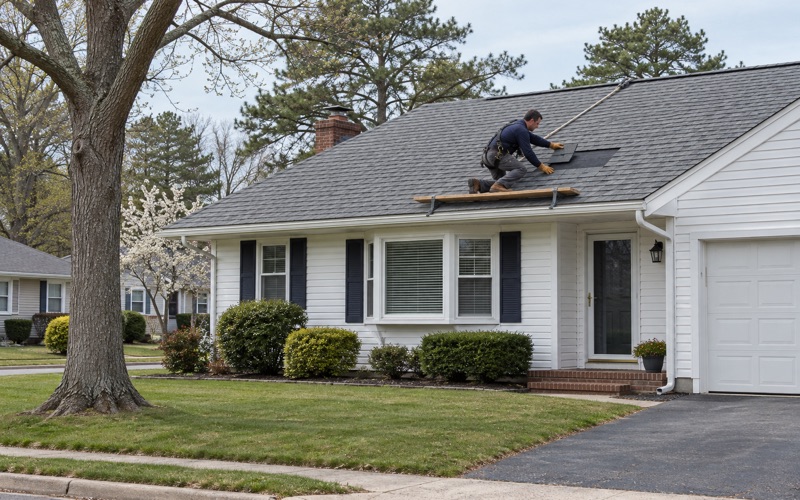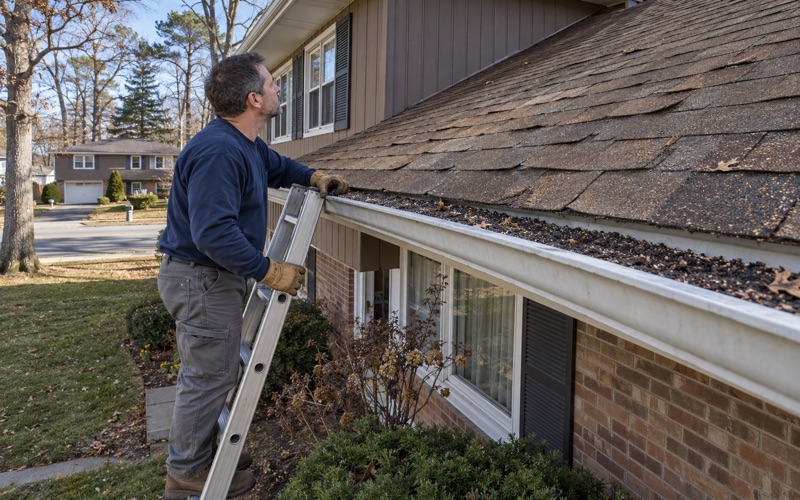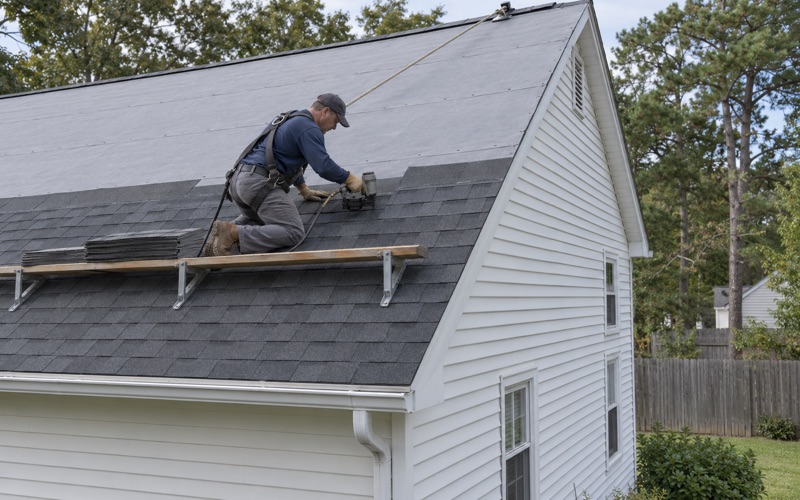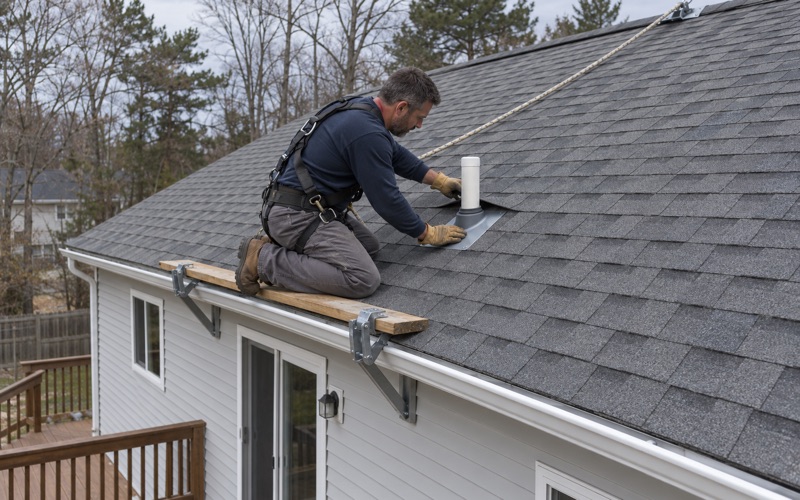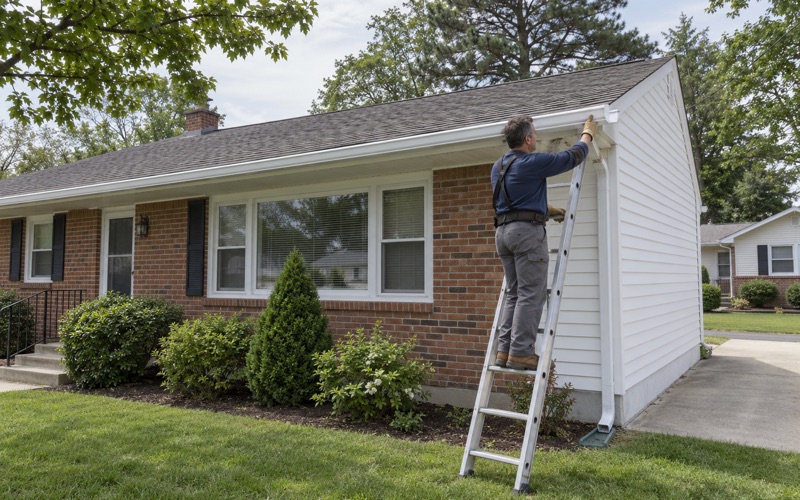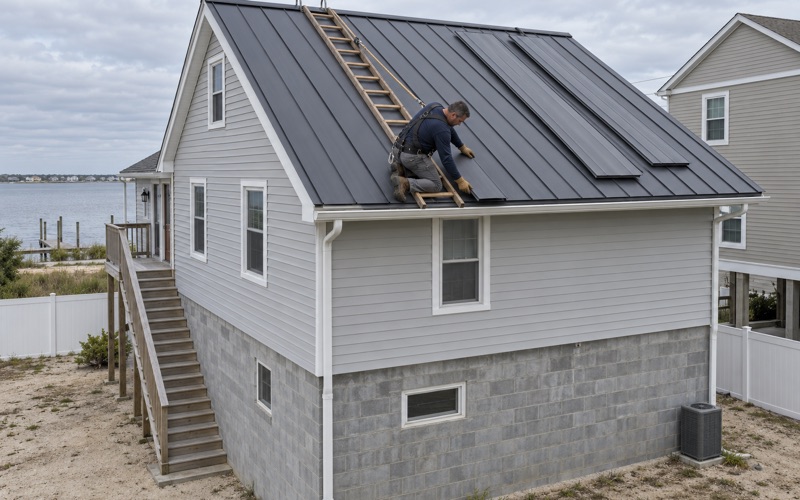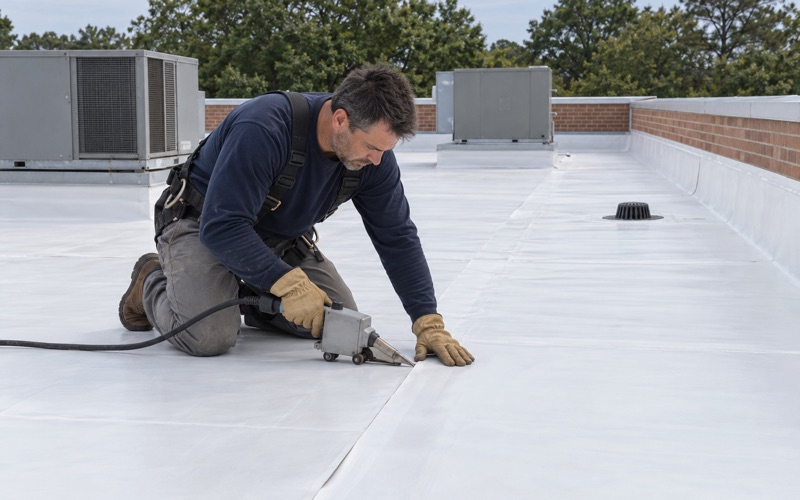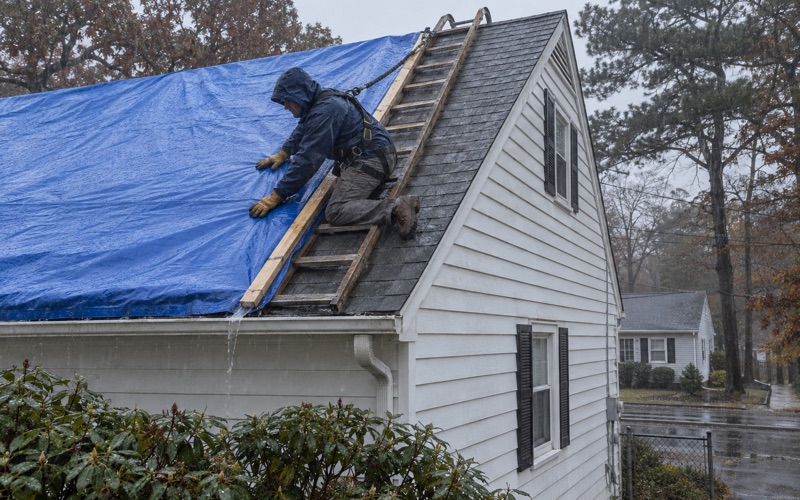
Toms River Elite Roofing brings more than 20 years in the trade to roofing in Asbury Park, and on a house here we settle two questions before we price anything. Can the existing roof be repaired, and if it cannot, what should the replacement look like? The first gets a straight answer from us up front. The second is shaped by a local rule most owners have never read.
That rule sits in the city’s property maintenance code rather than with any design review board. It asks that a replaced roof match, or be similar to, the style and color of what was there, and it also sets a plain performance standard for roofs and flashing. We read both parts as working instructions for the job, not as paperwork to sort out later.
Below we walk through what the code says, how the city’s code enforcement staff come across roof problems, and how we choose shingles and colors so a replacement fits the house it sits on. Where the public record is thin, we say so. We would rather tell an owner what is known than guess at how a clause will be applied.
What Asbury Park’s Property Maintenance Code Says About Roofs
A 2017 code that replaced the 1996 BOCA rules
Asbury Park’s current property maintenance code took effect on January 17, 2017, when, according to a city notice that February, it repealed and replaced the prior 1996 BOCA code. The new chapter adopts the 2015 International Property Maintenance Code as amended by the city, through Ordinance 2016-53, later amended by Ordinance 2018-40.
That history matters because the model code is the starting point and the local amendments are where Asbury Park adds requirements of its own. The roof language is one of those places. We work from the text of section 13-304.7 as it appears in excerpts of the city’s online code, not from a full printed ordinance, and we are careful not to read more into it than it says.
Sound, tight and not admitting rain
The core of section 13-304.7 is a single sentence carried over from the model code: the roof and flashing shall be sound, tight and not have defects that admit rain. It is a performance standard. It does not name a material, a shingle weight or a number of layers; it asks whether the roof keeps water out of the building.
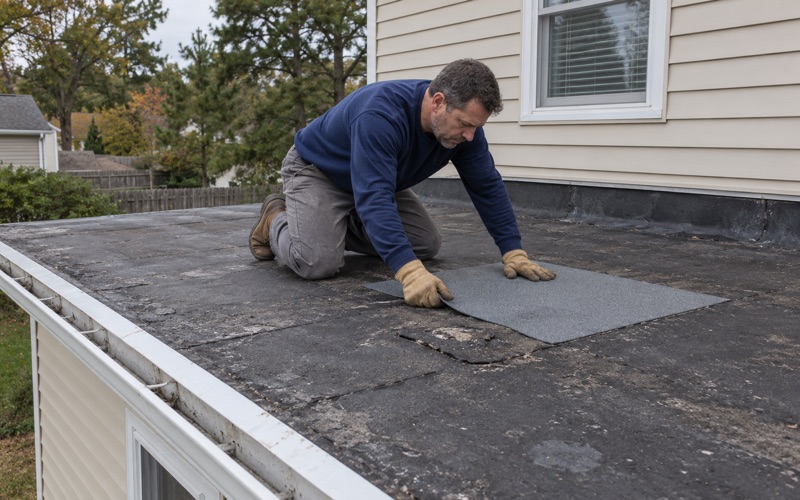
That is also how we approach a leak call. Every one includes a look in the attic as well as on the roof, so we can trace the water to where it actually gets in before anything is priced. A stain on a ceiling can sit well away from the opening that caused it, and patching the wrong spot leaves the very defect the code describes still in place.
Flashing is named alongside the roof
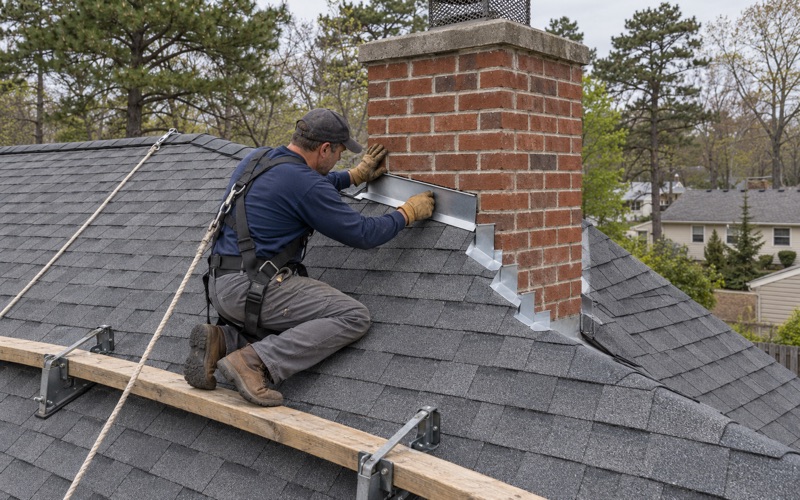
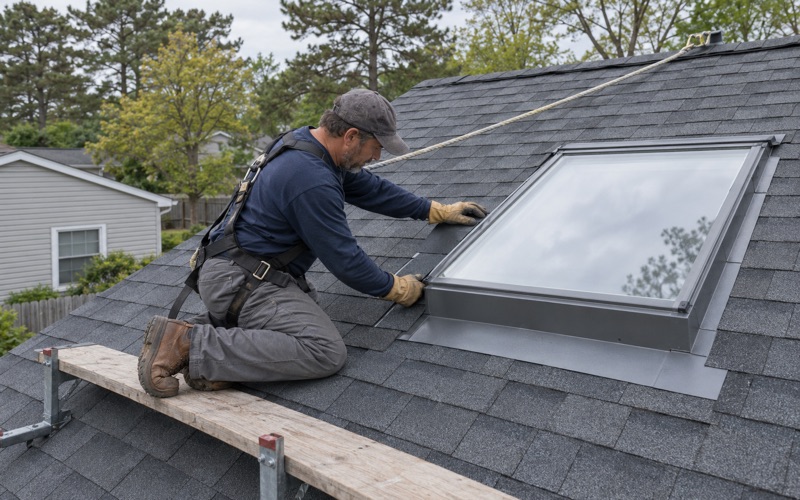
The clause names flashing in the same breath as the roof, and on older houses that is often where trouble starts. Step flashing along sidewalls, counter flashing set into masonry and the metal around a chimney all have to stay tight for the roof as a whole to meet the standard.
On a replacement we replace step, counter and chimney flashing along with the roofing rather than bending the old pieces back under new material. Reused flashing is a common source of the leaks the code is written against. On a house with a brick chimney we also look at the chimney crown and whether a cricket belongs behind it.
Looking for roofing closer to Tinton Falls? See Tinton Falls Roofing.
Match, or Be Similar To: Style and Color on a New Roof
The sentence the city added
Asbury Park’s version of the code goes beyond the model text. After the performance standard, section 13-304.7 adds that any repairs and/or replacement must match, or be similar to, the style and color of the existing. The same sentence appears in section 13-304.4, which covers structural members, so the idea of continuity runs through more than one part of the chapter.
For an owner, the practical reading is simple. A roof replaced with something close to what came off, in profile and in color, sits comfortably inside the clause. A roof that changes the look of the house, say from a dark shingle to a much lighter one, or from one style of roofing to a very different one, raises the question the clause is there to ask.
What similar leaves open
We have not found any published guidance on how the city interprets the word similar, and we do not pretend otherwise. The code text we have seen does not list colors, set a tolerance or describe a review step. It states the expectation and leaves the judgment to the people who enforce it.
Because of that, we steer owners toward choices that are easy to describe as similar. When a homeowner wants a real change in style and color, we talk it through before the contract is signed and suggest putting the question to the city’s code enforcement office directly. That conversation is far easier to have before the tear-off than after a finished roof is on.
It also helps to know what does not apply. We found no local historic commission with review power in force in the city, and the 2014 National Register listing of the downtown Commercial Historic District, around Bond Street, Cookman Avenue and Mattison Avenue, carries no local review of private roofs. The maintenance code is the rule that speaks to appearance.
No construction permit, but still a rule
Replacing the roof covering on a detached one- or two-family house is ordinary maintenance under New Jersey’s construction rules, N.J.A.C. 5:23-2.7(c)1.x, which means no permit, inspection or notice under that subcode. Many owners take that to mean nothing governs the job. In Asbury Park that is not quite right.
The ordinary maintenance rule answers a construction-code question, and the property maintenance code answers a different one. A detached-house re-roof can skip the construction office and still be expected to match, or be similar to, what it replaces. Work that affects structure falls outside the exemption, as do attached rows and buildings of three or more units, which go to the Construction Department at 1 Municipal Plaza.
How Code Enforcement Comes Across a Roof Problem
Field inspections, complaints and referrals
The city’s code enforcement division says potential violations are discovered through field inspections, resident complaints and referrals from other agencies. Its own description of the property maintenance code lists roofs among the matters it covers, alongside doors, plumbing, paint and the rest of a building’s exterior and systems.
Put plainly, a roof can come to the city’s attention without the owner calling anyone. A neighbor’s complaint, an inspector passing by or a referral from another office can each start the process. That is one more reason we treat a visible change in roof style and color as something to think through before the old roof comes off rather than after.
A notice of violation comes first
According to the city, properties in violation are issued a notice of violation to give time to correct the problem before a summons is issued. That sequence gives an owner a window to act. We cannot say how any particular roof would be treated, and we do not tell owners what an inspector will or will not do.
A 2017 news report on the new code noted that it allows summonses without a prior notice for some listed items, with fines from $66 to $2,150 plus $33 in court costs. That report did not say whether roofs are on the list, so we do not assume they are. What we can do is help an owner answer a notice with a clear, written plan of work.
Documenting the roof before it comes off
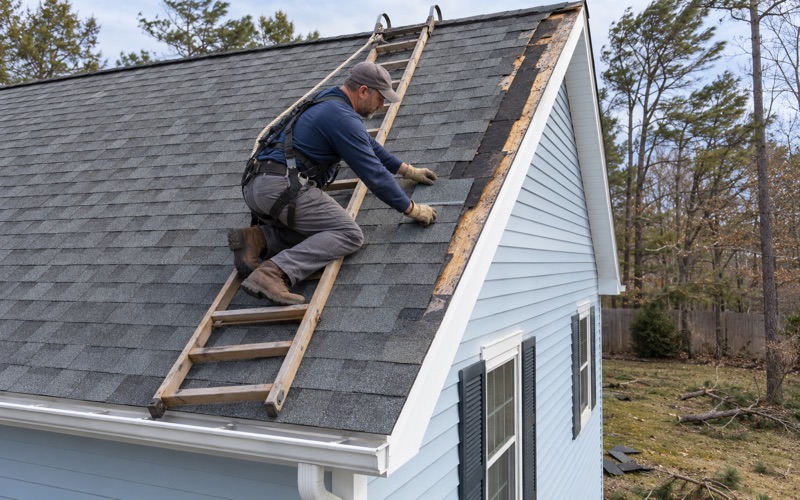
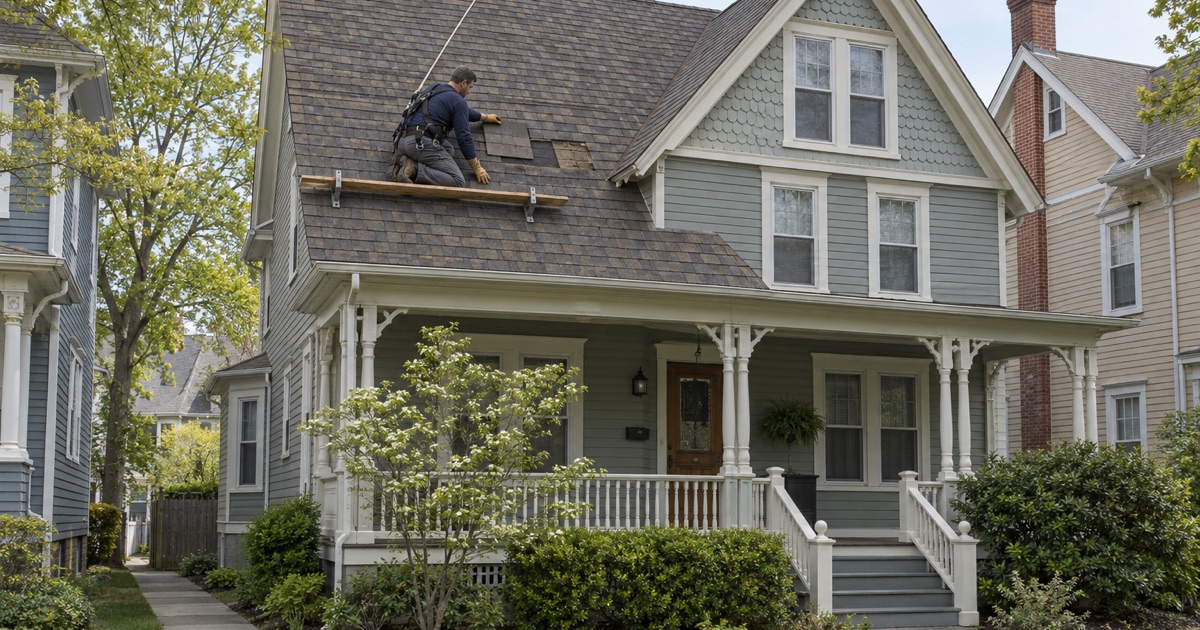
When a house might draw questions about whether its new roof is similar to the old one, a record helps. Before tear-off we photograph the existing roof from the ground and up close, including the shingle profile, the color and the trim and flashing details, so there is a clear picture of what was there.
Those photos sit alongside a written scope that lists tear-off, decking, underlayment, flashing, ventilation and gutters as separate lines, so estimates can be compared item by item. If the old roof hides rotted decking, we photograph it and show the owner before replacing it, at a per-sheet price set in the contract. An owner selling the house can also ask for a written roof condition report to hand to the buyer’s inspector.
Choosing Shingles and Colors for a Prewar Asbury Park House
An older housing stock
Asbury Park’s housing is old. American Community Survey 2024 five-year estimates count 3,225 of 8,681 housing units, or 37.1 percent, as built in 1939 or earlier. The city was developed beginning in 1871 as a residential resort, and its housing of the 1890s took in a full range of Victorian architecture.
On a prewar house the existing roof is rarely the first one. Layers may have been added over the decades, and the color on top today may not be what the house was built with. We look at what is there, what the owner wants and what the matching clause asks, and we answer whether a repair will do before any replacement talk begins.
Profiles and color families
Most re-roofs we plan use architectural, or laminated, shingles, which manufacturers such as GAF, Owens Corning and CertainTeed make in a wide range of colors. Lines like GAF Timberline HDZ, Owens Corning Duration and CertainTeed Landmark each offer several grays, browns and blends, which makes it practical to land close to an existing color rather than trading it for something new.
We bring samples to the house and hold them against the existing roof in daylight, on the slope itself rather than on a kitchen table. A shade that reads as similar in a brochure can look quite different against old siding and trim. Where an owner wants a change, we show the nearest options beside the bolder choice so the decision is made with both in view.
Ventilation and the parts no one sees
The matching clause is about what shows from the street. The parts that decide how long a roof lasts sit underneath, and we check attic ventilation on every replacement because a roof that cannot breathe ages from below. On older houses that often means pairing a ridge vent with soffit intake where the framing allows it.
Under the shingles we lay a self-adhering ice and water barrier at the eaves and in valleys and a synthetic underlayment across the rest of the deck. None of it changes the style and color the code cares about, but all of it bears on whether the roof stays sound, tight and free of defects that admit rain for years after we leave.
- 20+ Years on Shore Roofs
- Line-Item Written Scopes
- Attic and Roof Leak Tracing