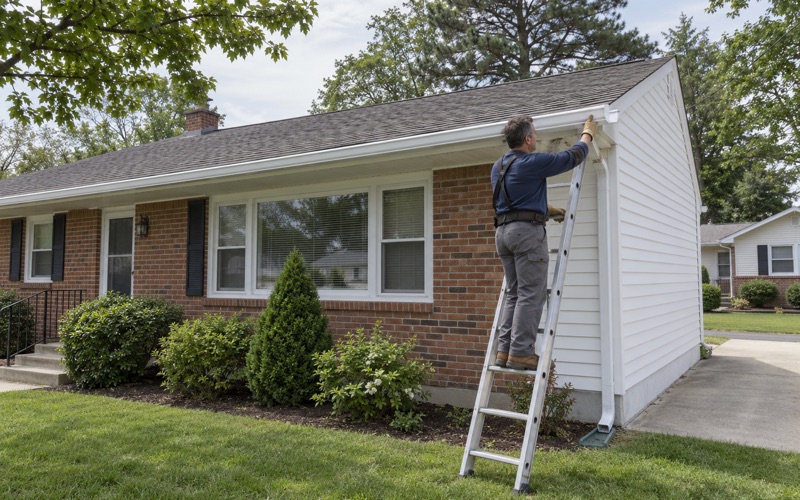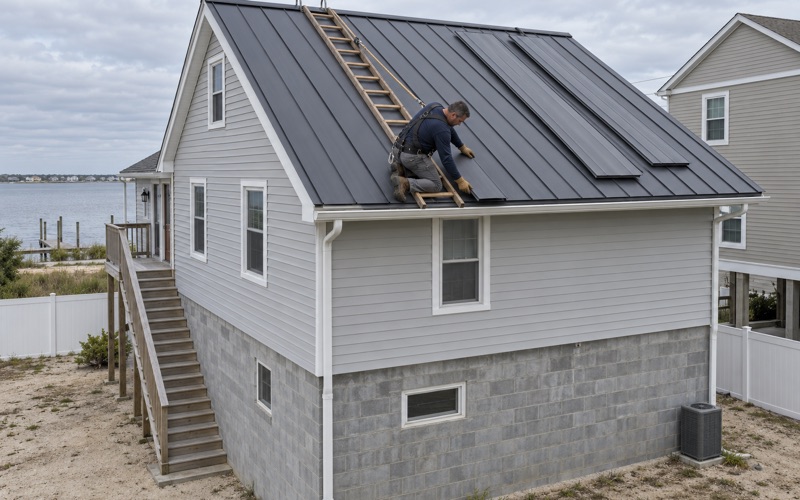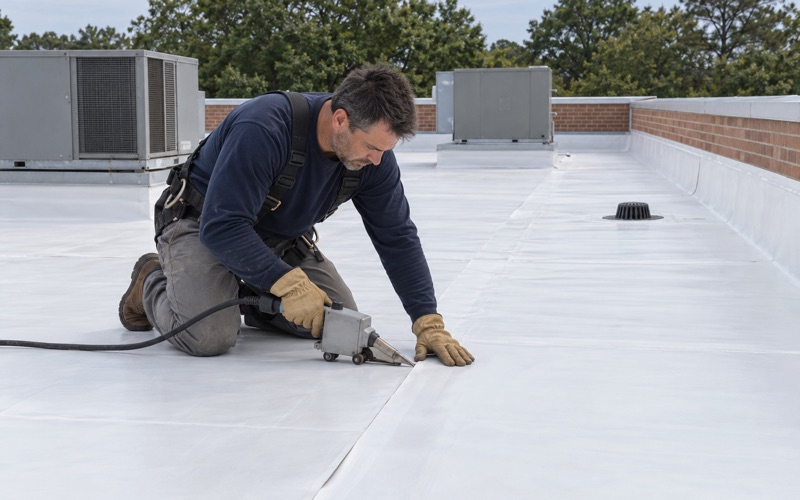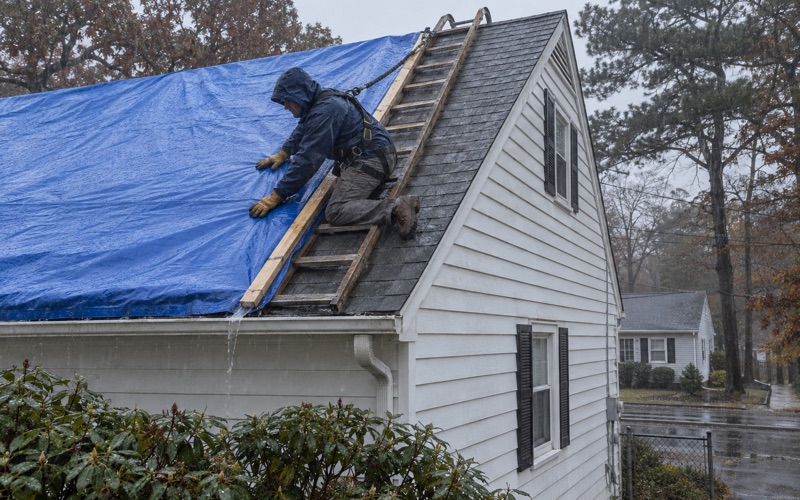
Toms River Elite Roofing has spent more than 20 years on roofing in Beachwood and the rest of the area, and on an older house the part of the job that deserves the most planning is often not the shingles at all. It is the painted wood along the edges of the roof: the fascia boards behind the gutters, the rake boards up the gable ends, and the trim that gets cut or replaced when a roof comes off.
That wood matters because a federal rule can reach it. When a paid contractor disturbs enough painted surface on a home built before 1978, the work has to be done lead-safe, with testing or containment and a defined cleanup. We would rather settle that question on paper during the estimate than discover it with a pry bar on tear-off day.
So every Beachwood estimate we write starts with an honest look at the roof and the attic, a plain answer on whether a repair will do, and a written scope that shows where painted edges will be touched. The sections below explain why that last line carries so much weight in this borough.
Beachwood’s Older Houses and the 1978 Line
How the borough’s housing came together
Beachwood began as a summer colony. In 1914 the publishers of the New-York Tribune bought 1,763 acres of Berkeley Township and sold 20-by-100-foot lots for $19.60 with a six-month subscription, and the borough incorporated in 1917. Some of the oldest houses still standing grew out of that era, but most of the housing came much later.
The census counts 4,258 homes in Beachwood, and 1,182 of them were built in the 1970s alone, the single largest decade. Another 550 date from the 1960s, 368 from the 1950s, 175 from the 1940s and 337 from before 1940. Taken together, 2,612 homes, about 61 percent, were built in 1979 or earlier.
Why the census count is only a starting point
The census groups construction years by decade, so its 1970s figure runs through 1979 and does not stop at the 1978 line the federal rule uses. The true number of houses inside the rule is therefore somewhat lower than 2,612. Still, a homeowner here is more likely than not to live in a house old enough to raise the question.
Age alone does not tell anyone whether lead is present. No record we know of says which Beachwood houses still carry lead paint on their exterior trim, and many have been repainted, wrapped or re-sided over the decades. Only testing the actual painted surfaces settles it, which is why we treat the build year as a reason to ask, not as an answer.
Who the rule reaches here
Beachwood is almost entirely detached houses: 4,245 of the 4,258 homes stand on their own, and about 92.5 percent of occupied homes are lived in by their owners. That shapes how the rule lands, because the text we have read contains no opt-out for an owner who lives in the house.
In practice, that means the federal requirements apply to paid work on an owner-occupied 1970s ranch just as they would on a rental. If your house falls on the older side of the line, the painted wood around your roof edges is part of the job conversation from the first visit.
Looking for roofing closer to Pine Lake Park? See Pine Lake Park Roofing.
Where Paint Meets a Roof Job: Fascia, Rakes and the 20-Square-Foot Line
Shingles are not paint, but the edges are
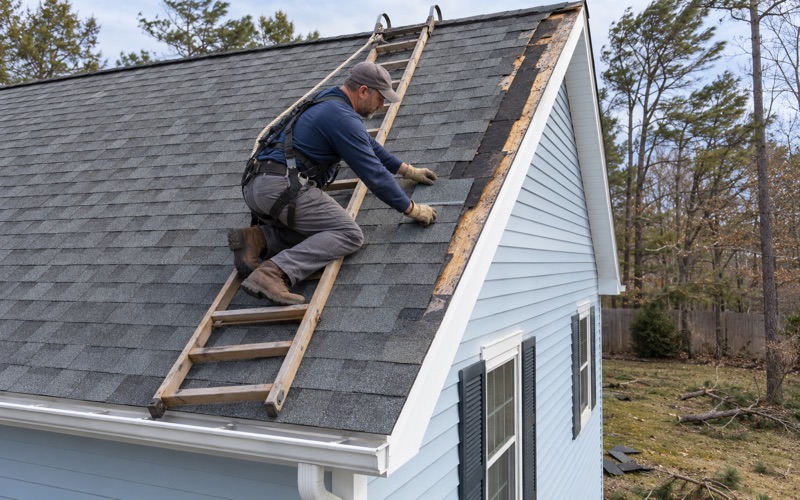
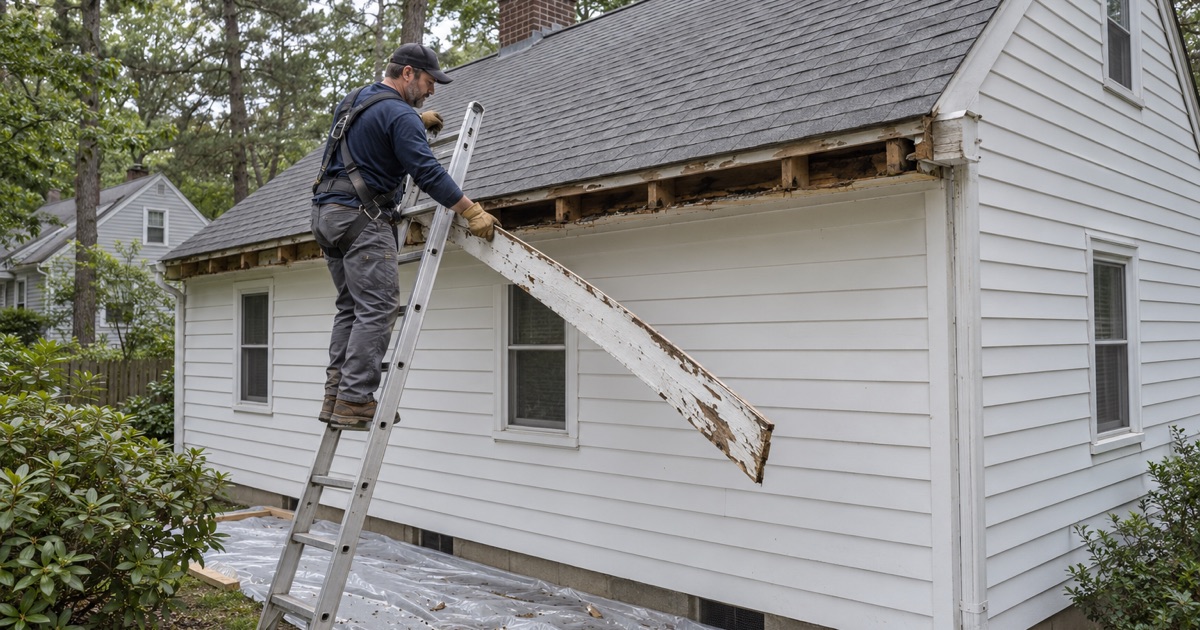
Asphalt shingles, underlayment and roof decking are not painted surfaces, so stripping and replacing them does not by itself trigger the rule. The trouble sits at the perimeter. Painted fascia and trim run along every eave, rake boards frame the gables, and soffits often carry the same coats of paint as the siding below.
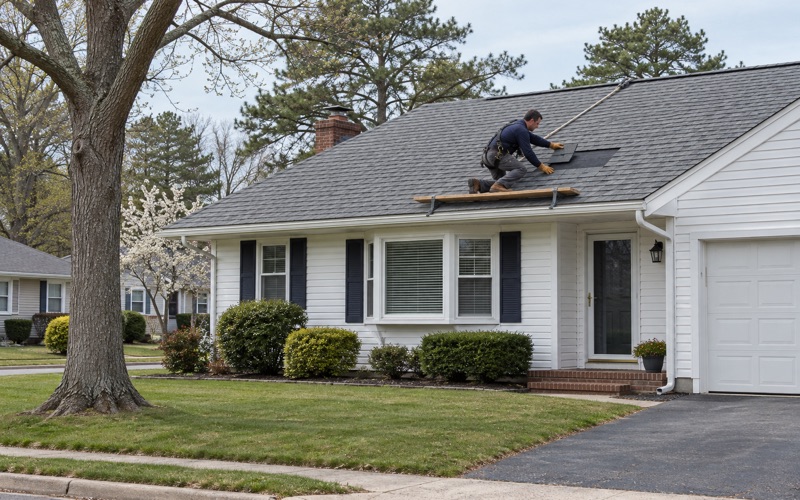
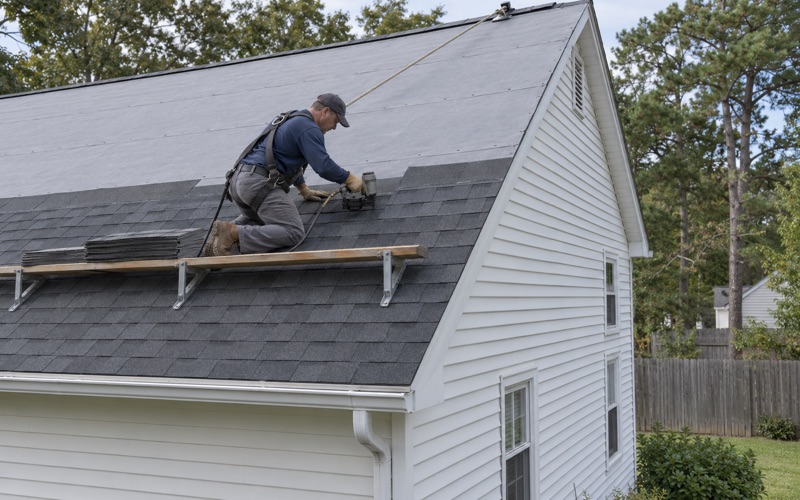
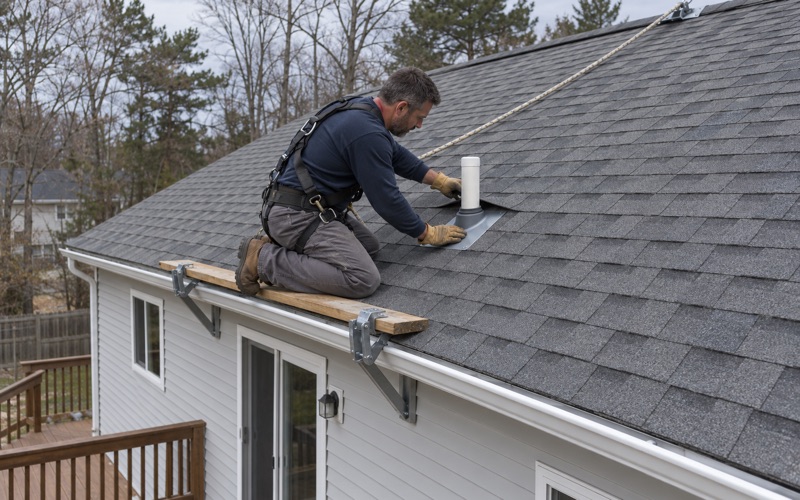
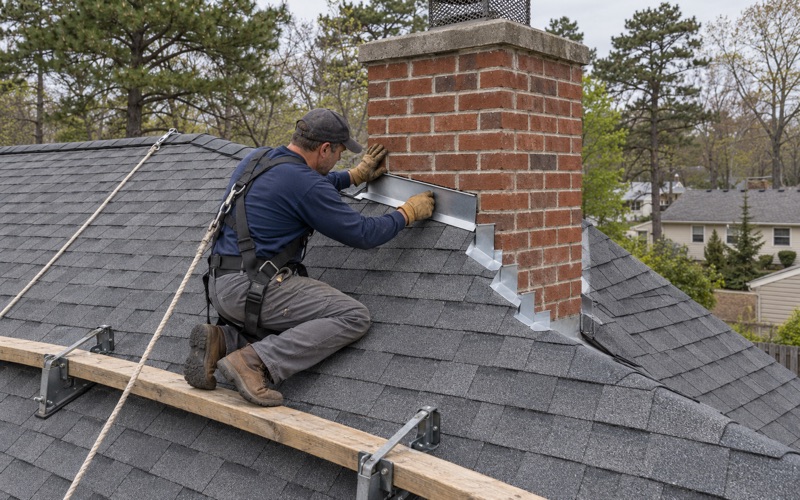
A re-roof touches those surfaces more than most homeowners expect. New drip edge is fastened over the fascia, rotted rake boards get cut out, gutters come down and go back up, and ventilation work can mean opening the soffit. Each of those steps can scrape, cut or remove painted wood.
How the 20 square feet is counted
The EPA Renovation, Repair and Painting rule treats exterior work that disturbs 20 square feet or less of painted surface as minor repair and maintenance, outside the full requirements. Above that figure, the work counts as a renovation, and firms paid to do it on pre-1978 housing must be certified by the EPA.
The counting rule is where roof jobs cross the line. When a painted component, or a portion of one, is removed, the entire surface area removed counts as disturbed. A few long runs of rotted fascia replaced along the eaves, plus a rake board or two, can pass 20 square feet faster than a quick glance suggests.
Measuring before we price
During the estimate we walk the eaves and gables and note which painted boards are sound, which are soft, and which will have to come off for new drip edge or flashing. That gives a realistic figure for how much painted surface the job will actually disturb.
When the honest answer is that the job will stay well under the threshold, we say so. When it will not, the estimate says that too, and it shows how the painted wood will be handled as a separate item rather than folding it quietly into the roof price.
Testing, Containment and Cleanup on a Re-Roof
Settling the question with a test
The rule offers a way to clear a component before work starts. A certified renovator can test the painted surface with an EPA-recognized test kit, or a paint chip sample can go to an EPA-recognized lab. If the result shows the paint below the federal lead levels, that component is outside the requirements.
Testing is usually the sensible first step on a Beachwood house with original or long-painted trim. It costs far less than containing a job that turns out not to need it, and it replaces guesswork with a result the homeowner can keep with the house records.
What lead-safe work looks like on the roof edge
When testing is not done, or the paint tests positive, the work proceeds under lead-safe practices. That generally means plastic sheeting on the ground below the work area, posted warning signs, and keeping dust and chips from the painted boards inside the contained zone rather than letting them fall into the yard or flower beds.
The edge of a roof is a hard place to contain because debris falls a full story or more. Planning the sheeting, the order of tear-off and the handling of removed boards ahead of time is what keeps the work practical, and it is why we want those decisions in the written scope instead of improvised on site.
Cleanup and the final check
Our crews already clean the driveway, yard and gutters at the end of every work day and run a magnet sweep for roofing nails. On a lead-safe job, cleanup goes further: removed painted wood and the sheeting under it are bagged and handled as the rule requires, and the work area is checked once the job is done.
Emergency repairs after a sudden event are treated a little differently. When storm damage threatens the house, the rule relaxes some of the pre-work notice and setup steps, but cleaning, verification and recordkeeping still apply. A tarp and a fast fix are fine; the cleanup afterward still has to be right.
Roof Repair and Replacement in Beachwood
Finding the leak before pricing anything
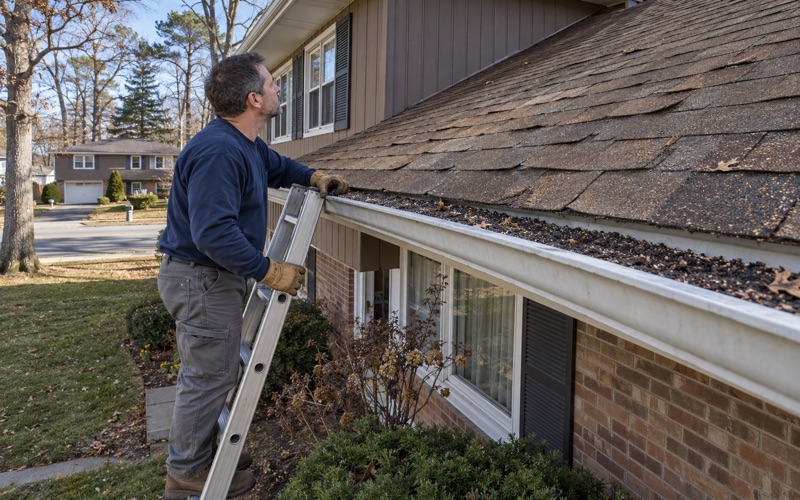
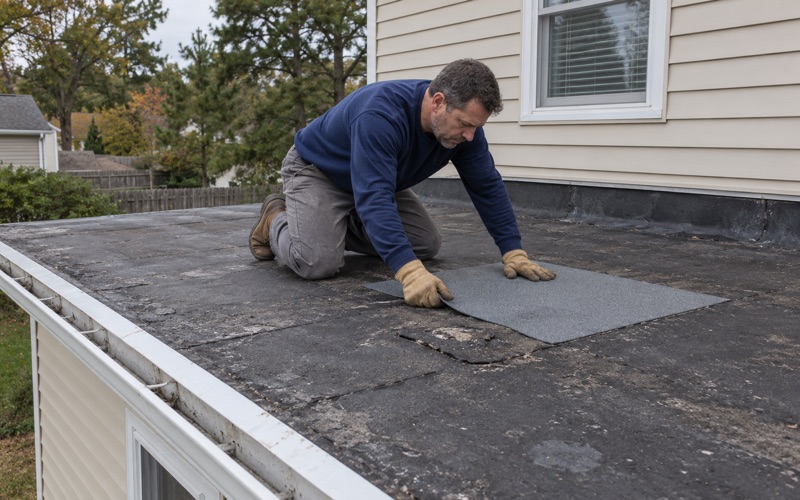
A leak in a Beachwood house gets traced from both sides. We go up on the roof and into the attic, because water often enters several feet away from where the stain shows on a ceiling. Only once we know where it actually gets in do we talk about cost.
That inspection also answers the bigger question early. If a flashing repair or a section of new shingles will keep the house dry for years, we tell you before replacement ever comes up. On an older home, a well-scoped repair can also touch far less painted trim than a full tear-off.
A scope you can compare line by line
When replacement is the right call, our written scope separates tear-off, decking, underlayment, flashing, ventilation and gutters into their own lines, with any painted trim work listed on its own. You can set our estimate beside another one and see exactly where they differ.
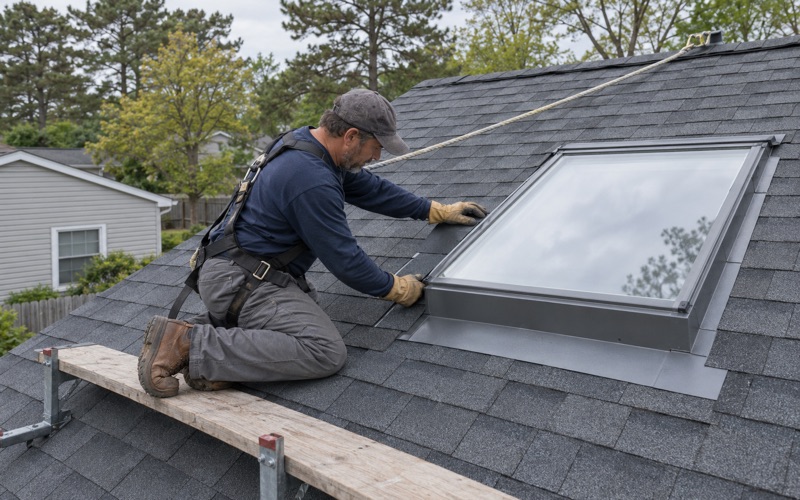
If damaged decking turns up once the old shingles are off, we photograph it and show you before replacing it, at the per-sheet price already set in the contract. Step, counter and chimney flashing are replaced with the new roof rather than reused, and attic ventilation is checked on every replacement so the new shingles are not aging from underneath.
Contracts, timing and the rest of the job
Our contracts follow New Jersey’s home improvement rules, including the three-day cancellation notice. If panels sit on your roof, the solar removal and reinstall go into the schedule from the start, and if you are getting the house ready to sell, we can provide a written roof condition report for the buyer’s inspector.
Whatever your house’s age, the goal is the same: a dry roof, a clear price, and painted edges that were tested or contained rather than guessed at. On a borough where most homes went up before 1980, that last part is simply part of doing the job right.
- 20+ Years on Shore Roofs
- Line-Item Written Scopes
- Attic and Roof Leak Tracing