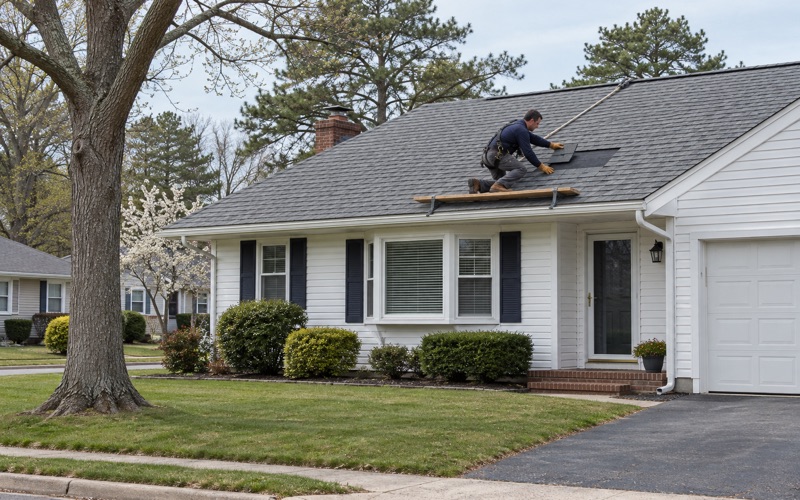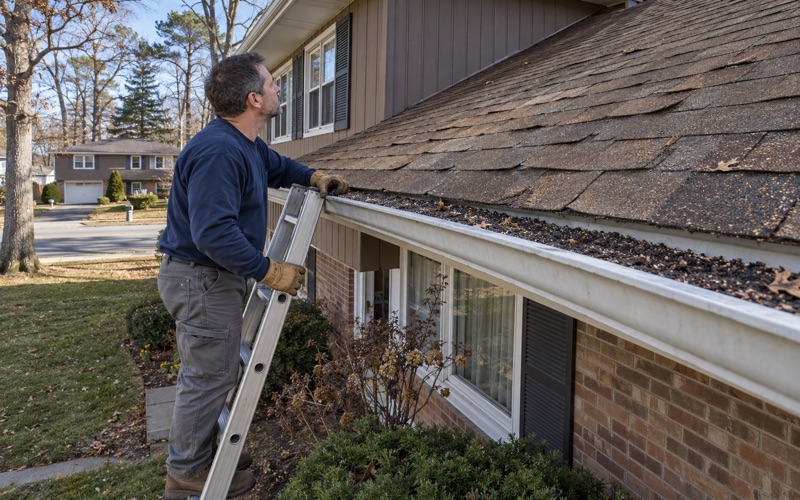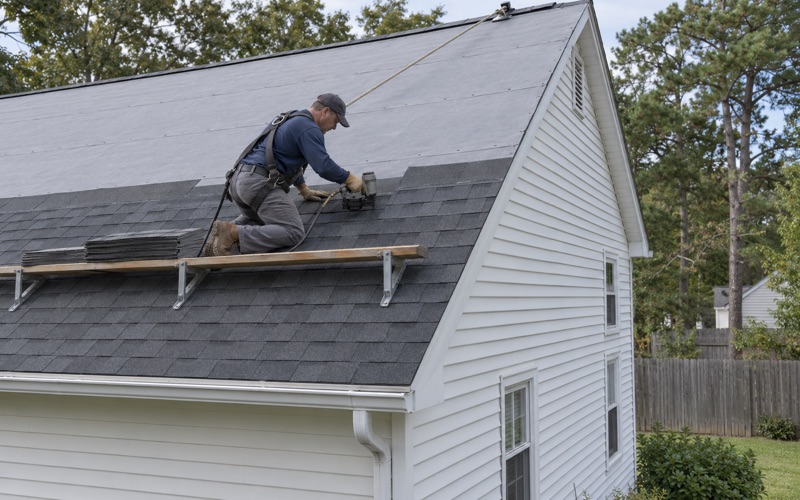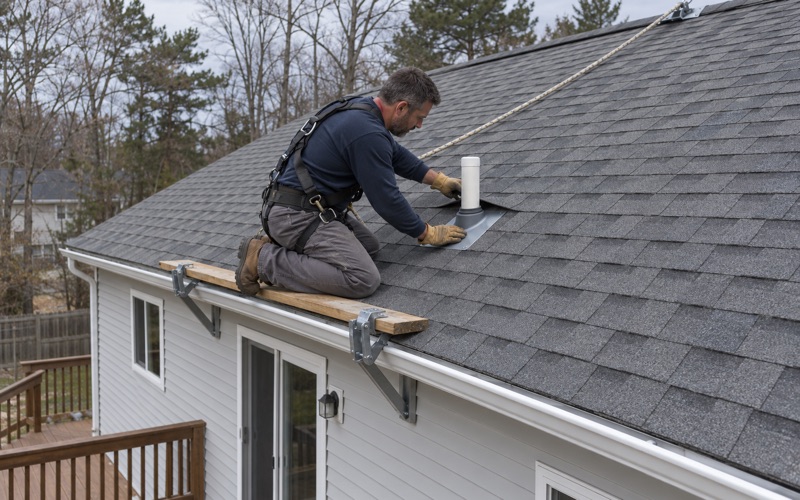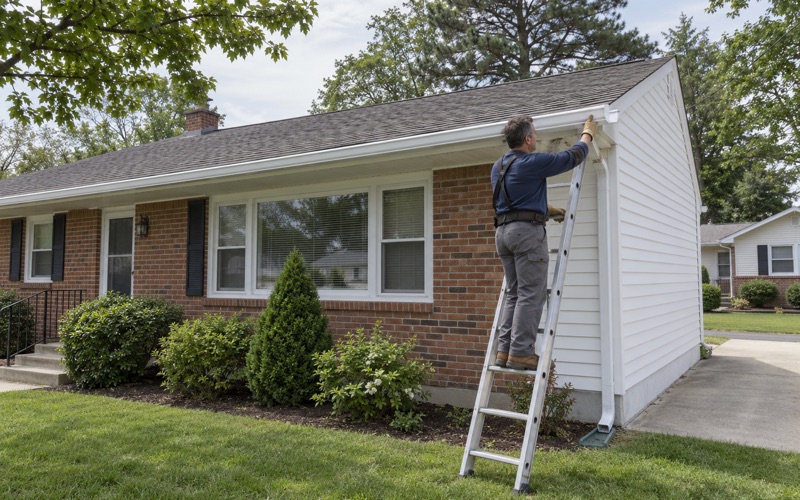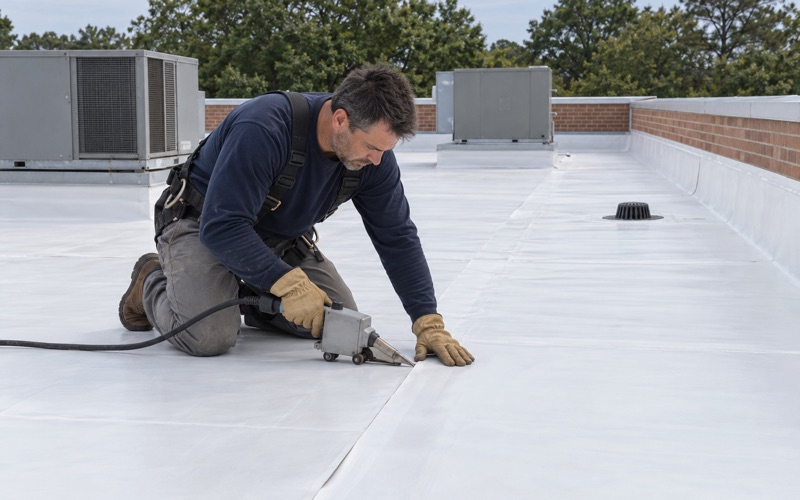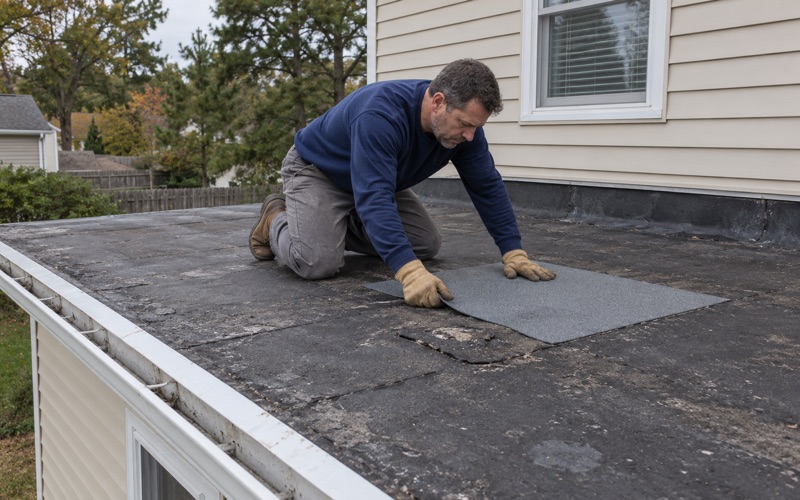
Toms River Elite Roofing brings more than 20 years of roofing in Berkeley Township and across Ocean County to every call, and a leak call always gets two inspections: one on the roof and one in the attic. Water rarely comes through the ceiling directly under the spot where it got in, so we follow the stain, the wet sheathing and the rusted nail tips back to the real entry point before we price anything.
The next thing you get from us is a straight answer about repair. If the roof has years left and the trouble is one flashing joint or a few lifted shingles, we say so before replacement ever comes up. When it does need replacing, our written scope lists tear-off, decking, underlayment, flashing, ventilation and gutters as separate lines, so a second estimate can be laid beside ours and checked line by line.
What follows is about the parts of this township that ask the most of a roof: the bayfront and its lagoon streets, a stretch of barrier island, and houses that stand empty for part of the year. Each one changes the materials we pick, how the crew reaches the roof, or how often someone ought to be looking at it.
Roofing Along Berkeley’s Bay, Lagoons and Barrier Island
Thirty-Five Miles of Shoreline
Berkeley Township runs from the Jersey Shore west into the New Jersey Pine Barrens, and its 2014 Strategic Recovery Planning Report puts the shoreline at about 35 miles. Roughly 18 of those miles face Barnegat Bay, 10 face the ocean and 7 follow creeks and rivers. That is a great deal of roofline within reach of salt spray and wind off open water.
The same report divides the township into three areas: the Pinelands and the senior communities of Holiday City and Silver Ridge west of the Parkway, an eastern mainland that takes in Bayville, Berkeley Shores, Holly Lake Park and Pinewald, and the barrier island section at South Seaside Park. A roof in Holiday City and a roof on the bay are not the same job, even when the shingle is.
Fasteners and Flashing Chosen for Salt Air
Salt goes after metal long before it goes after asphalt. Near the bay and the ocean we choose nails, drip edge and flashing for salt exposure rather than pulling whatever happens to be in the standard truck stock. FEMA’s coastal construction guidance makes the same point about stainless steel fasteners near saltwater, because a shingle can look perfectly sound while the nail under it corrodes away.
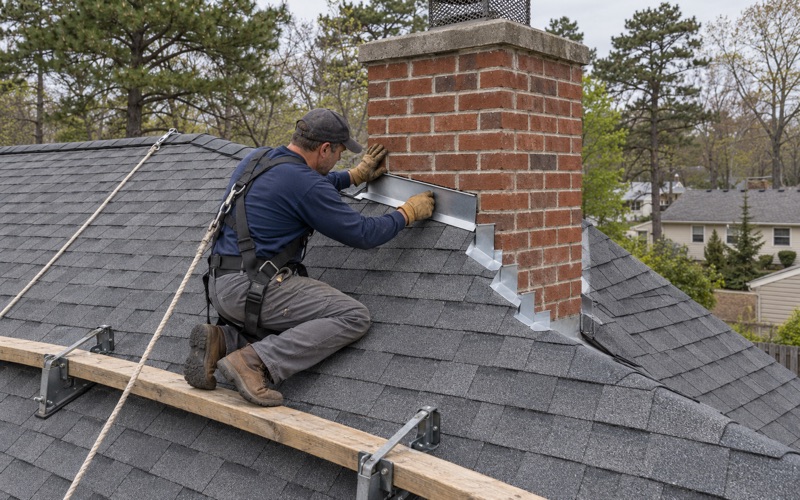
Flashing gets the same treatment. Step, counter and chimney flashing comes off with the old roof and new metal goes on with the new one; we do not bend tired flashing back into place under fresh shingles. Apron and kick-out flashing, a chimney cricket behind any chimney wider than 30 inches, and ASTM D1970 ice and water barrier at the vulnerable joints round out the details that keep wind-driven rain out.
West of the Parkway
In Holiday City and the township’s other planned retirement communities, the first question is often not about shingles but about who holds the roof. We check that against the association’s or co-op’s documents before we write an estimate, because the answer differs from one community to the next. Township code also ties exterior building permits in these communities to a written statement from the association.
That paperwork is routine in these neighborhoods, and it is easier to gather before the work is scheduled than after. Away from the bay the salt concerns ease, but the same attic check, the same separate line items and the same flashing replacement apply on every roof we take on.
Looking for roofing closer to Lakewood? See Roofing Services in Lakewood.
What the 2014 Recovery Report Recorded
Glen Cove’s Lagoon Streets
The recovery report, a draft prepared for the township in April 2014, describes Glen Cove as a series of streets and lagoons along Barnegat Bay. It names Sandlewood Drive, Cedar Drive, Butler Boulevard, Longview Drive and Bay Boulevard as places where Superstorm Sandy did damage when it struck on October 29, 2012, and it puts that damage down to storm surge, flooding and wind together.
Houses along a lagoon have water on at least one side, so wind coming across the bay reaches them with little in its way. On these roofs we look hard at the edges and the ridge, where uplift starts. Shingles rated to ASTM D3161 Class F or ASTM D7158 Class H, a sealed starter course and drip edge at the eaves and rakes all earn their keep on a lot like this.
Pelican Island and the Other Named Areas
Pelican Island is in the report too, with bulkhead damage noted along Catalina Drive and Prince Edward Drive. So are Bowsprit Road, Amherst Beach, Allen Road at Pebble Beach, Sea Bright Avenue and the Mill Creek boat ramp. The report’s photographs carry captions describing storm damage at a Berkeley waterfront home and storm damage and debris at a Bayville home.
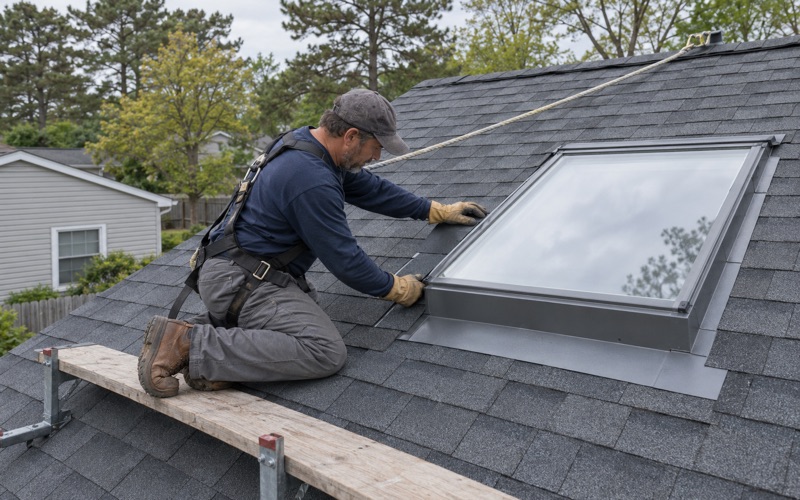
For us the useful part of that list is a record of where wind and water have reached before. An island lot has open bay around it and less to take the first gust. We check ridge vents, pipe boots and every other penetration, since a gap that would leak slowly on a sheltered street can take on real water when a storm drives rain sideways across the bay.
Reading a 2014 Draft Today
The report counted 252 properties within the township as substantially damaged, and in three census tracts between 6% and 32% of households had major or severe damage. Those numbers describe Berkeley in the months after the storm. They are not a count of roofs, and they say nothing about which homes have since been repaired, rebuilt or raised.
The report also notes that falling trees and power lines damaged buildings in some cases, which is the kind of harm a roof takes directly. What matters on your house is what is up there now. We look at the decking, the flashing and the attic as they stand today, and if damaged decking turns up once the old roof is off, we photograph it and show you before any sheet is replaced, at a per-sheet price already written into the contract.
South Seaside Park and the Coastal Ocean Forecast Zone
A Barrier Island Neighborhood
South Seaside Park is the part of Berkeley Township that sits on the barrier island, between Seaside Park and Island Beach State Park, and together with the state park it forms the township’s eastern boundary. The recovery report recorded damage along its beaches, including a breach between 21st and 22nd Avenues. Homes here have the ocean on one side and Barnegat Bay on the other.
Roofs on the island get everything we do for salt exposure: corrosion-resistant fasteners, new flashing and drip edge, and a careful look at how the roof is vented. We check attic ventilation on every replacement, because a roof that cannot breathe ages from underneath. A ridge vent works only with enough soffit intake to match it, so we compare the net free area at both before settling on a plan.
Two Forecast Zones in One Township
The National Weather Service office in Mount Holly does not forecast the whole township as one place. A point in South Seaside Park falls in forecast zone NJZ026, Coastal Ocean, while a point near Bayville on the mainland falls in NJZ020, Ocean. Those are forecast zones, not a long-term climate record, but they show the weather service treating the island and the mainland as different exposures.
In practice a wind or coastal flood statement for the island can read differently from the one for a Bayville street on the mainland. If you own in South Seaside Park, it is worth reading the Coastal Ocean forecast before a storm rather than assuming the mainland one covers you, and calling us afterward if the wind did anything to the roof you can see from the ground.
Raised Houses and Getting to the Roof
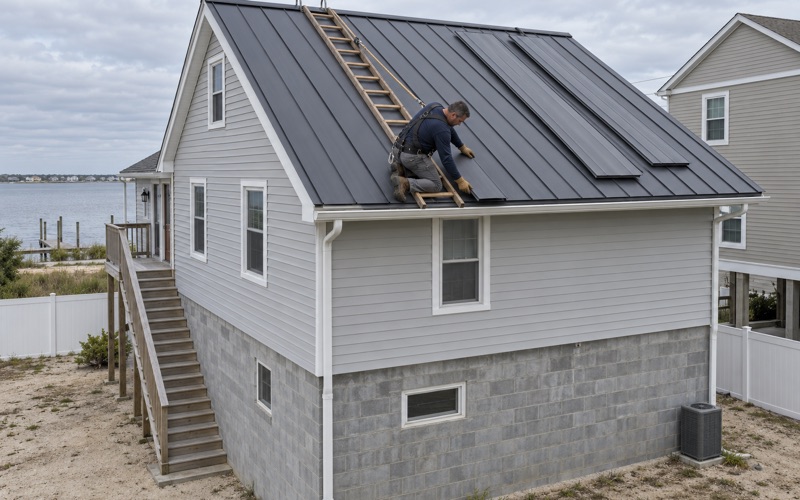
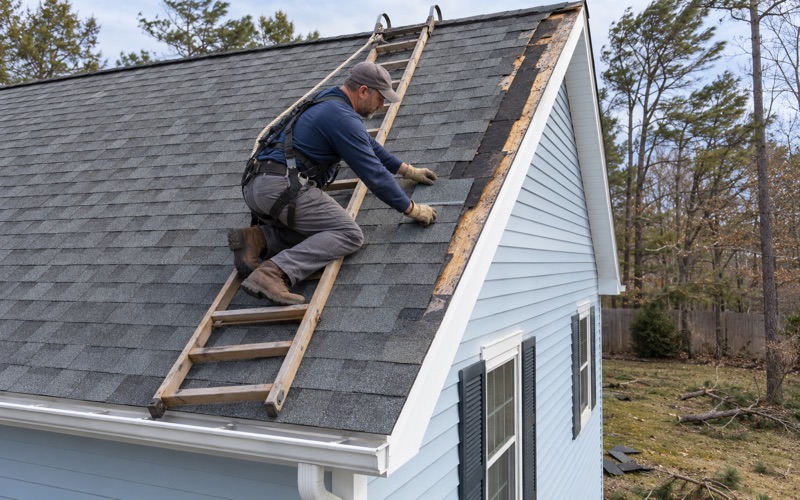
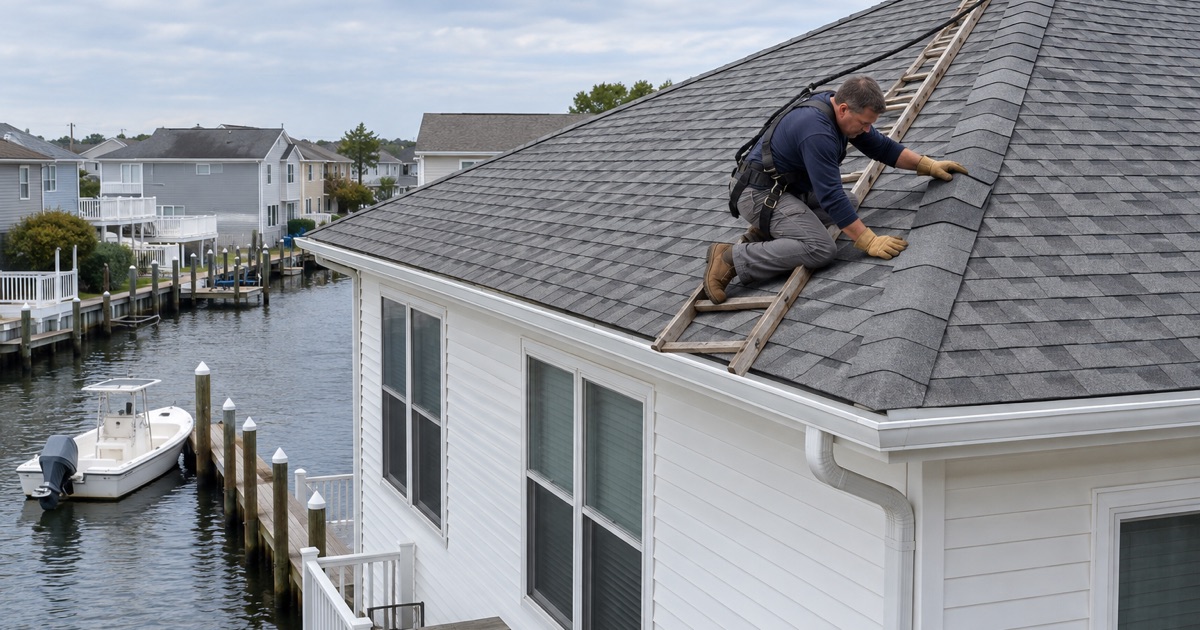
Where a waterfront or island house has been raised, the eave sits well above where a standard ladder setup expects it. We plan staging, ladders and material lifts for the extra height before the crew arrives, rather than working it out in the driveway that morning. Fall protection follows OSHA’s 6-foot threshold for residential roofing on every one of these jobs.
Cleanup is part of the plan on every lot. At the end of each work day the crew clears the driveway, yard and gutters and runs a magnet across the ground for loose roofing nails. Near a beach, where bare feet are common all summer, that sweep matters more than it might on an inland street.
Seasonal Homes and Which Policy Answers for a Roof
Roofs Nobody Is Watching
The census counts 2,173 Berkeley homes held for seasonal, recreational or occasional use, about three-quarters of the 2,910 vacant units in the township’s ACS 2024 five-year estimate. The figures do not say where those homes are, only that a real share of the housing here gets checked when the owners come back. A leak that starts in November can run for months before anyone opens the door.
If your Berkeley house sits empty for part of the year, a roof check before you close it up and another after a major storm costs far less than a stained ceiling and soaked insulation discovered in May. We inspect from the roof and from inside the attic, so a slow leak is caught where it starts rather than where it finally shows.
After a Storm
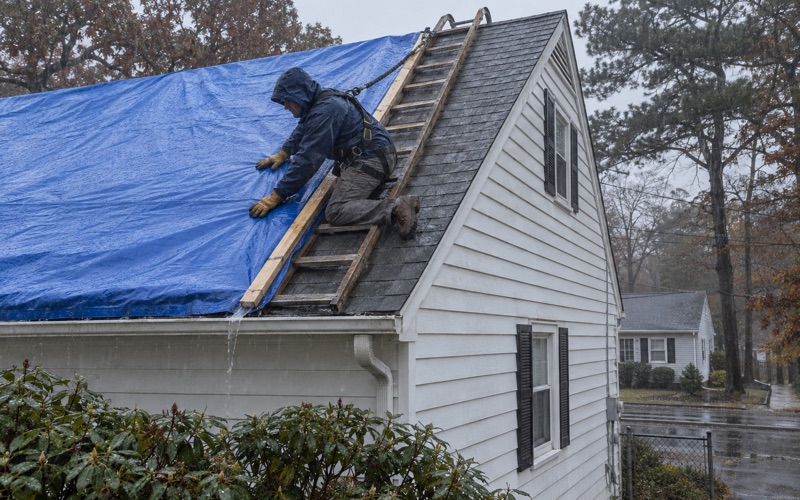
When a storm does reach the roof, we photograph the damage and write it up for your own claim, and if you ask, our crew will meet the insurance adjuster at the house. Settling the claim stays between you and your insurer. Under New Jersey’s Public Adjusters’ Licensing Act, N.J.S.A. 17:22B, a contractor can talk with an adjuster but cannot act for you in the claim.
Our contracts are written to New Jersey’s home improvement rules, including the three-business-day cancellation notice, so you have time to reread the scope after signing. The Department of Banking and Insurance publishes storm claims guidance for homeowners, and its Bulletin 11-16 addresses when a hurricane deductible is triggered. Reading your own declarations page before storm season is time well spent.
Wind, Flood and the Roof
Wind and flood sit under different policies. Flood insurance through the National Flood Insurance Program is separate from a homeowners policy, and nothing about it says it pays for a roof. Berkeley takes part in FEMA’s Community Rating System, which lowers flood premiums in the township, but that discount concerns flood coverage, not the shingles over your head.
Where a storm damages a home badly enough that repairs reach half the structure’s market value, FEMA’s substantial damage and substantial improvement rule, the 50 percent rule, can bring floodplain requirements into play. That determination belongs to the township, not to us. Our part is a clear written scope that separates roof work from everything else, so the numbers can be read accurately by whoever needs them.
- 20+ Years on Shore Roofs
- Line-Item Written Scopes
- Attic and Roof Leak Tracing