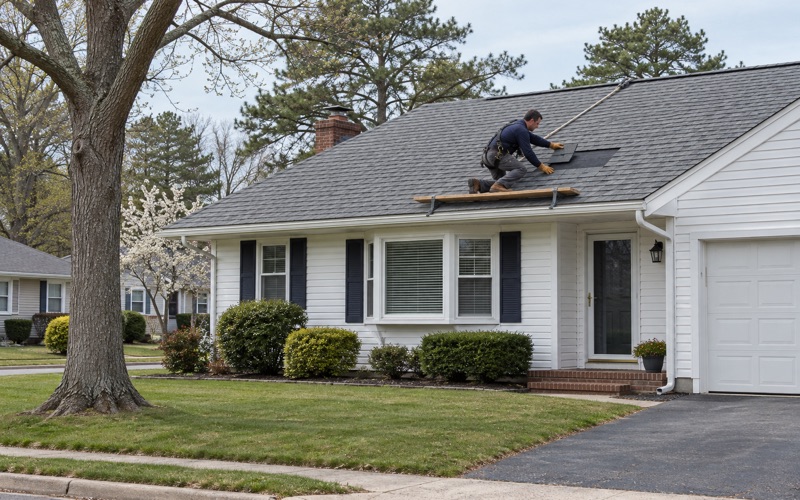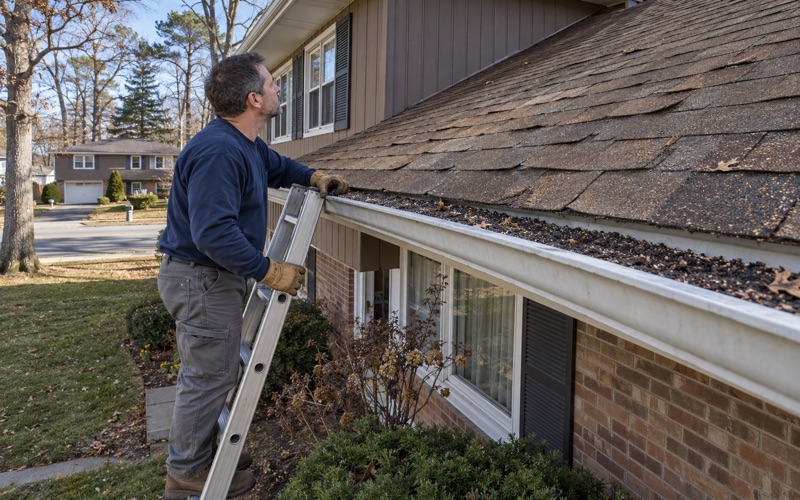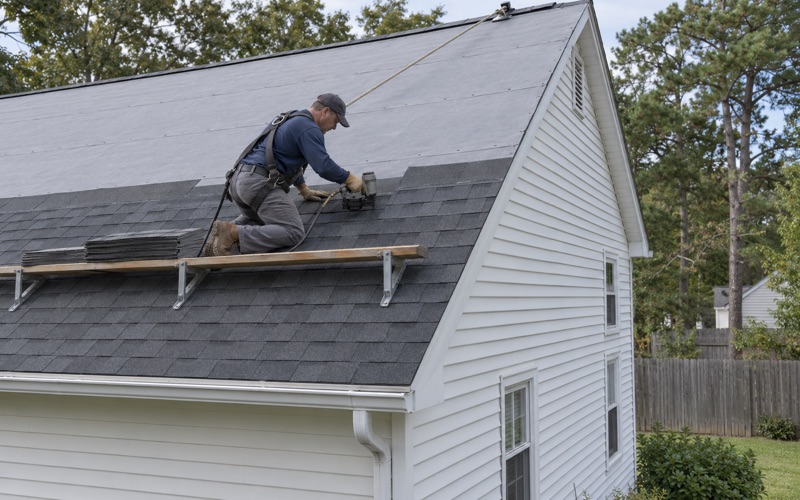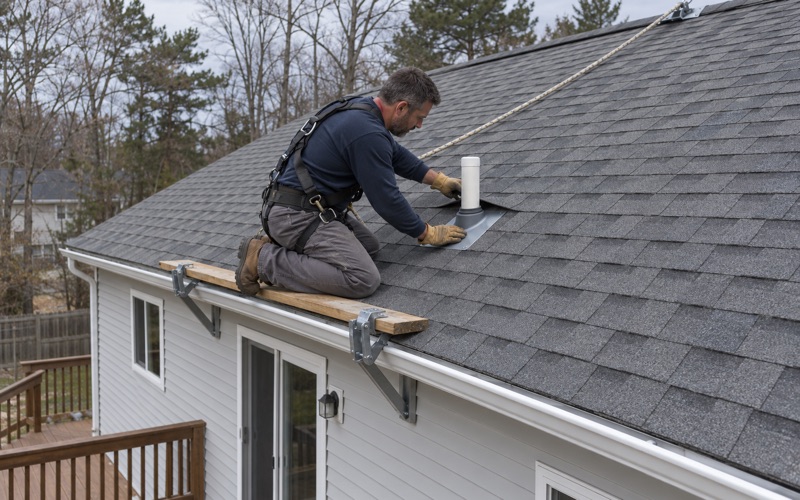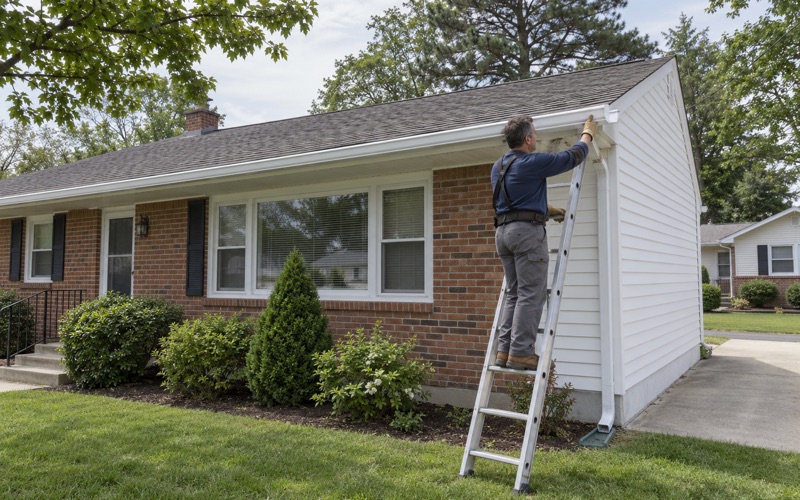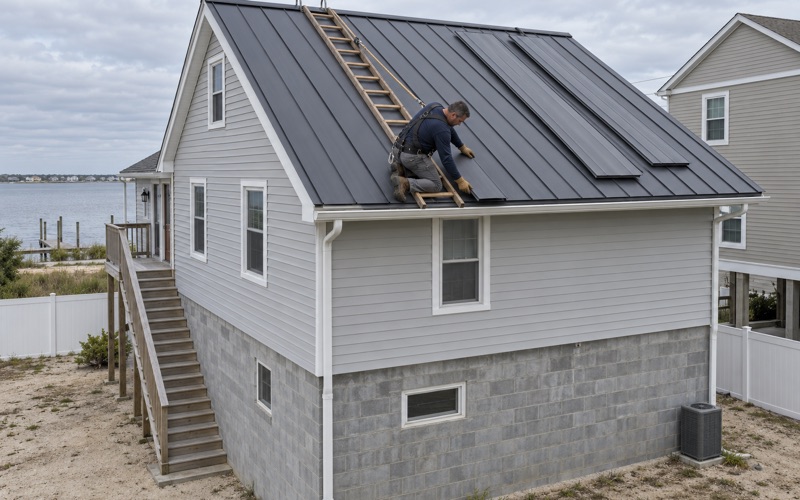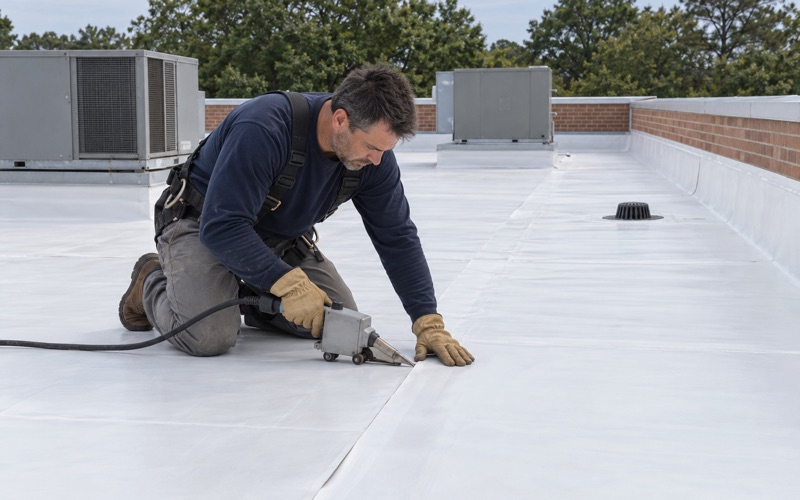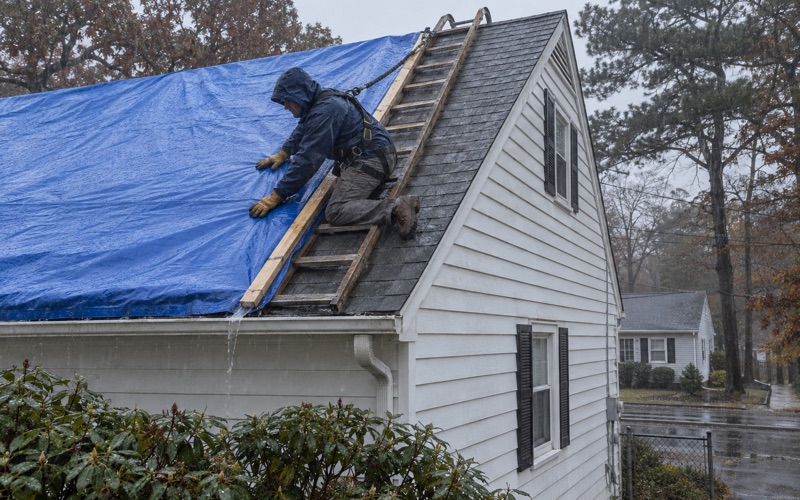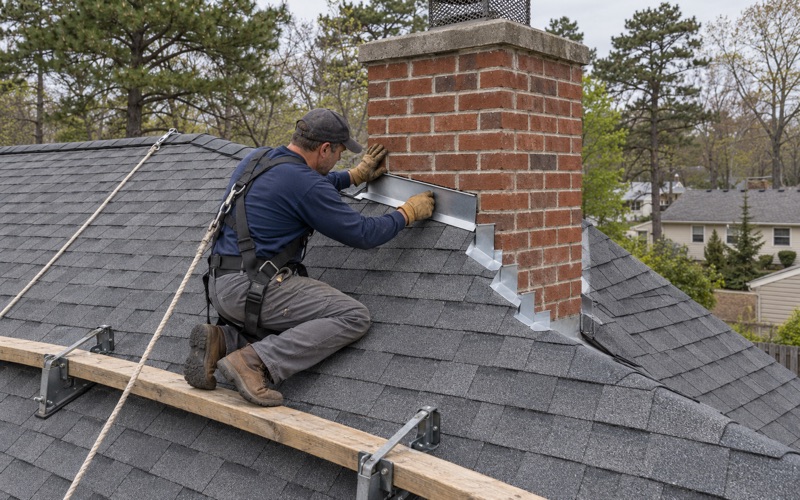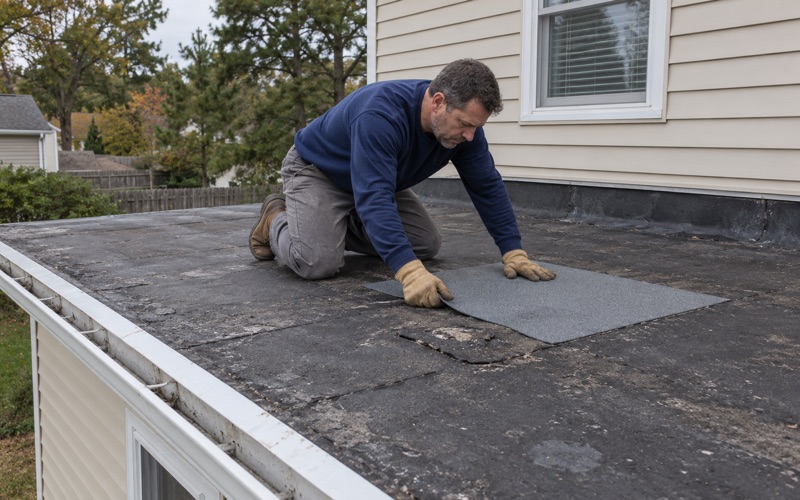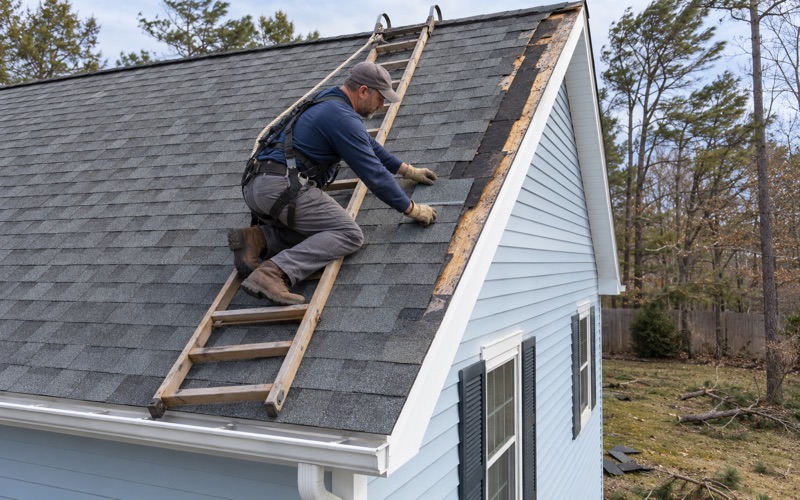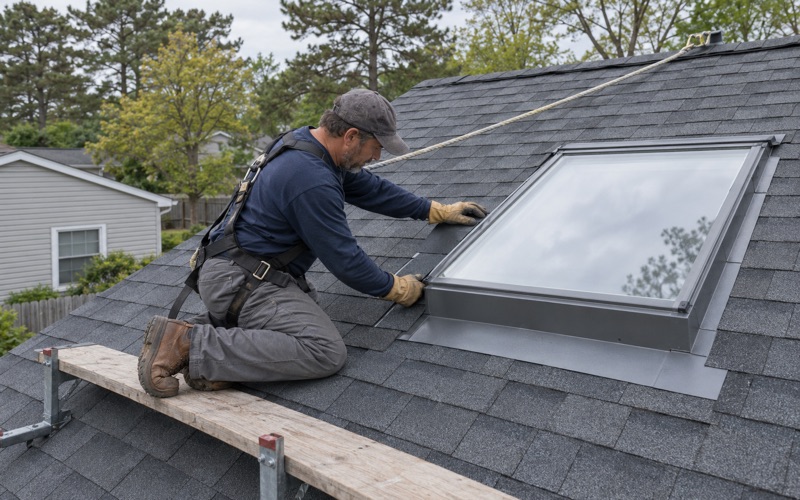
Toms River Elite Roofing has spent more than 20 years on roofing in Brick and the shore towns around our home base, and the work here asks the most of a roof after a heavy snowfall. Valleys, low roof sections and the last few feet above the gutters carry the weight and the meltwater, so those are the places we look first when a homeowner calls us about a stain or a drip.
Our approach starts inside the house. Every leak call includes a trip into the attic as well as onto the roof, because water that shows up on a bedroom ceiling rarely enters directly above it. Once we have traced the path to where it actually gets in, we tell you plainly whether a repair will hold before anyone mentions a new roof.
When replacement is the right call, the estimate breaks out tear-off, decking, underlayment, flashing, ventilation and gutters as separate lines. That way you can set our number beside another contractor’s and compare the parts rather than just the totals. Our contracts follow New Jersey’s home improvement rules, including the three-day cancellation notice.
Thirty Inches in Brick: The December 2010 Blizzard on the Record
What the National Weather Service Measured
The National Weather Service office in Mount Holly wrote up the December 26-27, 2010 storm in a winter storm summary, and Brick sits at the top of it. The summary says numerous New Jersey coastal locations received 20 inches or more, with the greatest snowfall measurement of 30 inches taken in Brick Township. For a township on the coast, that is a striking line to find in a federal weather record.
The spotter table attached to that summary lists Bricktown at 30.0 inches at 1:50 p.m. on December 27, and Herbertsville, a Brick locality, at 20.0. Spotter reports are labeled unofficial and the summary itself was marked preliminary, so we cite the 30 inches exactly as the National Weather Service gave it and do not lean on the larger totals that circulated afterward.
How the Storm Built Up Over Ocean County
Ocean County was under a Blizzard Warning issued at 3:52 a.m. on December 26, and the warning held into the morning of December 27. In the coastal bands, snow fell at 2 to 3 inches an hour. At that rate a roof gets no chance to shed one layer before the next one lands on top of it, and the snow packs as it accumulates.
Wind made it worse. The summary reports gusts over 50 mph across much of the forecast area, drifts of 8 to 9 feet in some locations, and portions of the Garden State Parkway shut down. Snow that arrives with that much wind does not settle evenly. It gets moved, and on a house it gets moved onto whatever roof sections sit downwind of a taller one.
Why One Storm Still Matters for a Roof Today
Nothing we have read reports roof collapses or roof damage in Brick from that storm, and we will not suggest otherwise. What the record does show is the upper end of what a Brick roof has been asked to carry in recent memory, measured by the agency that forecasts for the township, and that is a useful reference point for planning.
Structural snow capacity is set address by address, not town-wide, so we never quote a single number for the township. What we can do is look at how your roof is shaped, where snow would pile on it in a storm like that one, and whether the flashing, underlayment and ventilation at those spots are built to handle the meltwater that follows.
Looking for roofing closer to Berkeley? See Roofing in Berkeley.
Drifted Snow on Lower Roofs and Valleys
Where the Wind Puts the Snow
On a two-level house, a lower roof that sits against a taller wall collects snow blown off the upper roof, and that pile can end up far deeper than what fell in the yard. A dormer, a chimney or a parapet does the same thing on a smaller scale. The load is uneven, which is why we treat those spots differently from the open slopes of the roof.
Brick is largely a township of detached houses. Census estimates count 25,886 one-unit detached homes, about 77.8% of 33,277 housing units, and just over half of all units were built between 1950 and 1979. Houses of that age often carry later additions and porch roofs, and every junction between an older roofline and a newer one is a place where drifts can settle.
Valleys Take the Water as Well as the Weight
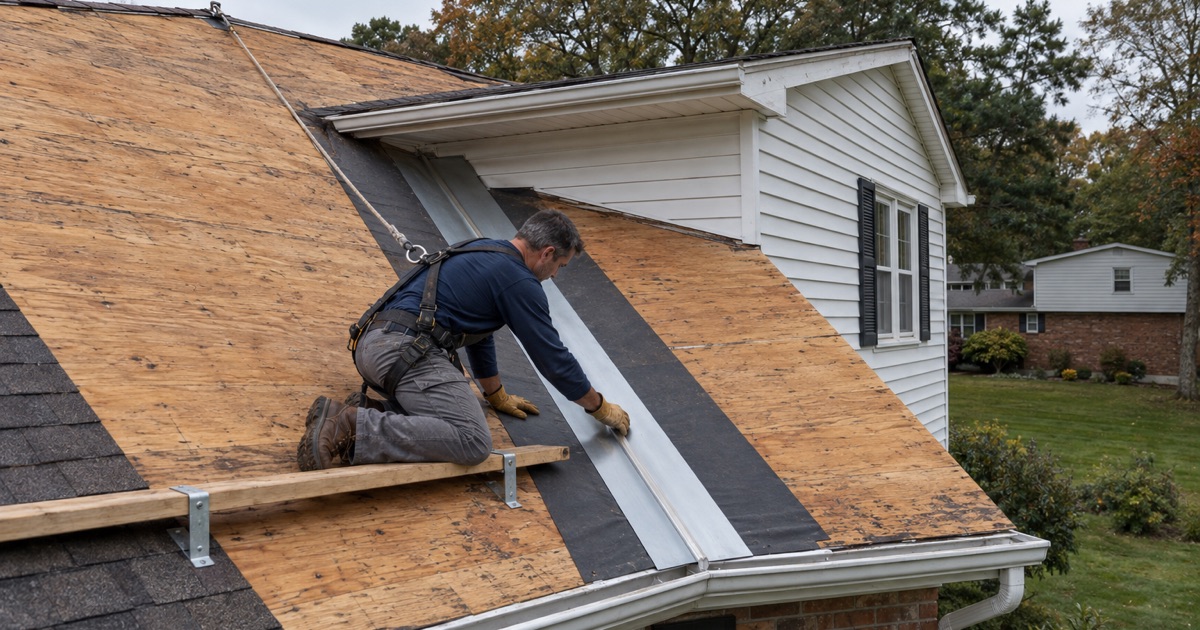
A valley is where two roof planes meet, and it collects both drifted snow and the meltwater running off each side. When that snow sits for days and thaws from the bottom, the valley carries more water than any other line on the roof. Worn shingles, cracked sealant or a gap in the valley lining tend to show up there first.
On a replacement we line valleys with a self-adhering ice and water barrier meeting ASTM D1970 before the shingles go down, and we choose between an open metal valley and a closed-cut shingle valley based on the pitch and the product. On a repair, we pull back enough shingle to see the lining itself rather than sealing over the surface and hoping.
Flashing Where the Drift Sits
A drift against a sidewall sits right on the step flashing and counter flashing, and the melt runs along that joint for days. That is why we replace step, counter and chimney flashing with the roof instead of bending the old pieces back under new shingles. Reused flashing has already spent years opening and closing with the seasons, and it rarely seats the same way twice.
Behind a chimney, snow banks up against the masonry and holds water there. A chimney cricket, or saddle, splits that flow and sends it around the stack, and the residential code calls for one behind chimneys wider than 30 inches. We check the chimney crown and cap at the same visit, since a cracked crown feeds water into the flashing from above.
Ice Dams and Ice-and-Water Underlayment in Ocean County
How a Big Snowfall Turns into Ice Dams
Ice dams form when heat from the house melts snow on the upper roof and the water refreezes at the colder eave. The ridge of ice grows, and water backs up behind it, under the shingle laps and onto the decking. A deep snowfall like the one Brick recorded in December 2010 gives that cycle plenty of fuel once the thaw begins and the nights stay cold.
The roof surface is only half of the story. Warm air leaking into the attic and weak ventilation are what drive the melt, so on every replacement we check intake at the soffits against exhaust at the ridge. A roof that cannot breathe ages from the underside, and in winter it also melts its own snow at the wrong time and in the wrong place.
What New Jersey Code Says and Does Not Say
New Jersey’s code ties the ice barrier to an average January temperature of 25 degrees or less, and in this state that trigger reaches only Sussex County. Ocean County is outside it, so ice-and-water underlayment at a Brick eave is not a code item. Anyone who tells you otherwise is describing a different part of the state.
Shingle manufacturers recommend the membrane at the eaves anyway, and their installation instructions are what a shingle warranty is written against. So at a Brick eave it is a recommendation and a judgment call rather than a rule. We talk it through with you instead of quietly adding it to the price or quietly leaving it out of the scope.
How We Weigh the Membrane at the Eaves
Our usual starting point is a run of self-adhering membrane at the eaves and in every valley, with ASTM D8257 synthetic underlayment over the rest of the deck. Low-slope sections, porch roofs tied into a wall, and eaves over a heated room with little attic space above them make the strongest case for the membrane, because that is where ice dams start soonest.
The written scope shows the membrane as its own line, so you can see what it adds and decide for yourself. If another estimate leaves it out or includes more of it, comparing the two underlayment lines side by side makes the difference plain. That is the reason we never bundle it into a single roofing figure.
Drip Edge and Gutters at the Edge
The eave is where an ice dam starts, so the small parts there carry real weight. Drip edge at the eaves and rakes keeps meltwater off the fascia, and the membrane has to lap over it in the right order. Closer to the bay, we choose drip edge, flashing and nails for salt air rather than pulling them from standard truck stock.
Gutters packed with ice add weight at the edge and hold water against the fascia. We look at seamless aluminum gutters and leaders, their hangers and their pitch during any eave work. Gutters stay their own line in the estimate, so a replacement or repair there is never folded silently into the roof price.
Checking a Brick Roof After a Heavy Snow
What to Watch for Inside and Out
Once the snow is gone, the signs are usually quiet: a stain at the top of an exterior wall, damp insulation near the eave, a drip line on the attic side of the decking, or shingles that look lifted along a valley. Thick icicles along one stretch of gutter while the next stays clear can point to a warm spot in the attic.
We do not recommend climbing onto a snow-covered or icy roof to clear it. A roof rake used from the ground on a single-story section is a different matter, but anything higher is work for a crew with fall protection. Call us when a stain appears, and we will look as soon as conditions on the roof are safe to work.
Our Inspection After the Thaw
We start in the attic, with a light on the underside of the decking, and follow any water trail back to where it enters. Then we go up to check the valleys, eaves, flashing and pipe boots against what we saw inside. You get a plain answer on whether the roof can be repaired before replacement comes up at all.
If the old roof comes off and the decking underneath has gone soft from repeated thaws, we photograph it and show you before any sheet is replaced. The contract sets the per-sheet price in advance, so a rotten board found on tear-off day never turns into a surprise on the invoice. At the end of each work day we clean the driveway, yard and gutters and run a magnet for nails.
Storm Damage and Paperwork
When winter or a storm leaves visible damage, we photograph it and write it up so you have a record for your own insurance claim. If you ask, our crew will meet the adjuster on site and walk the roof with them. The claim itself stays between you and your insurer, and so does every decision about coverage.
Replacing the roof covering on a detached one- or two-family house is ordinary maintenance under N.J.A.C. 5:23-2.7, and no permit is needed for that. Structural work, and roofs on attached rows and multi-unit buildings, go to the Brick Township Building Department, also known as the Division of Inspections, at 401 Chambers Bridge Road.
- 20+ Years on Shore Roofs
- Line-Item Written Scopes
- Attic and Roof Leak Tracing