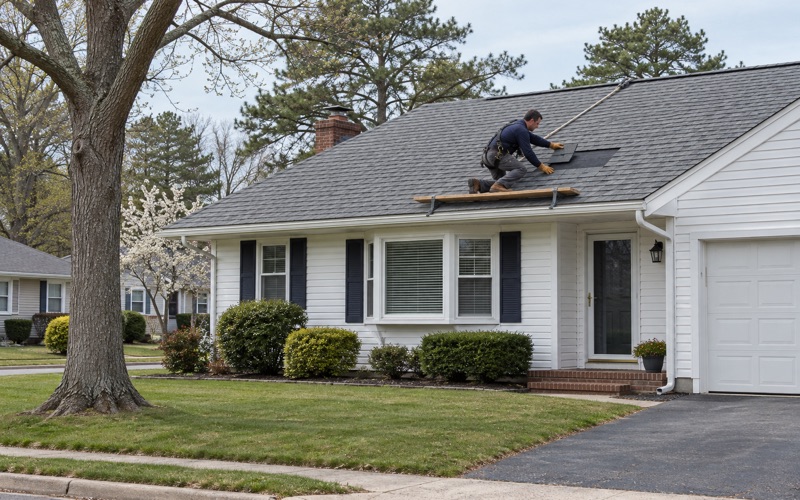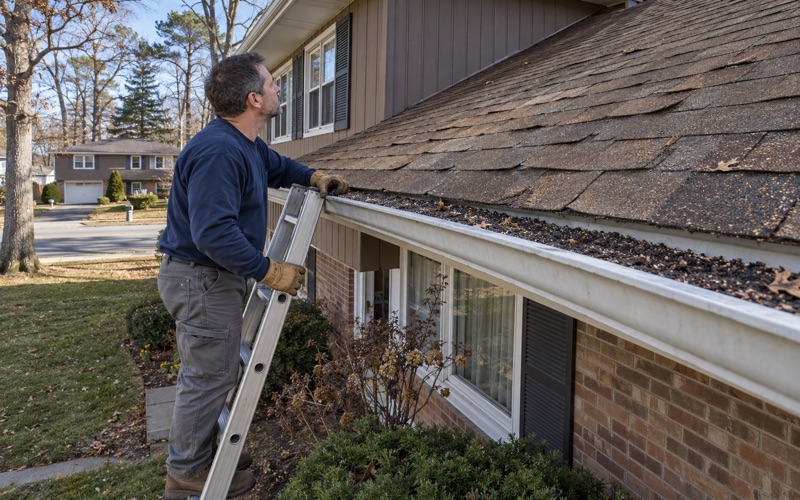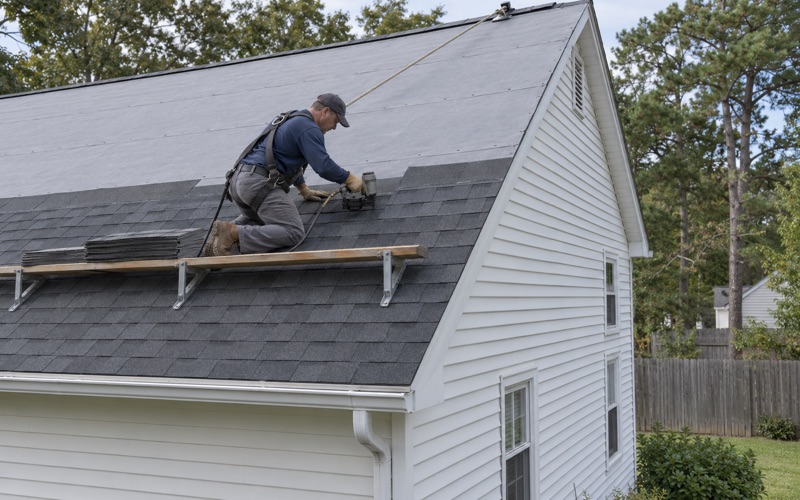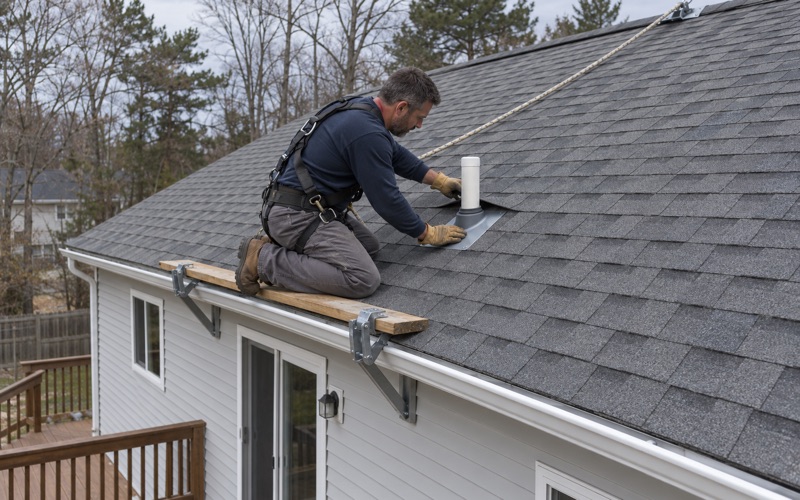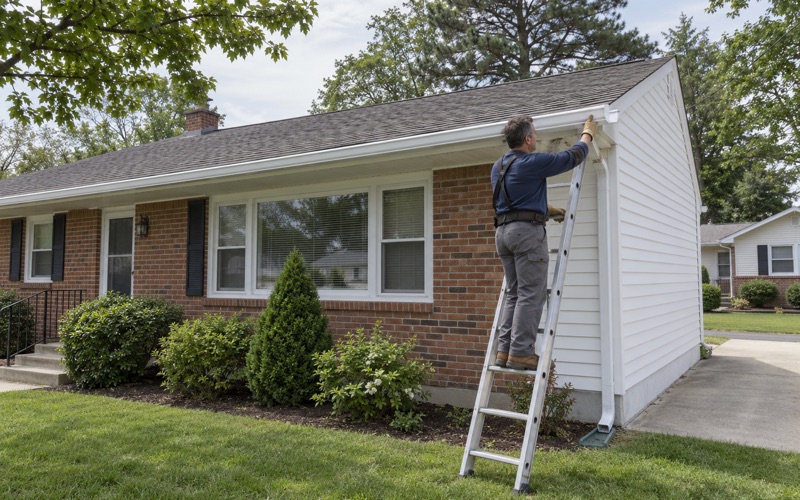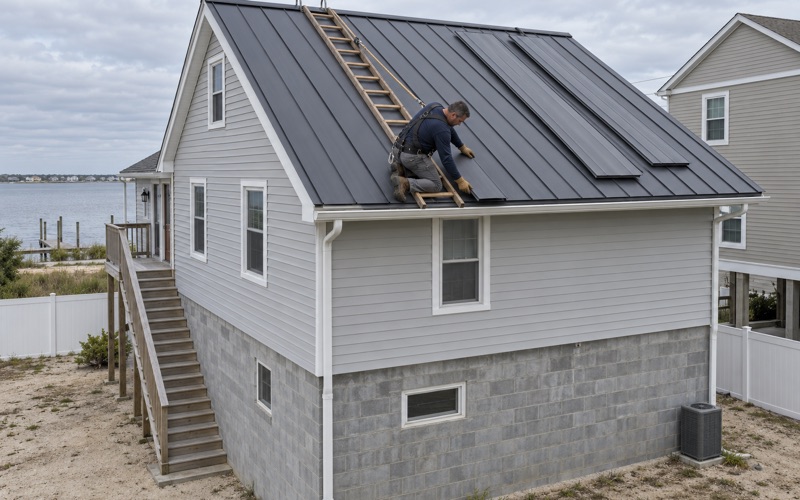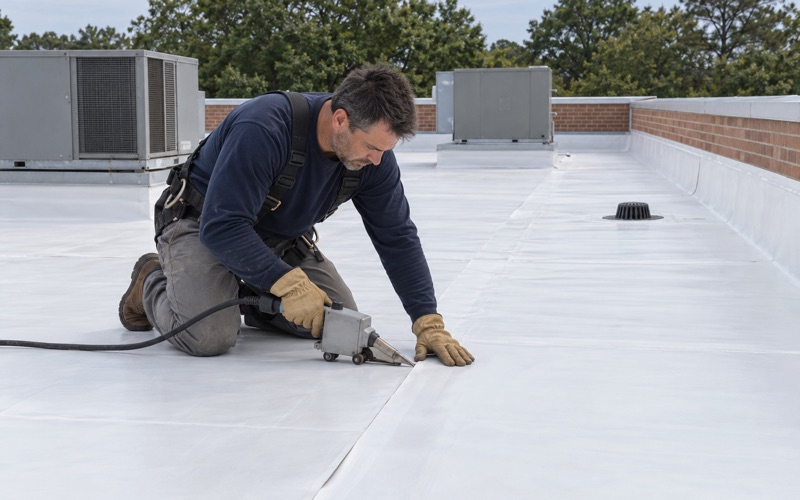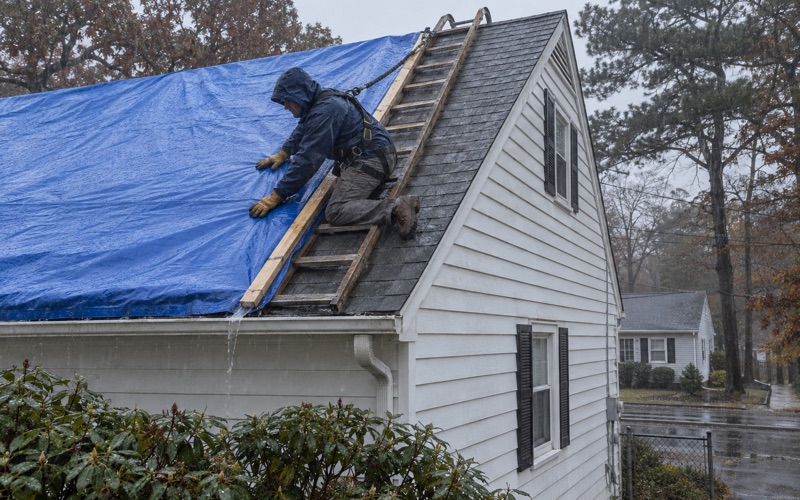
Toms River Elite Roofing has spent more than 20 years on roofing in Crestwood Village and across Ocean County, and here the first thing a roof job needs is not a ladder. It is a set of papers that has to reach the Trustees before any crew does. We plan every estimate in this community around that order, because work that starts ahead of approval leaves the member out of step with the co-op’s own rules.
The roofing itself starts the way it does everywhere we work. Every leak call includes a look in the attic as well as on the roof, so the water is traced to the point where it actually gets in before anything is priced. Then you get a straight answer on whether the roof can be repaired, and replacement only comes up if it truly cannot.
What changes in Crestwood Village is everything around the work: the letter of request, the insurance certificate, the window for a roll-off and the hours a crew may run. Below we walk through how we handle each one, so a member knows what happens before, during and after the job.
How Village One Handles Outside Contractors
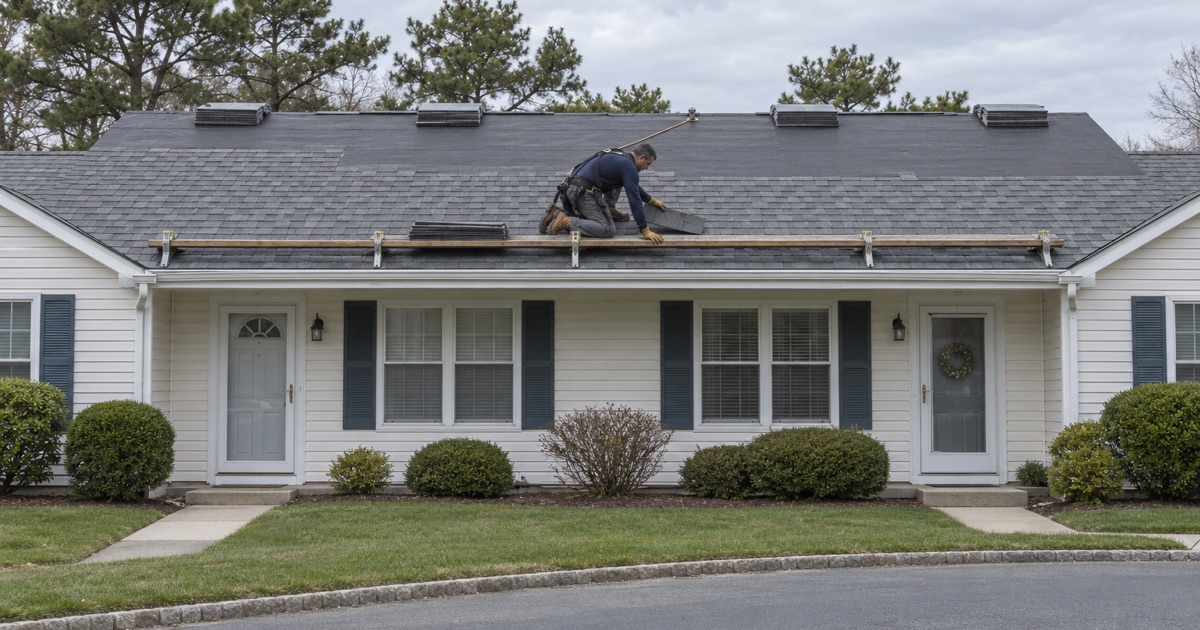
A letter of request comes first
Crestwood Village is a census-designated place in Manchester Township, Ocean County, and it holds several separately governed numbered villages. This page follows the rules of Village One, run by Crestwood Village Co-op, Inc.; the other villages keep their own boards. Rule 21a of Village One’s Rules and Regulations, as amended March 1, 2025, says that before starting any construction, repairs or changes, the member must submit a letter of request.
We help with that step by giving the member a written scope early, so the letter can describe the work in plain terms. Our scopes list tear-off, decking, underlayment, flashing, ventilation and gutters as separate lines. That same format lets a member set two estimates side by side and compare them item by item before choosing anyone.
Who holds the roof, checked before pricing
In Village One, title to the land, buildings and equipment sits in the co-operative’s name rather than the individual’s, and the co-op insures the buildings for their replacement value. The rules we read do not say who pays for a re-roof, so we never assume an answer in either direction.
Before we write a number, we check who holds the roof against the co-op’s documents and ask the member to confirm with the Trustees office at 732-350-1818. A price written before that question is settled can send a member down the wrong path, and asking first costs nothing but a phone call.
Keeping to the original intent of the model
Rule 21a also carries a line that matters to any roofing scope: no modifications are allowed which would change the original intent of the model. A re-roof here replaces what the building was designed to carry. It is not a chance to reshape a roof line or add features the model never had.
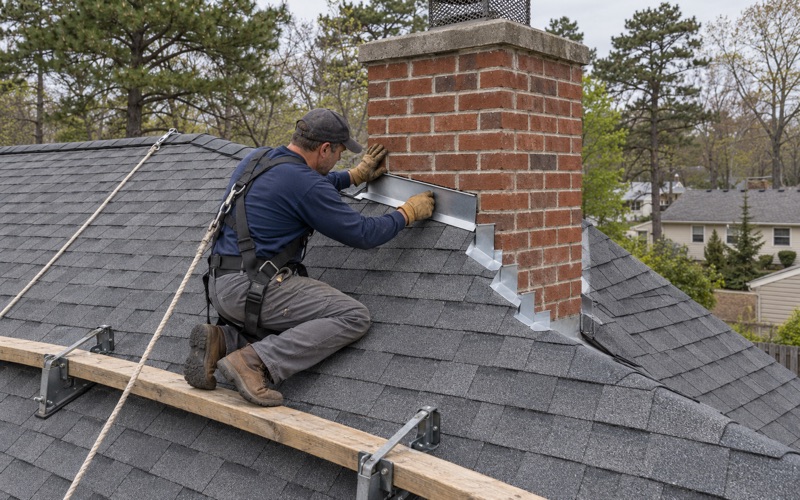
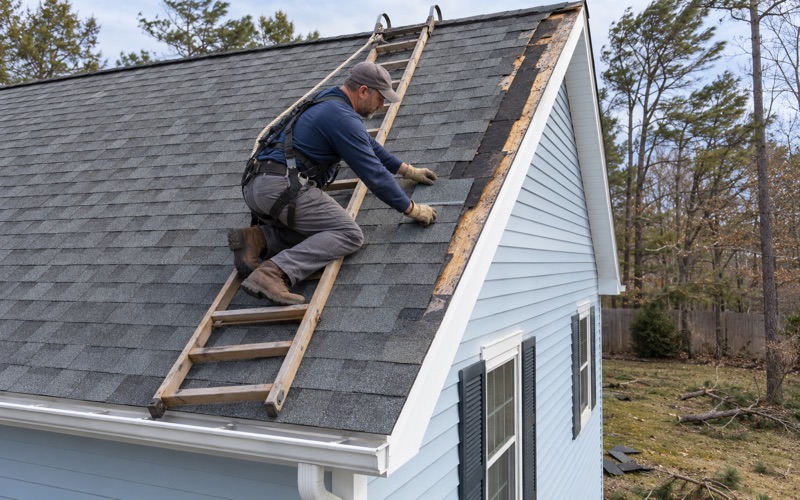
That suits how we already work. Step, counter and chimney flashing is replaced with the roof rather than reused under new material, and drip edge goes back at the eaves and rakes, while the profile a neighbor sees from the street stays as it was. If a member wants something out of the ordinary, we put it in the letter of request so the Trustees can weigh it.
Looking for roofing closer to Asbury Park? See Roofing Services in Asbury Park.
The Certificate of Insurance That Names the Co-op
Four coverages on one certificate
Under Rule 21a, the Trustees office must receive a certificate of insurance from all contractors for all work performed within the co-op. The rule lists what it has to show: general liability, auto insurance, workers compensation and employer’s liability. A certificate missing any one of those does not meet the rule as it is written.
For a roofing crew, each line has a reason. Workers compensation and employer’s liability cover the people working on the roof, auto covers the trucks and trailers parked along village streets, and general liability covers the building and the homes around it. We request the certificate for the specific job rather than handing over a generic copy from a file.
Naming Crestwood Village Co-op, Inc. as additional insured
The certificate must also show that Crestwood Village Co-op, Inc. is an additional insured. That wording matters because the co-op, not the member, holds title to the building, and it is the co-op’s property that sits under the crew while the old roof is off.
Members in Village One also carry their own HO-6 policy listing the co-op as additional insured, so the same name runs through the whole arrangement. We use the co-op’s exact legal name when the certificate is requested, so the Trustees office is not sent a document with a shortened or misspelled entry that has to be reissued.
What the Trustees’ approval does and does not mean
The rules are direct about this point. If approval is given, the association is not approving, guaranteeing or endorsing the contractor; the Trustees are strictly verifying that the contractor has met their insurance guidelines. A green light from the office is an insurance check and nothing more.
That leaves the judgment of the contractor with the member, which is where it belongs. We would rather be chosen on a written scope, a straight repair-or-replace answer and a contract written to New Jersey’s home improvement rules, including the three-day cancellation notice, than on a reading of the approval that it was never meant to carry.
Roll-Offs, Shored Driveways and the Work Week
Three days for the container
Rule 22 allows roll-offs, dumpsters or pods for 3 days after approval from the Board of Trustees. On a roofing job, that window shapes the whole schedule: the container arrives, the old shingles and underlayment come off into it, and it has to leave before the third day runs out.
We plan tear-off and haul-away around that limit rather than dropping a container and hoping. Material is staged so the debris side of the job finishes inside the window. If the scope is large, we talk through how the hauling will fit before the letter of request goes in, not after the container is already sitting on the driveway.
Shoring under the container
The same rule says driveways must be protected with shoring material, and any damage is the member’s responsibility. A loaded roll-off is heavy, and the weight carried on its rails across a residential driveway is exactly what the rule is written to manage.
Our crew lays protection under the container before it is set down and keeps it in place until the container is hauled away. At the end of each work day the driveway, yard and gutters are cleaned, including a magnet sweep for roofing nails, so a member is not left with loose fasteners where a car or a walker passes.
Monday through Saturday, 7:00 a.m. to 7:00 p.m.
Rule 25b permits construction only Monday through Saturday, from 7:00 a.m. to 7:00 p.m., with no Sunday work except in an emergency. A roof replacement that might run into Sunday somewhere else has to pause here and pick up again on Monday, with the deck dried in and watertight overnight.
We build our day count from those hours. Tear-off is sized to what can be dried in before the evening cutoff, and if weather costs us a day, the work moves to the next permitted morning. For true emergencies, Village One keeps its own 24-hour maintenance line at 732-350-2202, and the co-op notes that a service charge may apply outside regular business hours.
Rule 32: Wildlife, Roofs and Crawl Spaces
Why the co-op bans feeding wildlife
Rule 32 bans feeding wildlife because it attracts pests and vermin that, in the co-op’s own words, can do considerable damage to our roofs and crawl spaces, creating unnecessary expense. Fines run $50 for a first violation and up to $500 after that.
When a set of community rules names roofs and crawl spaces outright, it is worth listening. We treat the rule as a field note: where animals have been drawn close to a building, we look on purpose for openings at the eaves, around vents and along flashing, rather than waiting to stumble on them.
Looking in the attic, not just on the roof
Every leak call we take includes time in the attic as well as on the roof. A ceiling stain can trace back to a gap an animal opened rather than a failed shingle, and the attic side of the deck is where that difference shows up first.
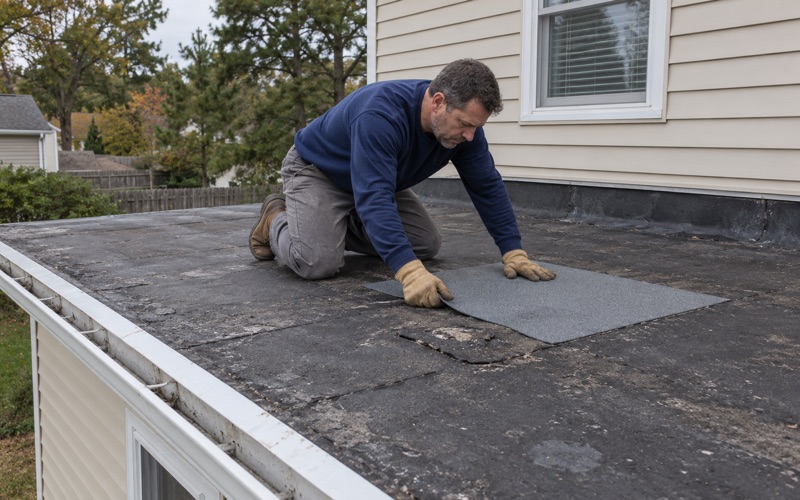
Finding where the water really enters is what lets us say plainly whether a roof can be repaired before replacement is ever on the table. A gap at a vent or a lifted run of flashing is usually a repair. Wear spread across the whole field of shingles is a different conversation, and we tell you which one we see.
Ventilation, decking and the underside of the roof
Attic ventilation is checked on every replacement, because a roof that cannot breathe ages from underneath. Where pests have packed soffit openings or a ridge vent with nesting material, airflow suffers, and a ridge vent only does its job with soffit intake that is open and screened.
Once the old roof is off, any damaged decking is photographed and shown to the member before it is replaced, at a per-sheet price set in the contract. In Crestwood Village, that photo record also gives the member a clear account of what was under the shingles to share with the Trustees office if it is asked for.
- 20+ Years on Shore Roofs
- Line-Item Written Scopes
- Attic and Roof Leak Tracing