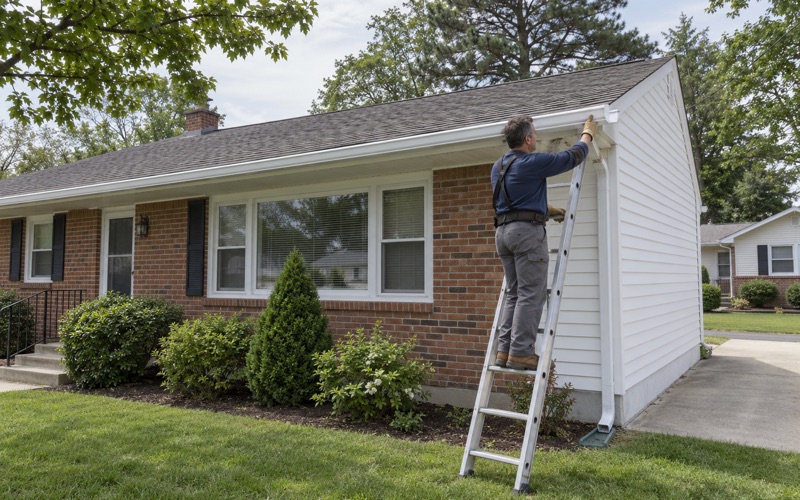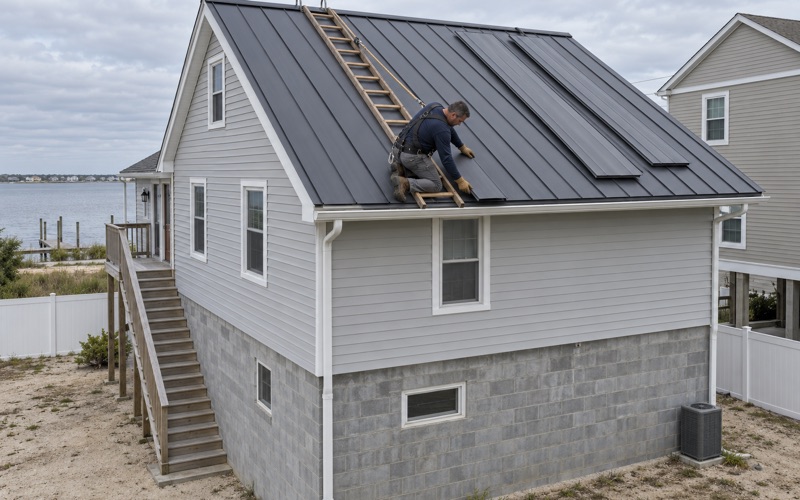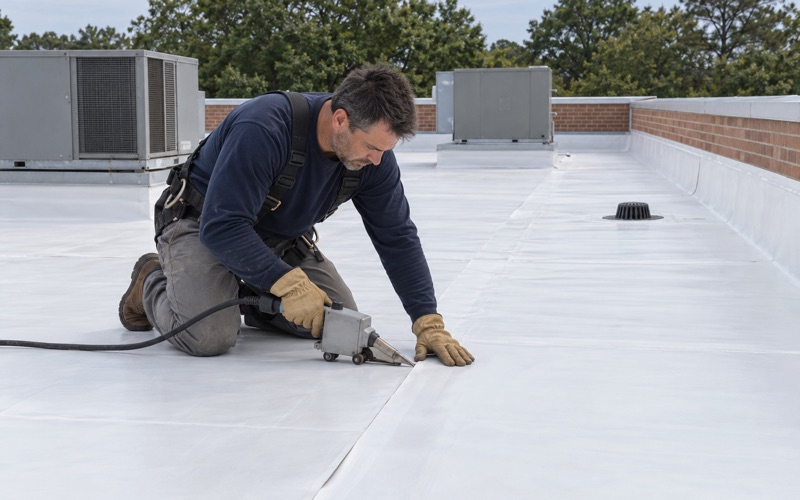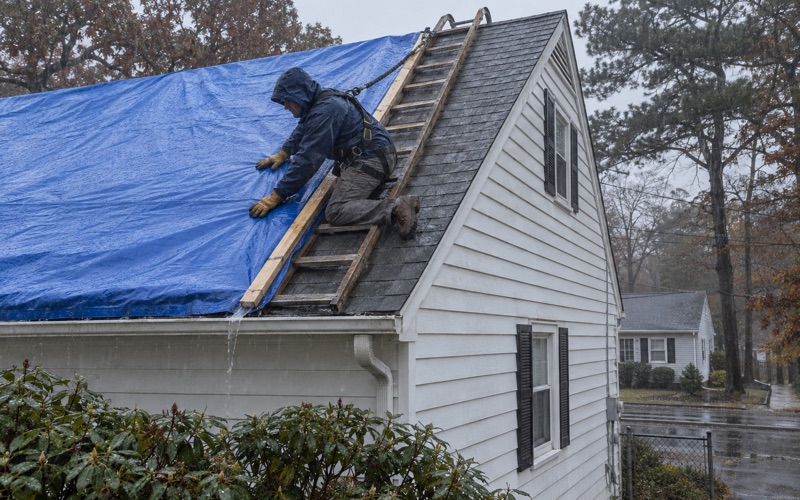
Toms River Elite Roofing brings more than 20 years of roofing in Eatontown and across Monmouth County to two very different kinds of client: the homeowner with one roof and the owner or property manager responsible for a row of apartment buildings. The work overlaps, but the obligations behind it do not, and we plan every job around which of those two situations we are standing in.
On a leak call we go into the attic as well as onto the roof, because water rarely shows up on a ceiling directly below where it entered. Tracing it to the real entry point comes first, and pricing comes after. If a repair will hold, we say so plainly before anyone talks about replacement, whether the roof covers one family or twenty.
Our estimates break the job into separate lines for tear-off, decking, underlayment, flashing, ventilation and gutters. That lets an owner set our number beside another contractor’s and compare them item by item instead of guessing what a single lump sum includes. For apartment owners, that same itemized scope becomes part of the building’s maintenance record.
Eatontown’s Garden Apartments by the Numbers
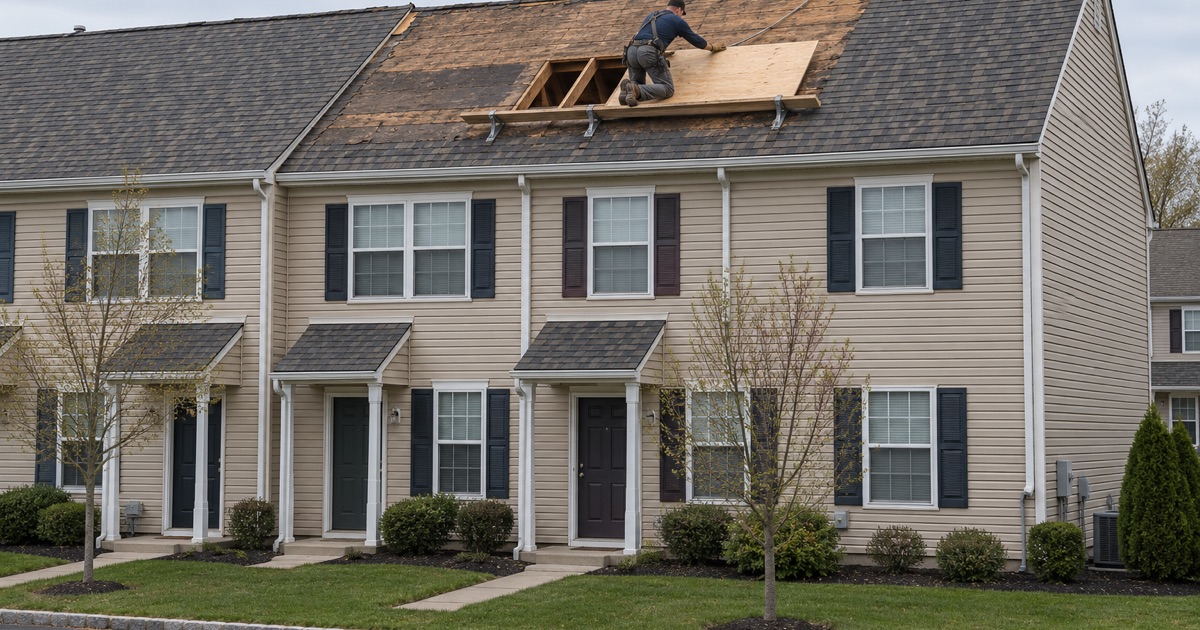
Eatontown is a garden-apartment town as much as a house town, and the census tables show it plainly. That shapes what roofing here actually involves, because a large share of the borough’s roofs sit over several households at once rather than one.
Where the units sit
The Census Bureau’s 2024 five-year American Community Survey counts 5,968 housing units in the borough. Of those, 2,342, or 39.2 percent, are in buildings with three or more units. The spread runs from small to large: 481 units in three- and four-unit buildings, 577 in buildings of five to nine, 718 in buildings of ten to nineteen, 157 in buildings of twenty to forty-nine, and 409 in buildings of fifty or more.
That distribution matters on the roof. A three-unit building usually carries a pitched roof much like a large house, while the bigger garden apartment blocks often mix pitched sections with low-slope areas over stairwells, breezeways and connecting wings. Each calls for different materials and different details at the edges and penetrations.
Who lives under those roofs
The same survey finds renters living in 1,924 of those 2,342 apartment-building units. In other words, most of the borough’s multi-unit housing is rental housing, and the person deciding on roof work is usually a landlord, an owner’s representative or a property manager rather than the household that hears the drip.
The largest complex named in a public record is Eatoncrest Apartment Homes, which a May 2024 borough filing lists at 412 units. We have not inspected its roofs and make no claim about their condition. It simply shows the scale involved: a complex that size is many buildings and many roof sections, each needing its own attention over time.
Why scale changes the job
On a complex, one roof problem is rarely isolated. The same flashing detail, vent type or valley layout is usually repeated building after building, so a failure found on one is worth checking on the rest. We note those patterns in writing so an owner can plan repairs across the property rather than answering one tenant complaint at a time.
Looking for roofing closer to Red Bank? See Roofing in Red Bank.
Multiple Dwellings and the State Rule That Names the Roof
New Jersey treats apartment buildings differently from houses, and the difference reaches the roof directly. Understanding where a building falls is the first thing we check, because it decides which rules apply to the owner long before a shingle is lifted.
Three units is the line
Under the state’s Hotel and Multiple Dwelling Law, a multiple dwelling is any building or group of buildings with three or more units of dwelling space intended to be occupied independently. That means every one of those apartment-building units in three-plus buildings sits in a multiple dwelling, from a modest triplex to the largest garden complex.
There is one carve-out worth knowing. Owner-occupied units in buildings of no more than four units are exempt from the state’s cyclical inspection. A landlord renting all three units of a triplex is in the program; an owner living in one unit of a small building may not be, and we suggest confirming status before assuming either way.
What N.J.A.C. 5:10-7.4 asks of a roof
The maintenance rule for hotels and multiple dwellings, N.J.A.C. 5:10-7.4, names the roof outright. It requires all exterior walls, roofs, windows, window frames, doors, door frames, skylights and foundations to be maintained so they keep out water, limit drafts and heat loss, and bar pests. A roof that lets water in is not just a nuisance on these buildings; it falls short of a written state standard.
The rule goes further than keeping rain out. It states that damaged or badly worn material shall be repaired or replaced, and that places showing signs of rot, leakage, deterioration or corrosion shall be treated or restored. Worn shingles, corroded flashing and soft decking all fall inside that language.
Reading a roof against that rule
When we assess an apartment building, we write findings in terms an owner can act on: where water is getting in, which materials are badly worn, and where rot or corrosion has started. Each item comes with a recommendation, repair or replacement, so the owner can decide what to fix now and what to schedule, with the reasoning on paper.
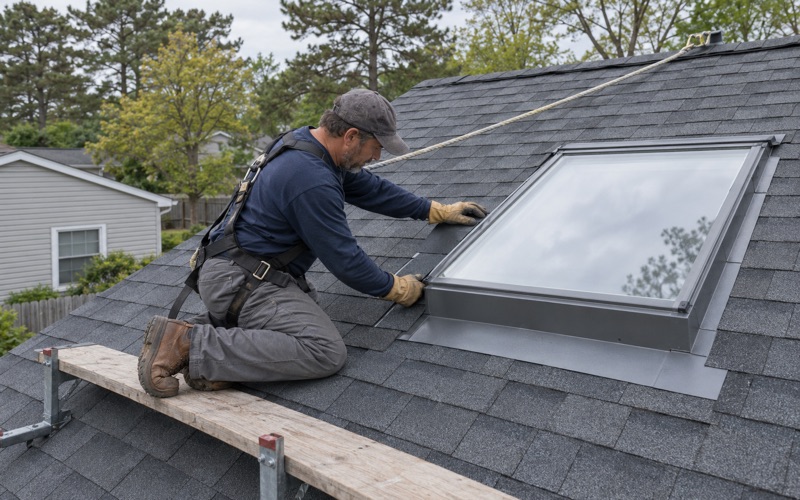
Skylights, which the rule names alongside roofs, get the same look. Their curbs and flashing are among the most common leak points on older apartment buildings, and resealing or reflashing a skylight is often the repair that keeps a top-floor unit dry without touching the rest of the roof.
Inspection Cycles and What Owners Keep Ready
Multiple dwellings in New Jersey are registered with the Department of Community Affairs’ Bureau of Housing Inspection and inspected on a recurring cycle. Owners recertify their registration every year. The cycle itself is set by how the building performed last time.
Seven, five or two years
Since a 2019 change to the law, buildings with no violations, or with every violation abated by the first reinspection, move to a seven-year cycle. Buildings that cleared violations by the second or third reinspection are inspected every five years, and those that did not abate by the third are inspected every two years. The Bureau tracks the due dates.
That structure rewards fixing things promptly. A roof leak written up and left open across reinspections can push a building onto a shorter cycle. A re-roof does not itself set off an inspection, but keeping the roof in repair between visits is part of how an owner stays on the longer schedule.
Records a property manager can hand over
Our written scopes and photographs are built to be kept. When we replace damaged decking, we photograph it and show it to the owner before it goes in, at a per-sheet price already set in the contract. Those photos, with the itemized scope, give a property manager a dated record of what was found and what was done.
The same goes for storm damage. We photograph and write up what a storm did so the owner can file their own claim, and we will meet the insurance adjuster on site when asked. The claim itself stays between the owner and their carrier.
Planning across buildings
For a complex with many roofs, we can walk every building and rank each section by condition. That turns a pile of separate repairs into a schedule an owner can budget for, with the worst roofs first and the newer ones on a watch list.
Re-Roofing an Occupied Apartment Building
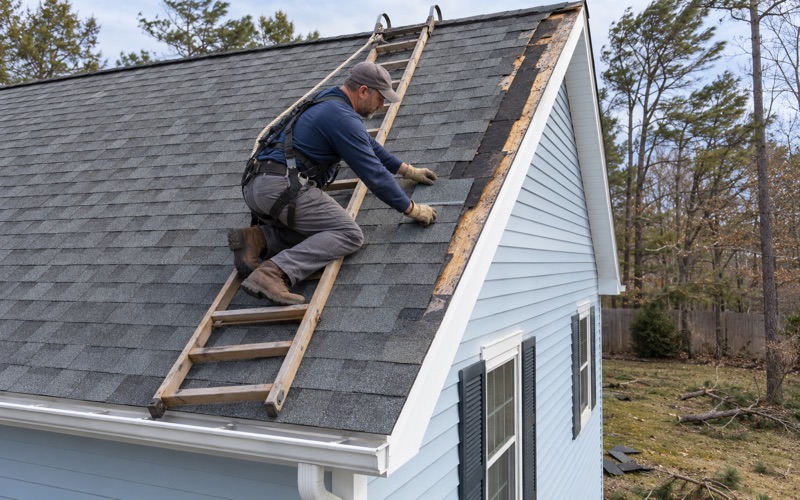
Replacing a roof over people who live in the building is a different job from re-roofing an empty house. Tenants stay home, cars stay parked, and the building has to be dry by the end of every working day.
Permit work, not homeowner maintenance
New Jersey treats replacing the roof covering on a detached one- or two-family house as ordinary maintenance. A multiple dwelling is outside that rule, so a full re-roof on an apartment building is permit work through the borough’s Construction Department at 47 Broad Street. We build the permit into the schedule from the start rather than treating it as an afterthought.
Working over tenants
We tear off only what can be dried in the same day, and we sequence buildings so a complex is never opened up all at once. Notice to residents, parking and walkways around the work area are planned with the property manager before the crew arrives, so tenants know which building is being worked on and when.
At the close of each work shift the crew cleans the grounds and gutters and runs a magnet sweep for nails. On an apartment property, with children, tenants’ cars and shared walkways right below the roof, that daily cleanup matters even more than it does at a single house.
Flashing and ventilation done with the roof
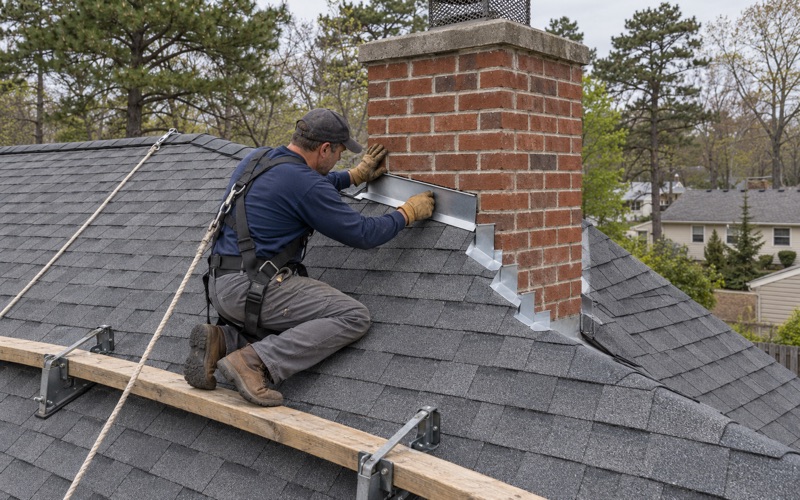
Step, counter and chimney flashing is replaced with the new roof, not reused under it. On long apartment roofs with many units below, we also check attic ventilation on every replacement, because a roof that cannot breathe ages from underneath and trades a new shingle problem for an old moisture one.
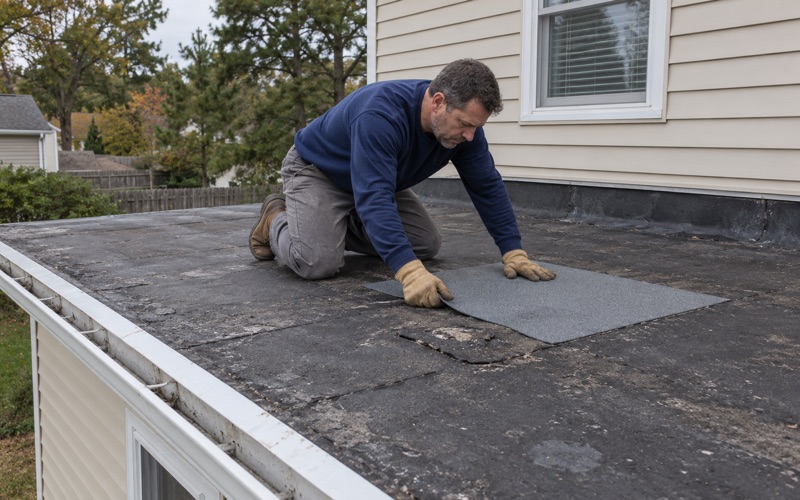
Where a building has low-slope sections, we price them as their own line, typically in EPDM, TPO or modified bitumen, separate from the pitched shingle areas. That keeps the scope readable and lets an owner see exactly what each part of the building costs to bring back into good repair.
- 20+ Years on Shore Roofs
- Line-Item Written Scopes
- Attic and Roof Leak Tracing