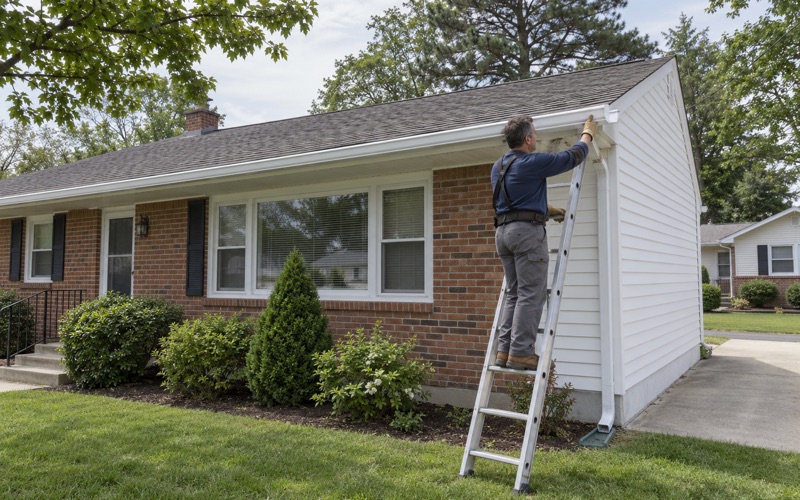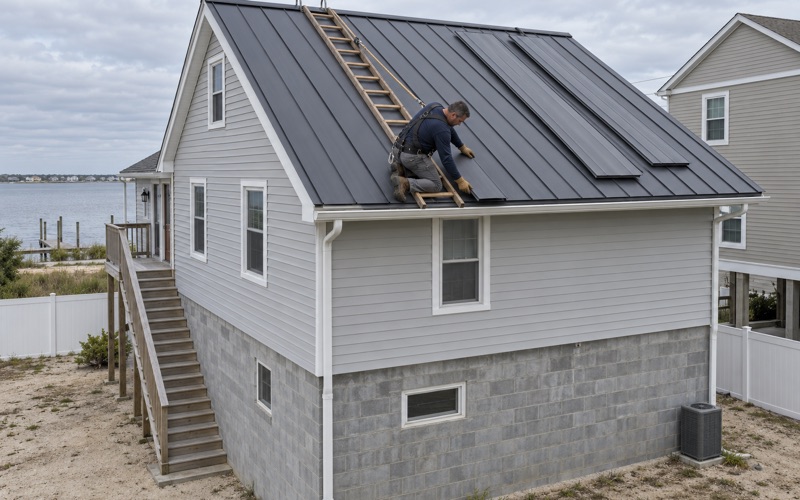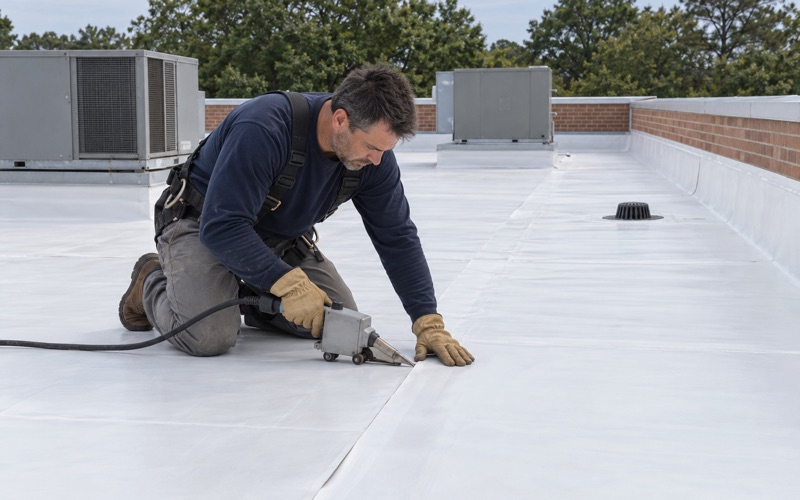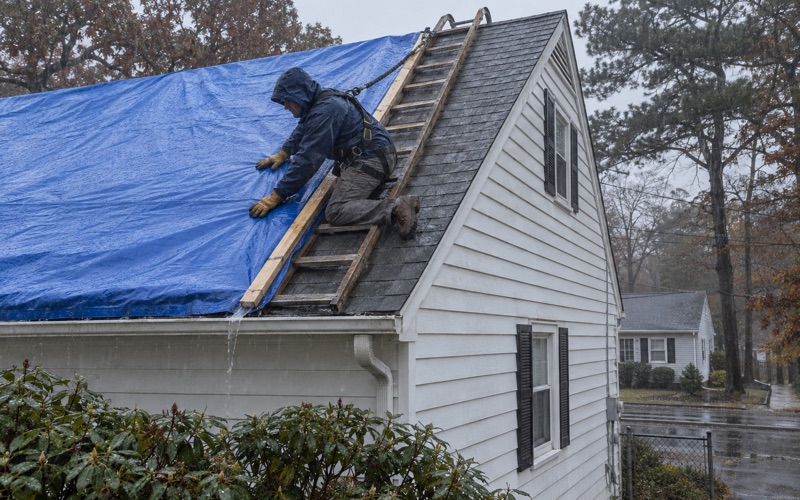
Toms River Elite Roofing approaches roofing in Holiday Heights with 20+ years in the trade and one habit that comes before any price: we find out what the roof actually needs. That means a straight answer on whether a repair will hold, given before replacement ever comes up, and a written explanation of what we saw so you can weigh it on your own time.
When a ceiling stain brings us out, we go into the attic as well as onto the roof. Water rarely enters where it shows up inside, so we follow it along the rafters and sheathing to the point where it actually gets through, and only then put a number on fixing it. A leak priced from the ground is a guess.
If the answer is a new roof, our written scope breaks tear-off, decking, underlayment, flashing, ventilation and gutters into separate lines. You can lay our estimate beside anyone else’s and compare item by item, and our contracts follow New Jersey’s home improvement rules, including the three-business-day cancellation notice.
Holiday Heights, Its Own Holiday City Community
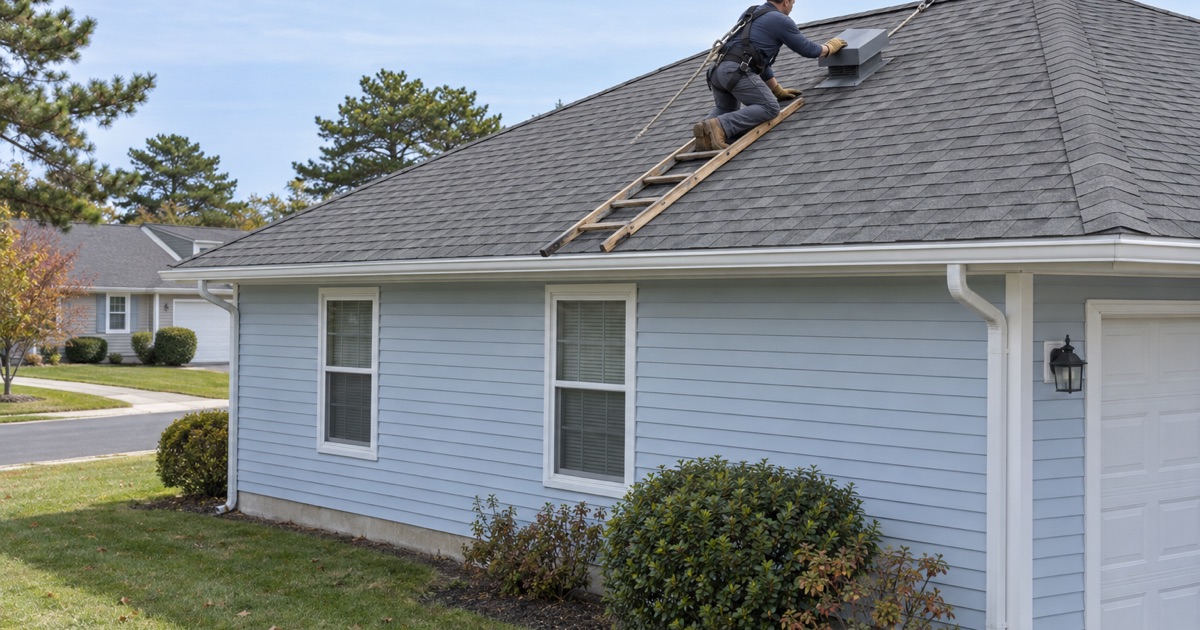
Holiday Heights is one of the five Holiday City communities, alongside Holiday City Berkeley, Carefree, West and South. Each has its own homeowners association, and that separation matters more to a roofing job than the shared name suggests. What one Holiday City association says about roofs tells you nothing certain about another.
A separate association with its own documents
Neighbors sometimes pass along what they heard from a friend in another Holiday City section, and it is easy to assume the same rules carry over. We do not make that assumption. Holiday Heights Homeowners Association keeps its own records, with an office listed on Prince Charles Drive, and its declaration and rules are the only documents that speak for homes here.
We have not been able to read those governing documents, so we will not tell you who holds roof responsibility in Holiday Heights or what the association expects before work starts. Anyone who quotes you a rule without having seen the paperwork is guessing, and a guess about a covenant can turn into a stalled job or a dispute after the shingles are on.
Checking association rules before an estimate
In adult communities we check who holds the roof against the association’s own documents before we write any estimate. In Holiday Heights that means asking you to confirm with the association office, or to share the rules you received at closing, so the scope we write matches what the association actually allows and requires.
This step costs a phone call and sometimes a few days, and it saves far more than that. An estimate written around the wrong assumption about responsibility, materials or approval has to be torn up and rewritten. We would rather start once, with the right document in hand, than restart after the crew is scheduled.
Looking for roofing closer to Leisure Village West? See Roofing in Leisure Village West.
Roofs on Houses Built From the Mid-1980s Through the 1990s
Holiday Heights grew quickly in a short window, and that compressed build era shapes what we find when we climb up. Most of the community went up within a decade or so, which means many roofs here share similar ages, similar materials and similar points of failure.
What the census says about the build era
The ACS 2024 five-year estimates date 649 of the community’s 1,351 homes to the 1990s and 415 to the 1980s, with none built after 1999. The census population tells the same story from another direction: 703 residents in 1990 and 2,389 in 2000. Holiday Heights was first counted as a census-designated place in 1990, partway through that growth.
Those numbers mean a large share of the roofs here started life within a few years of each other. If yours still carries original shingles, it is old by any standard. If it has already been replaced once, the question becomes how that replacement was done, whether the flashing was renewed, and whether new shingles went over old ones rather than onto bare decking.
Original shingles and second roofs
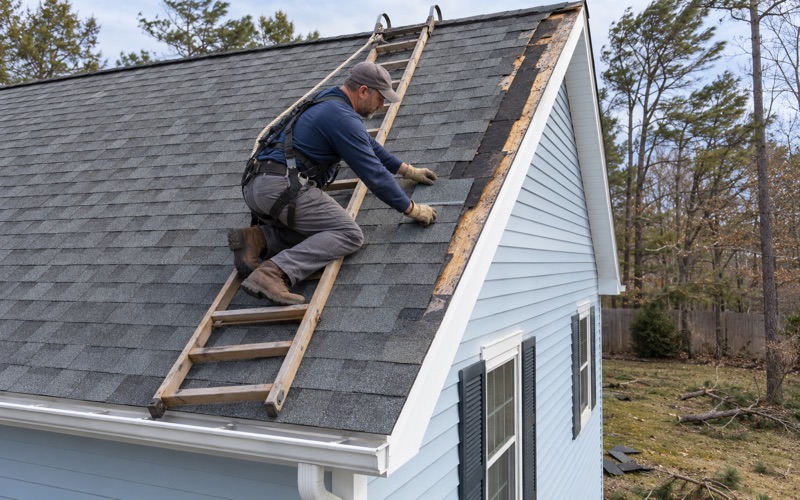
On a house of this age we look for signs of a layover, where a second roof was installed over the first. New Jersey’s rehabilitation subcode limits how many layers a roof can carry, so a house already wearing two layers needs a full tear-off. Knowing that before the estimate keeps the price honest and avoids surprises on the first morning.
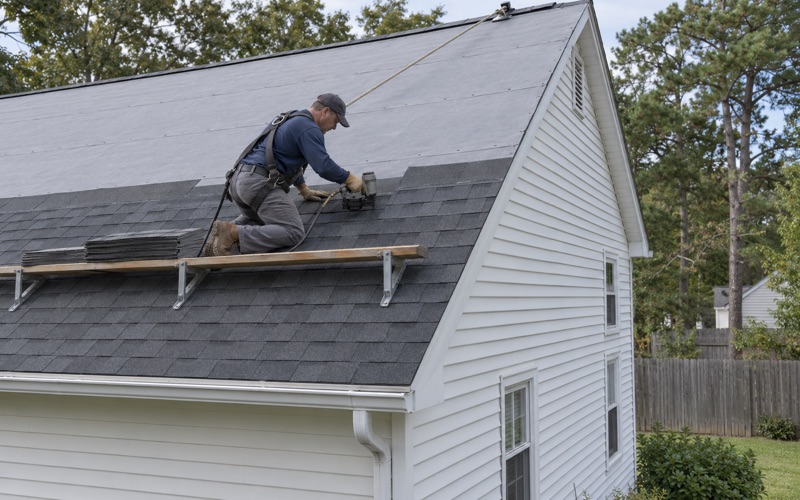
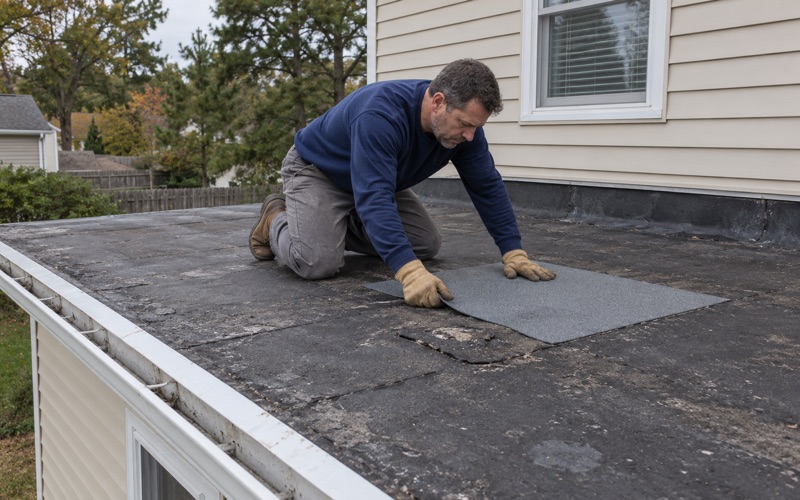
Once the old roof is off, we sometimes find soft or delaminated decking. When that happens we photograph it and show you before any sheet is replaced, at a per-sheet price already written into the contract. You see the damage yourself, and the cost of fixing it was agreed before anyone knew how much there would be.
Ranch rooflines and attached garages
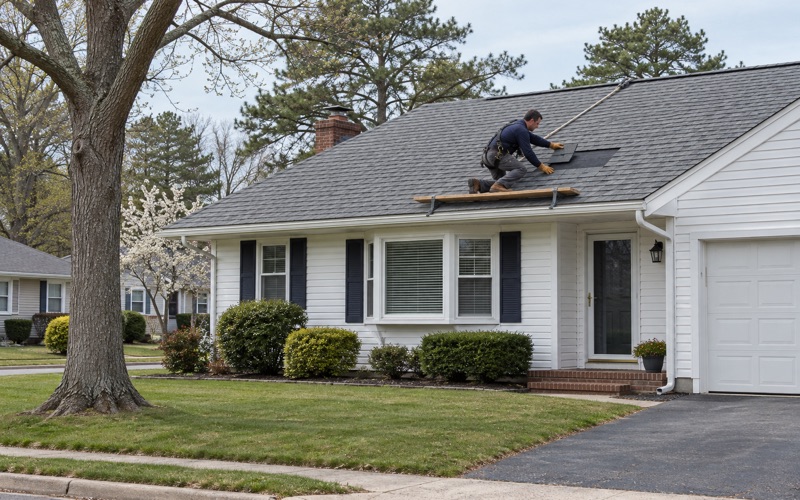
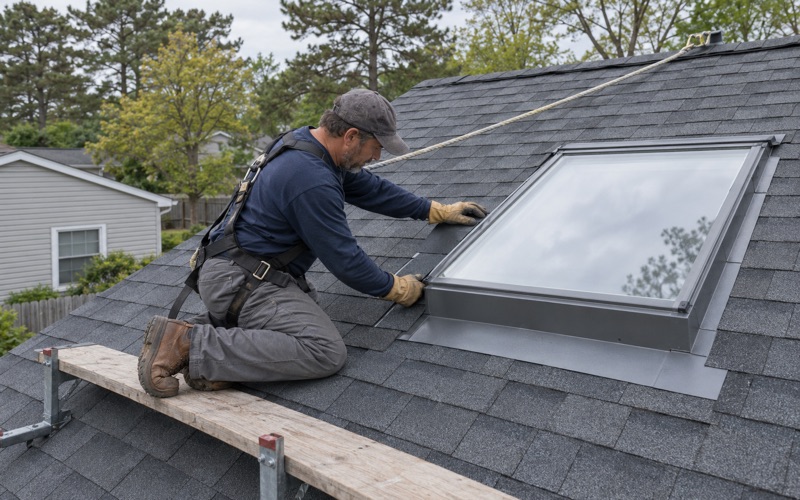
Holiday City homes are detached ranch houses, and many Holiday Heights models carry an attached one- or two-car garage. That long, low roofline is easy to walk and generally forgiving, but the joint where the garage roof meets the house wall is a common leak point, and so are the plumbing vents and any skylights cut through the field of shingles.
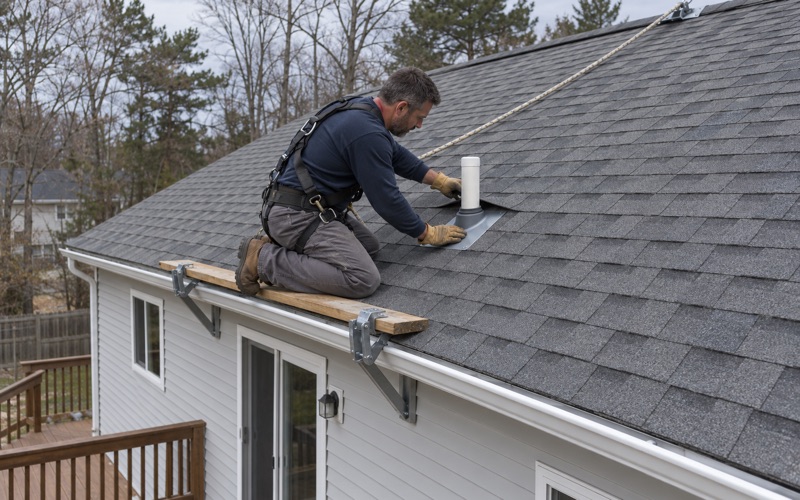
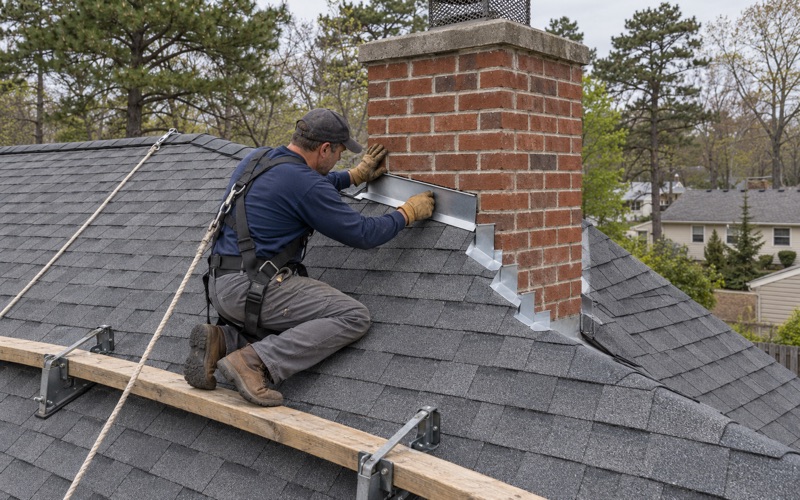
We replace step, counter and chimney flashing with the roof instead of reusing the old metal under new material. On a ranch house with a garage tie-in, that junction is where reused flashing usually gives out first, and a new roof sitting on tired flashing is a new roof that leaks along an old seam.
Detached, Owner-Occupied and Lived In Year-Round
Holiday Heights is not a summer colony. The ACS counts every one of its 1,258 owner-occupied homes as a detached house and records no seasonal units at all. Owners live here through every season, which changes both how leaks get noticed and how a roofing crew has to work around the household.
One owner, one roof
Because each house stands on its own, a roof decision belongs to the household that lives under it rather than being bundled into a building-wide project. That gives you control over timing and materials within whatever the association permits, and it means our attention stays on your house rather than on a row of attached units.
We check attic ventilation on every replacement, because a roof that cannot breathe ages from underneath. In a ranch house heated and cooled all year, a balanced ridge vent with soffit intake keeps moisture from condensing on the sheathing in winter and keeps attic heat from cooking the shingles in summer.
Working around a lived-in house
A year-round household means people, cars and daily routines stay in place while we work. We plan the tear-off so the house is dried in by the end of each day, and we watch the forecast for Ocean County before opening a roof rather than hoping a front holds off.
At the end of every work day we clean the driveway, the yard and the gutters, including a magnet sweep for roofing nails. In a community where residents walk the streets and pull into their garages daily, a stray nail in a tire or a shoe is not a small thing, and we treat the cleanup as part of the job rather than an extra.
Selling a Holiday Heights Home in Berkeley Township
Mailing addresses here read Toms River, but Holiday Heights sits inside Berkeley Township, and it is the township that handles the paperwork when a house changes hands. For a seller, the roof is one of the items that can hold up a closing if it is not in order.
The Certificate of Occupancy checklist
Berkeley Township requires a Certificate of Occupancy on every sale and every tenant change. Its checklist asks for the roof, walls, windows and exterior doors to be free from holes and leaks, and for gutters and downspouts to be in good repair. Transfers in age-restricted communities also need an original approval letter from the homeowners association.
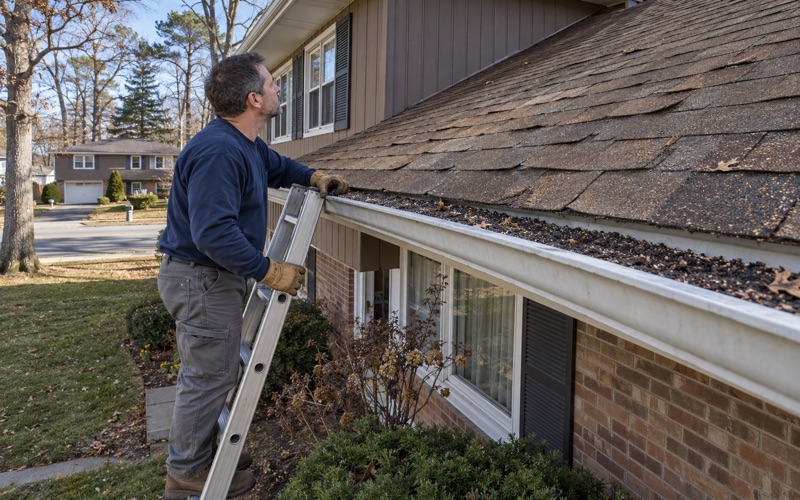
A roof that drips during the inspection, or a gutter hanging loose at a corner, can push a closing date back. We would much rather find those problems weeks before the inspector does, while there is still time to fix them properly instead of patching them the night before.
A written roof report for the buyer’s inspector
When a home is going on the market, we provide a written roof condition report that the seller can hand to the buyer’s inspector. It describes the covering, the flashing, the ventilation and the gutters as we found them, with photographs, so the conversation at the inspection starts from a documented record rather than a guess.
If the report turns up a repair, it says so plainly, and it also says when a repair is enough. Sellers are sometimes told they need a whole new roof to close, and sometimes that is true. Often it is not, and a straight answer can keep money in the sale that a reflexive replacement would have spent.
Permits, storms and insurance
Under New Jersey’s code, re-roofing a detached one- or two-family house is ordinary maintenance that does not need a permit, so the timeline depends on materials, weather and association approval rather than on a permit office. Structural repairs to rafters or sheathing are a separate question, and we will tell you if one comes up.
If a storm damages your roof, we photograph the damage and write it up for your own claim, and we will meet your insurance adjuster on site when you ask us to. The claim stays yours to file and settle, and our job is to give you an accurate record of what happened to the roof.
- 20+ Years on Shore Roofs
- Line-Item Written Scopes
- Attic and Roof Leak Tracing