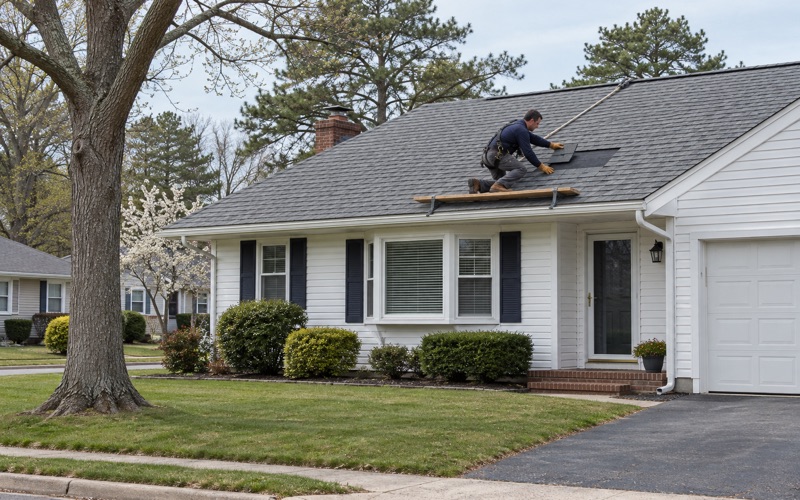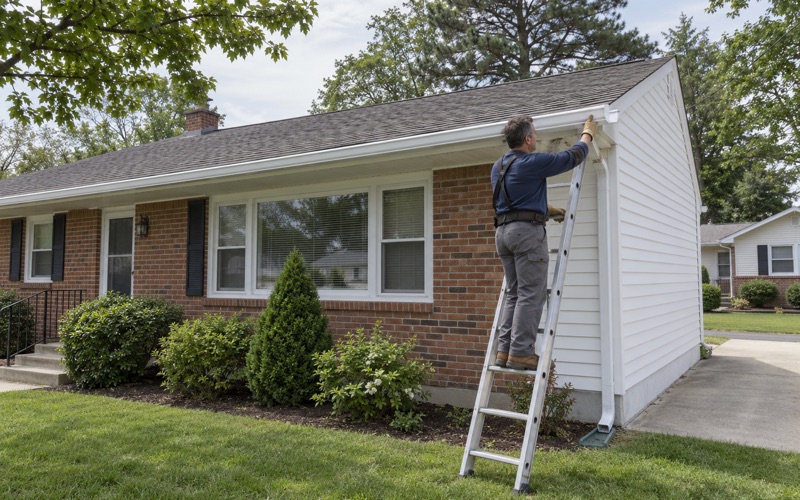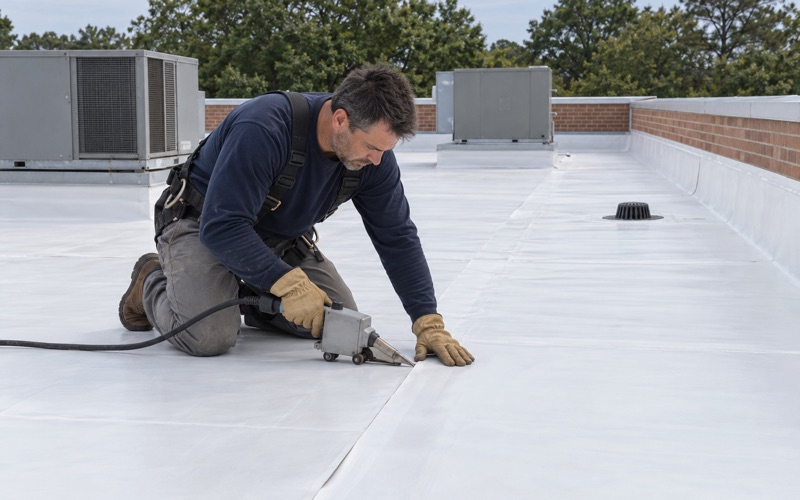
Toms River Elite Roofing has spent more than 20 years on roofing in Lacey and across Ocean County, and here the question at replacement time is rarely just what will last longest. It is also what will hold up when embers are in the air. We repair what can be repaired, replace what cannot, and tell you which is which before a price is written.
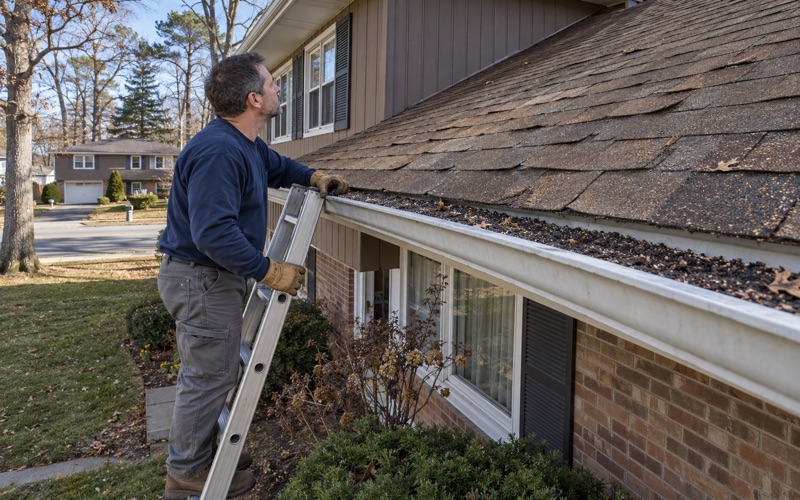
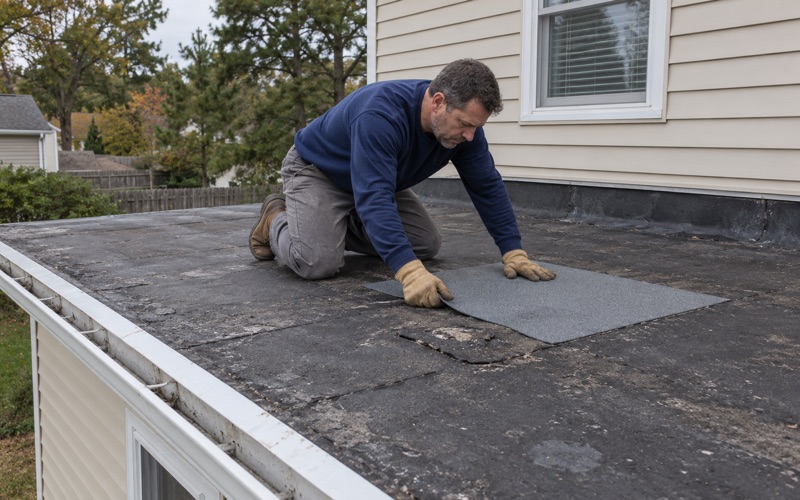
Every leak call starts with a look in the attic as well as on the roof, because water seldom shows up inside where it actually gets in. Once the path is traced, you get a plain answer on whether a repair will do the job. Replacement only enters the conversation when the roof is genuinely past saving.
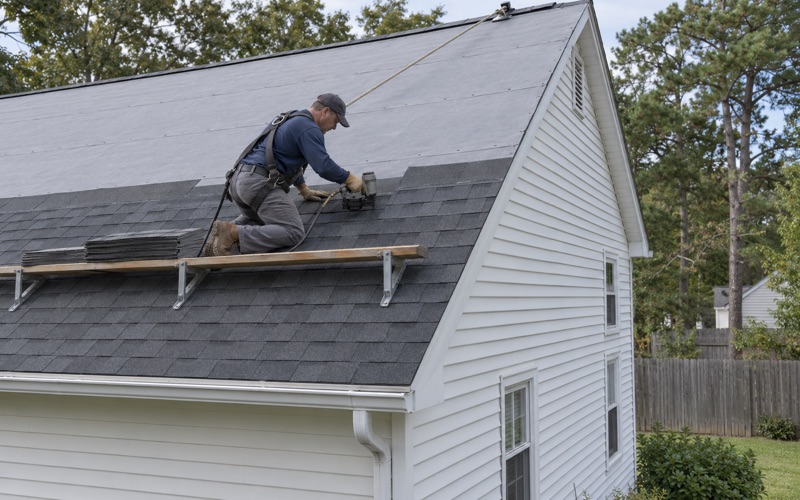
When it is, our written scope breaks the work into tear-off, decking, underlayment, flashing, ventilation and gutters as separate lines. That lets you set our estimate beside anyone else’s and compare them item by item, including the covering itself, which in this township carries more weight than color or style alone.
What the Jones Road Wildfire Showed Lacey Homeowners
April 2025, West of the Parkway
The Jones Road Wildfire started on April 22, 2025 and burned through the forest in Ocean and Lacey townships. Minutes from the state Fire Safety Commission’s May 22, 2025 meeting record more than 15,300 acres burned, 3,000 residents evacuated and more than 1,320 structures threatened. The Garden State Parkway and US Highway 9 were among the roads closed at some point.
Acreage figures differ by source. NJDEP’s first annual wildfire report later put the fire at 14,949 acres and called it the second-largest in New Jersey in 20 years, so we quote each number with the agency that published it. The same report says the New Jersey Forest Fire Service needed 20 days to contain it.
What the Township Came Through
Lacey’s mayor, Peter Curatolo, called it the worst fire in the history of the township. By his account, the only major damage in Lacey was a warehouse owned by a family business. Residents of the Pheasant Run senior community were sheltered at the Charles A. Smith Community Center before being moved to Manchester Township High School.
The mayor’s account names no destroyed house in the township. What the fire left behind instead is a clearer picture of exposure: a forest that can burn hard, highways that can close, and thousands of roofs sitting downwind of the woods. That is the lens we bring to a roof here, whether the job is a single repair or a full tear-off.
Looking for roofing closer to Point Pleasant? See Roofing Services in Point Pleasant.
Homes East of the Parkway, Forest to the West
A Township Split by One Highway
About two-thirds of Lacey’s land lies west of the Garden State Parkway, under New Jersey Pinelands Commission controls set by the 1979 Pinelands Act. More than 95% of the township’s homes sit east of it. The Parkway works as the informal line between neighborhoods and woods, and the Jones Road fire closed that line itself.
Most houses in Forked River and Lanoka Harbor are not inside the forest, then, but they are close to it. For a roof, that means the covering, the edges and every opening deserve a look with wind-carried embers in mind, not only rain and wind-driven water. It changes which questions we ask before we recommend anything.
The Houses Themselves
Lacey is overwhelmingly detached and owner-occupied. Census estimates count 12,145 of 12,711 housing units as detached, and 61.0% of the stock was built between 1960 and 1989. Many of those roofs are on their second or third covering by now, which makes the next replacement a real decision point rather than a routine swap of like for like.
Owners making that choice usually live in the house and plan to stay. A covering picked for fire resistance pays off over decades, and the decision comes around once per roof. We walk through the options with the actual house in front of us: its pitch, its attic, its chimney and the trees standing around it.
Reading Your Own Roof Against That Risk
A useful first question is simply what the house is wearing now. A worn three-tab shingle, a patched section over an old addition and a shake-covered porch roof each call for different answers, and a single home can carry all three. We note every covering on the house, not just the main slopes, before suggesting what should replace it.
The second question is what sits overhead and around the roof. Dead limbs over the house are something the Pinelands Commission advises removing, and a tall pine leaning toward the ridge changes how we think about valleys, chimneys and skylights. We point these out on the walkaround so that you can decide on tree work separately from the roof itself.
Roof Coverings the Pinelands Commission Recommends, and the One It Warns Against
Class-A Materials on the List
The Pinelands Commission’s fact sheet ‘Protecting Your Home from Wildfire’ tells residents to consider Class-A asphalt shingles, slate or clay tile, metal, or terra-cotta tiles for roof construction. It adds that fire-resistant sub-roofs can provide added protection. This is guidance rather than a code requirement, and we have found no township ordinance that mandates a Class A covering.
Class A is the top fire rating under ASTM E108 / UL 790, and widely used architectural shingles such as GAF Timberline HDZ, Owens Corning Duration and CertainTeed Landmark carry it. For most Lacey homeowners, the covering the Commission recommends is also the familiar one, so following the guidance rarely means choosing something unusual for the street.
Why Cedar Shake Is the Exception
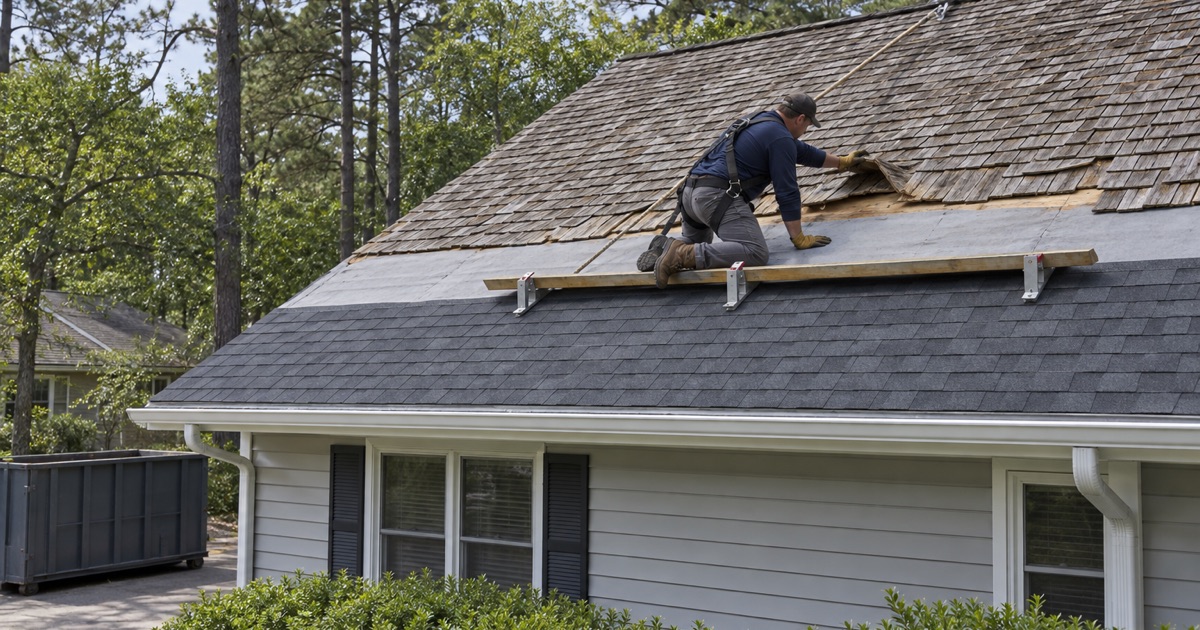
The same fact sheet is blunt about one material: do not use cedar shake shingles. Wood shakes are fuel in their own right, and their gaps can catch and hold embers. If your house still has a shake roof, or a shake section over a porch or addition, replacement is the natural point to move to one of the listed materials.
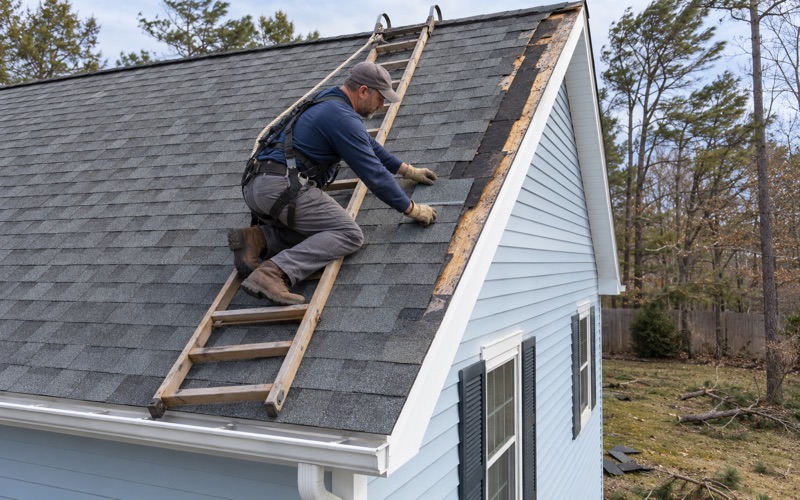
Removing an old shake roof is also a code matter. New Jersey’s rehabilitation subcode re-roofing rule under N.J.A.C. 5:23-6 does not allow new roofing to be laid over wood shake, so we price a full tear-off rather than assume a layover. Damaged decking found underneath is photographed and shown to you before it is replaced, at the per-sheet price already set in the contract.
Metal, Slate and What Goes Beneath
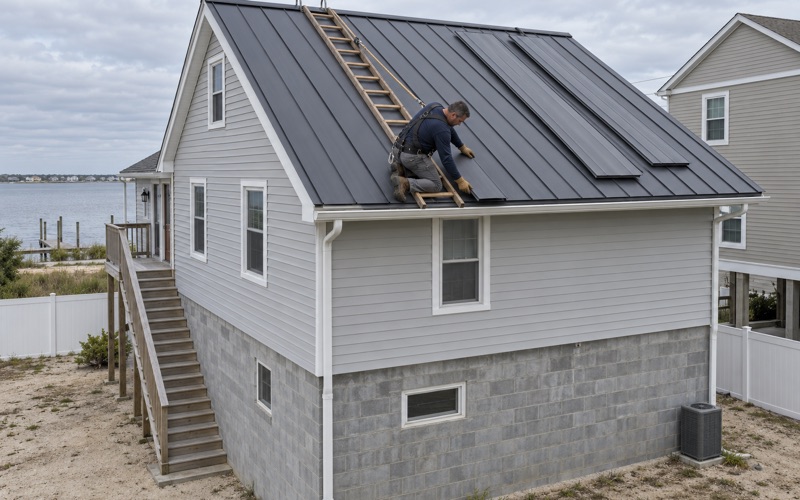
Standing seam metal is the listed option many owners ask about next. It sheds needles and debris easily and can be installed as a Class A assembly. Slate and clay tile are on the list too, though their weight usually means checking the framing first on a house built in the 1970s or 1980s.
Beneath any covering, we install ASTM D1970 self-adhering ice and water barrier at eaves and valleys and synthetic underlayment over the rest of the deck. That layer is the sub-roof the fact sheet refers to in practice, and on our scope it gets its own line so you can see exactly what sits between the covering and the plywood.
Spark Arresters, Penetrations and the Replacement Decision
Chimney Spark Arresters
Embers can leave a chimney as easily as they can land on a roof. The Pinelands Commission recommends a spark arrester made of non-corrosive material, with mesh openings no larger than one inch and no smaller than 3/8 of an inch. It also advises having the chimney inspected at least twice a year and cleaned at least once.
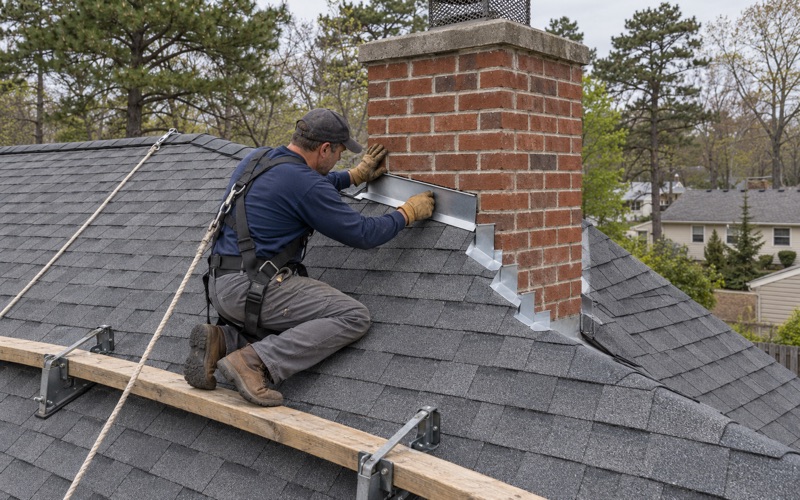
When we replace a roof, step, counter and chimney flashing is replaced with it rather than reused under new material, and the chimney cap and crown get a close look while we are up there. If the cap has no spark arrester, or its mesh falls outside that range, we write it into the scope as a separate line.
Vents, Boots and Other Openings
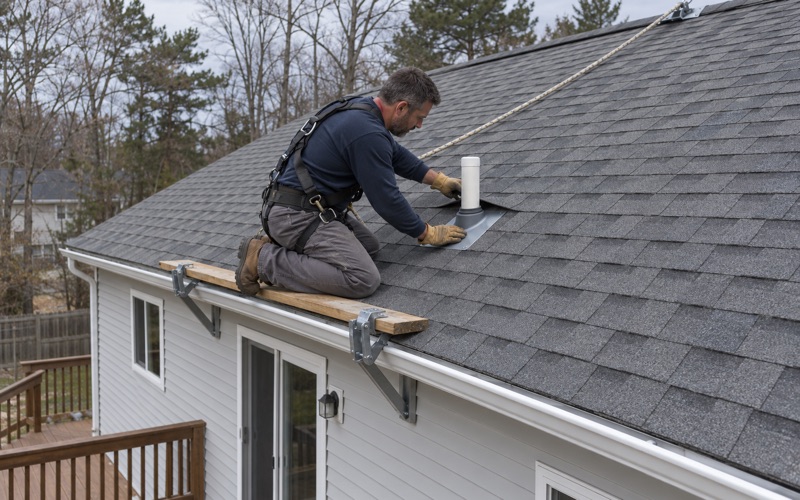
Every replacement includes a check of attic ventilation, because a roof that cannot breathe ages from underneath. We look at each ridge vent, box vent and pipe boot both as an airflow point and as a gap in the roof surface, and we replace worn pipe boots rather than sealing around them and hoping.
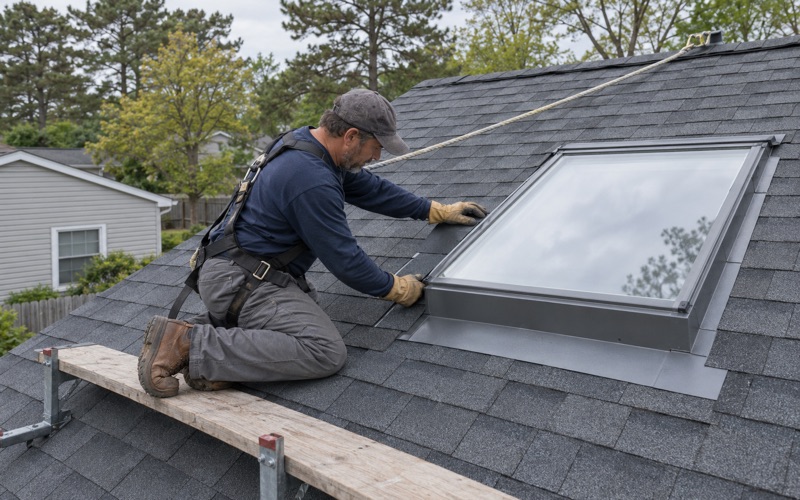
Skylights deserve the same attention. An older curb-mounted or deck-mounted skylight that has already outlived one roof often has cracked seals or a brittle frame, and replacing the roof around it while leaving it in place usually means opening the new covering again later. We flag older units on the scope so you can decide on them while the roof is open.
Permits, Contracts and Paperwork
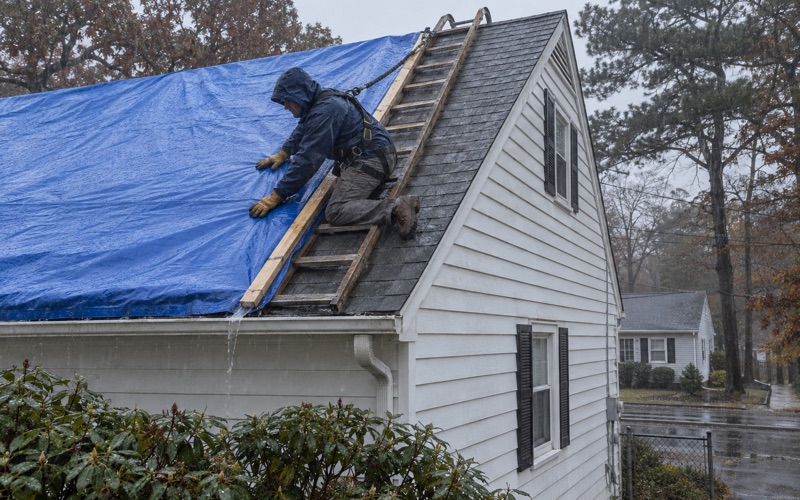
Our contracts are written to New Jersey’s home improvement rules, including the three-day cancellation notice. If a storm has already damaged the roof, we photograph and write up the damage for your own claim, and we will meet the insurance adjuster on site when you ask. At the end of each work day the driveway, yard and gutters are cleaned, with a magnet sweep for nails.
Lacey Township’s Building Department lists roofing and siding among the work it says needs a permit, while state rules under N.J.A.C. 5:23-2.7 treat a re-roof on a detached one- or two-family house as ordinary maintenance. We suggest confirming with the Building Department at 818 W Lacey Road in Forked River before work is scheduled.
Choosing a Covering in Forked River and Lanoka Harbor
For most homes here, the practical choice comes down to Class-A asphalt shingles or metal, with the old covering, the attic and the chimney settling the details. We set those options side by side in writing, so the fire rating, the scope of tear-off and the expected service life are visible together rather than spread across a conversation.
If the roof still has years left, we will say so and repair it. If it does not, replacement is the moment to decide how the house meets the next fire in the woods west of the Parkway, and the Forked River Mountains are never far away. A covering chosen with that in mind, and installed with new flashing and a proper spark arrester, is a decision you only need to make once.
- 20+ Years on Shore Roofs
- Line-Item Written Scopes
- Attic and Roof Leak Tracing