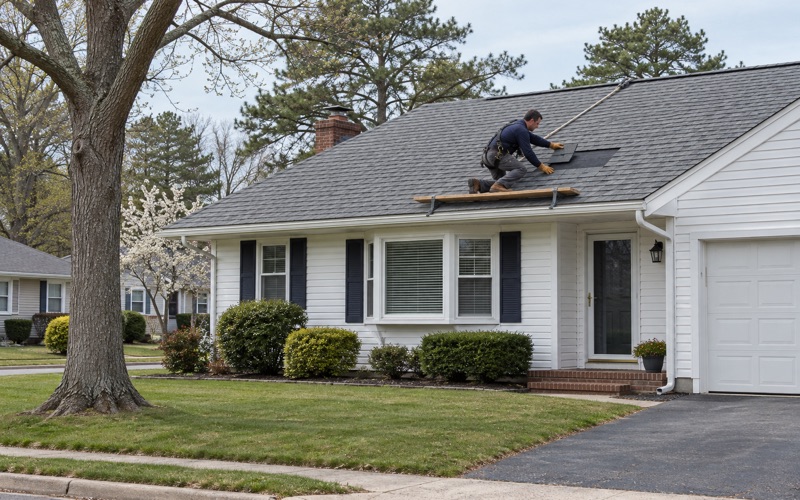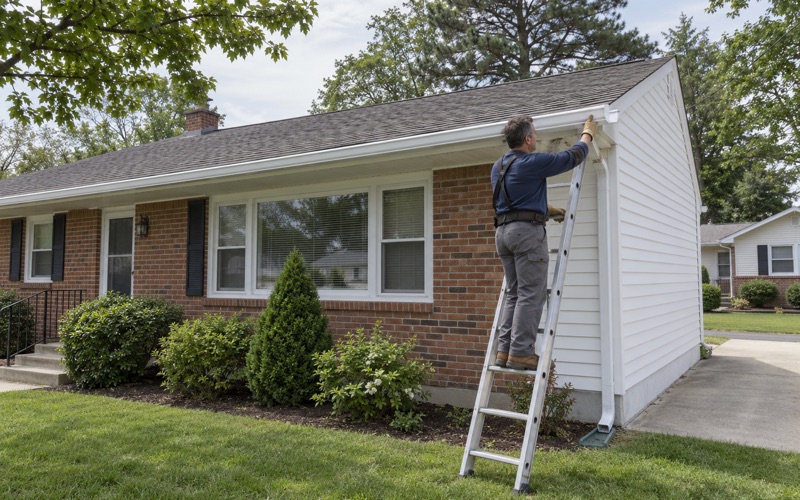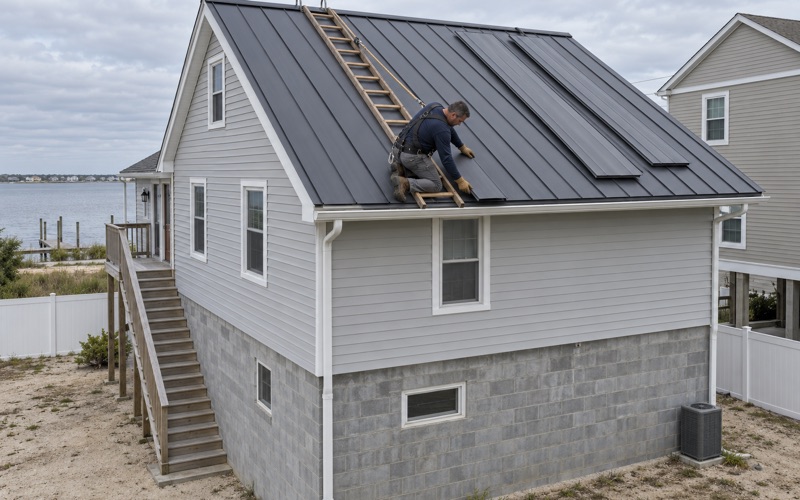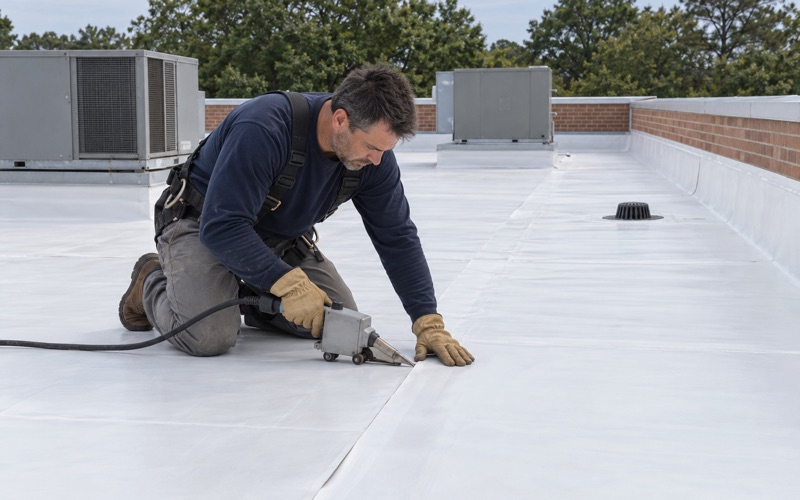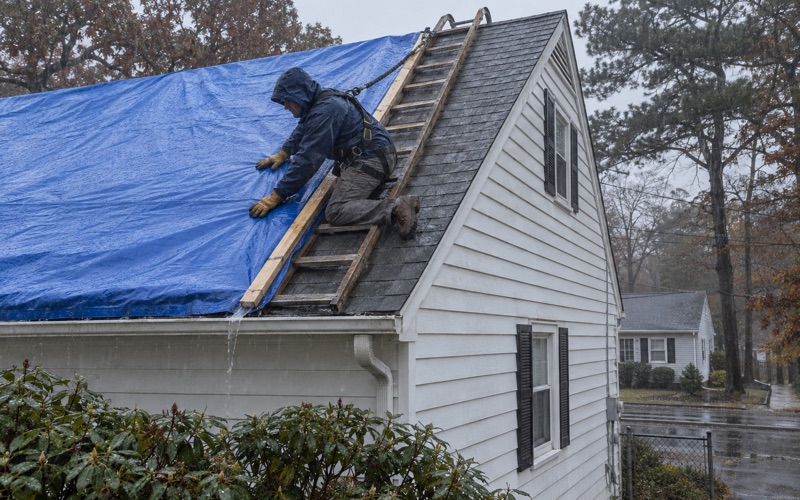
Toms River Elite Roofing approaches roofing in Leisure Village East with one question ahead of every other: is this roof yours to fix, or the community’s? After more than 20 years of roofing work, we have learned to answer it from the association’s or co-op’s documents before any estimate is written, because a price for a roof the owner does not hold helps nobody and wastes a week.
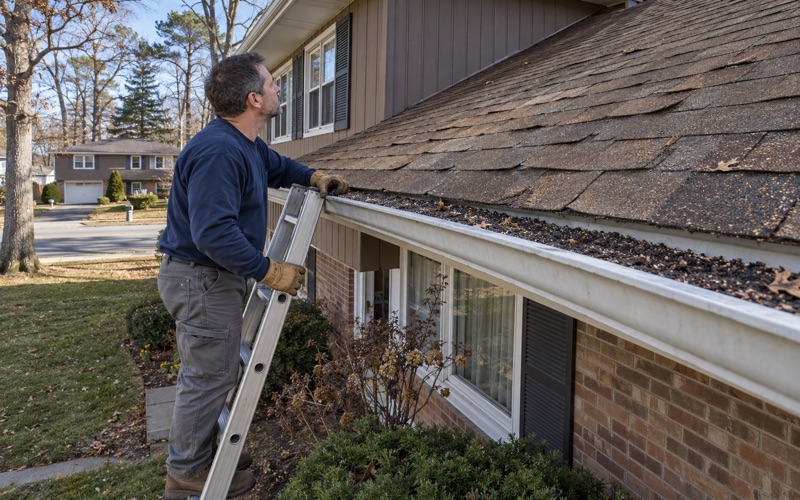
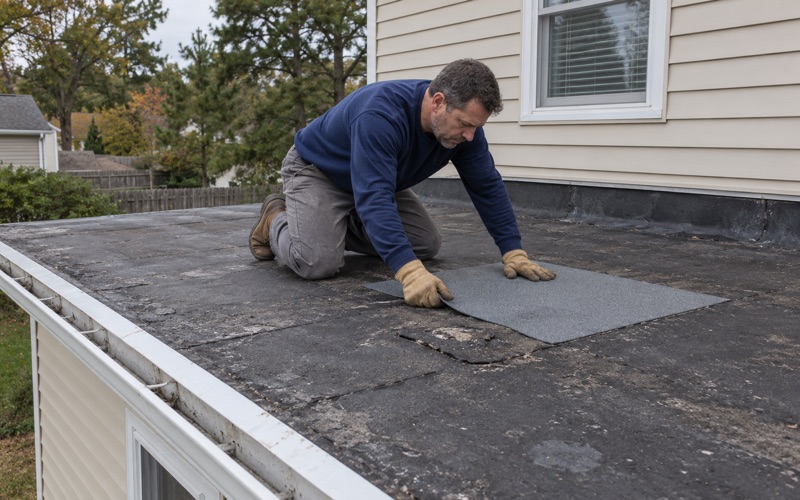
When water shows up on a ceiling, we look in the attic as well as on the roof and trace the leak to where it actually enters before pricing anything. Then we say plainly whether a repair will do. Replacement comes up only after that answer, and only when the roof in front of us has genuinely run out of repairs worth paying for.
This page is about money as much as shingles. New Jersey now requires planned-community associations to plan for replacing what they maintain, and a 2025 change lets some of them fund that plan at 85 percent if they tell owners when a special assessment may come. Below we explain how that law touches a roof, and what owners and buyers can reasonably ask.
Roofs Over Leisure Village East’s 1970s Attached Homes
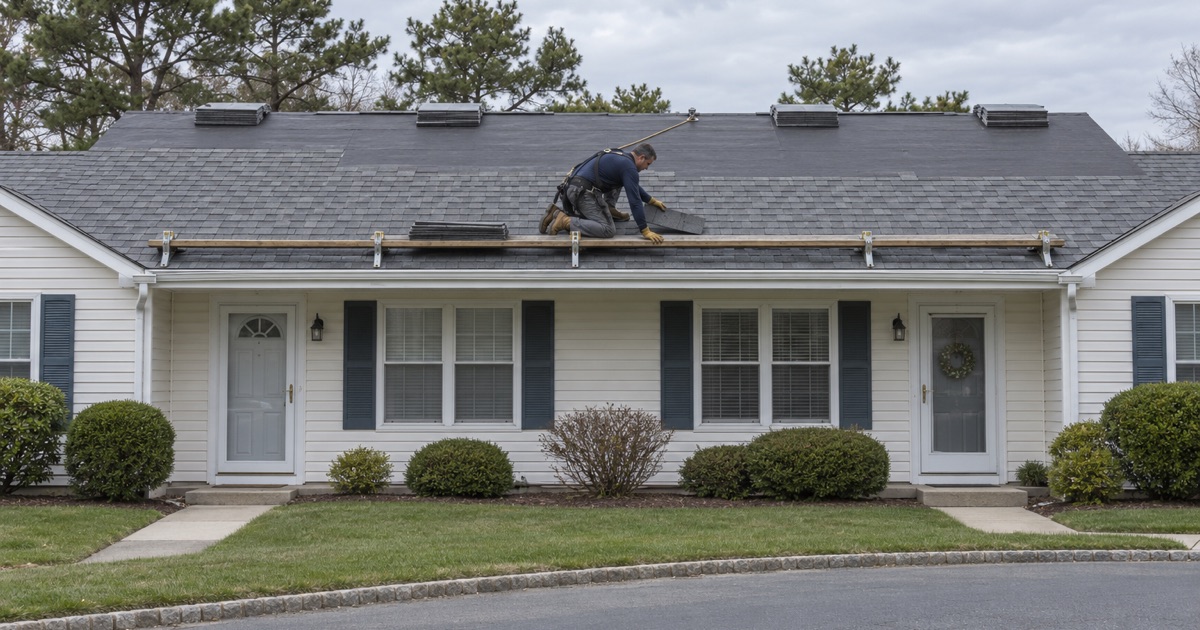
Leisure Village East is an unincorporated community and census-designated place within Lakewood Township, in Ocean County, and one of several active adult communities nearby bearing similar names. The gated 55+ community, whose clubhouse is the Barton Hall Recreation Center, lists 1,412 attached homes built between 1970 and 1974, in five models ranging from 630 to 1,690 square feet.
One Roof Line, Several Households
In an attached row, a single roof runs over several owners’ homes. The 2024 five-year American Community Survey counts 1,468 owner-occupied attached units in the census-designated place, so this is the ordinary shape of a home here rather than an exception. Ridges, valleys and flashing cross the lines between units, and a repair over one kitchen can change how water moves above the neighbor’s.
That is why we treat a roof section in a row as part of a whole building. Before work starts, we look at how the adjoining sections are tied in, where the old flashing laps under the next unit’s courses, and whether the attic space is shared or separated. A neat patch that sends water toward the house next door is not a repair.
Reading the Documents Before an Estimate
Listings for the community describe the monthly fee, quoted at $196 to $357, as covering common area maintenance, bus service, club management and events, as well as property insurance, and some listings mention siding and roof maintenance. We have not read the governing documents ourselves, so we do not guess. We ask for them and confirm who holds the roof before writing an estimate.
Ownership affects more than the bill. GAF’s shingle limited warranty, for example, reserves its Lifetime term for shingles on a single-family detached residence owned by individuals; for buildings owned by a condominium or homeowner association, the warranty length is 40 years. If a building turns out to be association-held, the warranty paperwork should reflect that from the first day.
Looking for roofing closer to Leisure Village? See Roofing Services in Leisure Village.
New Jersey’s Capital Reserve Study Law and the Roof
Under N.J.S.A. 45:22A-44.2, a New Jersey planned real estate development association must have a capital reserve study covering what it maintains. The Department of Community Affairs FAQ on the law, signed in January 2024, says the requirement applies to all such associations, not only those with buildings covered by the separate structural inspection rules, and it lists roofs among condominium common areas.
What the Study Must Contain
The statute requires the study to be performed or overseen by a reserve specialist credentialed through the Community Associations Institute, or by an engineer or architect licensed by the State. Among its required parts is a proposed 30-year funding plan, which sets out how the association expects to pay for replacing major components over three decades instead of meeting each bill as it arrives.
An association without a study done within five years of January 8, 2024 had to complete one within a year, and associations with covered buildings must have the study conducted and reviewed at least once every five years. Associations with less than $25,000 in total common area capital assets are exempt. Preparing the study belongs to the credentialed professionals the statute names, not to a roofing company.
Where an Itemized Roof Scope Helps
A reserve plan typically treats a roof as a component with a remaining life and a replacement cost. When a board or an owner wants to test that against the real roof, a lump-sum quote does little. Our written scopes list tear-off, decking, underlayment, flashing, ventilation and gutters as separate lines, so two estimates, or an estimate and a plan, can be compared item by item.
Decking is the line that most often surprises people. Damaged sheathing usually cannot be seen until the old roof is off, so our contracts set a per-sheet price in advance, and we photograph any bad decking and show it to the owner before replacing it. On a building from the early 1970s, that unknown deserves a fixed price rather than an open question.
The 85 Percent Option and the Bold-Type Notice
The 2025 amendment, P.L.2025, c.132, changed how existing associations may fund their reserves. In the DCA’s FAQ, subsections b through d of N.J.S.A. 45:22A-44.3 appear struck as deleted by that law, and subsection e sets out an alternative. We read the FAQ’s text, not the public law itself, so we describe the change as the FAQ presents it.
Funding at 85 Percent of the Plan
An association that existed as of January 8, 2024 may fund its reserve according to the study’s plan, or in an amount equal to 85 percent of a plan. The lower figure is not a free pass. It comes with conditions attached, and the statute says the 85 percent method may not be used for more than five fiscal years.
For a roof, the gap matters because roofs are large, predictable expenses. A plan funded at 85 percent sets aside less each year than the study calls for, and the shortfall has to come from somewhere when the replacement year arrives. The law’s answer is not to forbid that shortfall but to require that owners be told about it plainly and in advance.
The Notice in 20-Point Bold
Before adopting the budget, a board that elects 85 percent funding must notify all unit owners in 20-point bold font. The notice has to say the board made that election, and it must give the year in which a special assessment or loan is anticipated, along with the anticipated amount. It is written to be impossible to miss on the page.
In a community of attached homes built from 1970 to 1974, a roof replacement is the kind of capital item such a notice would surface, if one is sent. The year printed there is where a roof bill first becomes visible to an owner. We have not seen any notice from this association, and we do not know whether one exists.
What Our Research Did Not Find
Whether the Leisure Village East association has completed its study, what its plan assumes for roofs, or whether it has elected the reduced funding level did not turn up in our research. The DCA’s FAQ also says the department does not oversee compliance by owner-controlled associations, and that disputes go to civil litigation. Questions belong with the board first.
What Owners and Buyers Can Ask About the Roof Plan
None of this requires an owner to read a reserve study cover to cover. A few direct questions to the board, put in writing, will usually show where the roof stands in the community’s plan, and whether any part of the roof over a home is the owner’s own responsibility in the first place.
Questions for the Board
Owners can ask whether a capital reserve study has been completed, when it was done, and who prepared or oversaw it. They can ask what remaining life it gives the roofs on their building and what year it sets for replacement. And they can ask directly whether the board has elected 85 percent funding and, if so, what year the notice named.
Answers like these turn a rumor into a date and a figure. If the roof over a unit is association-maintained, the owner’s practical job is to report leaks promptly and document them. If it is the owner’s, the conversation moves to us, and we start with an attic inspection and a straight answer on repair.
Buyers and the Seller’s Notice
Under subsection e, before a purchase contract is signed, the seller must give the buyer the most recent notice the association sent about 85 percent funding. For buyers weighing a home in Leisure Village East, that page is worth reading line by line, because the anticipated year and amount of a special assessment are part of what the home actually costs.
Sellers whose roof is their own responsibility can add something of their own. For homes being sold, we write a roof condition report the seller can hand to the buyer’s inspector. It describes what we found on the roof and in the attic, plainly, so the roof is a known quantity instead of a surprise in the middle of a negotiation.
When the Roof Is the Owner’s to Fix
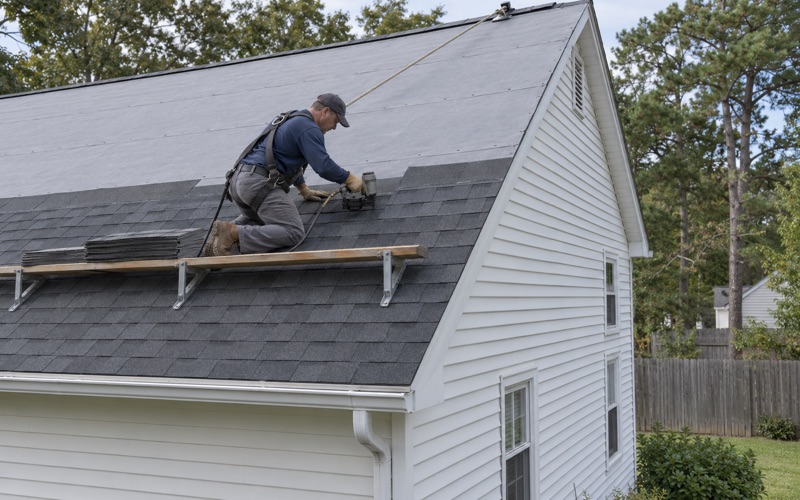
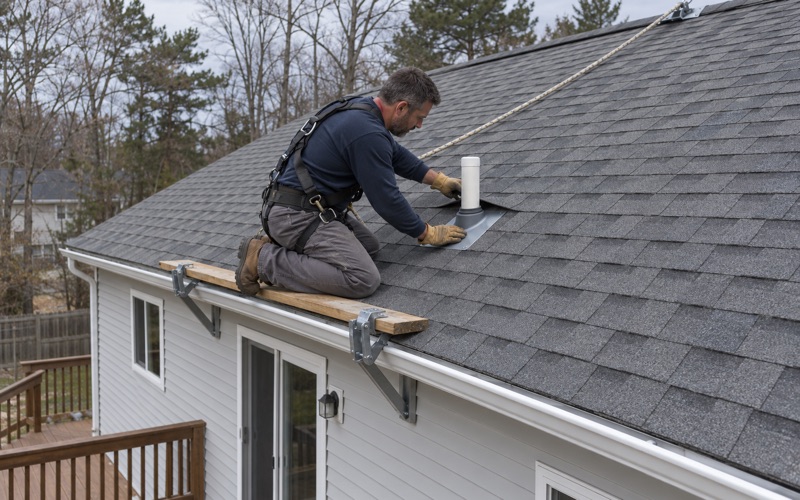
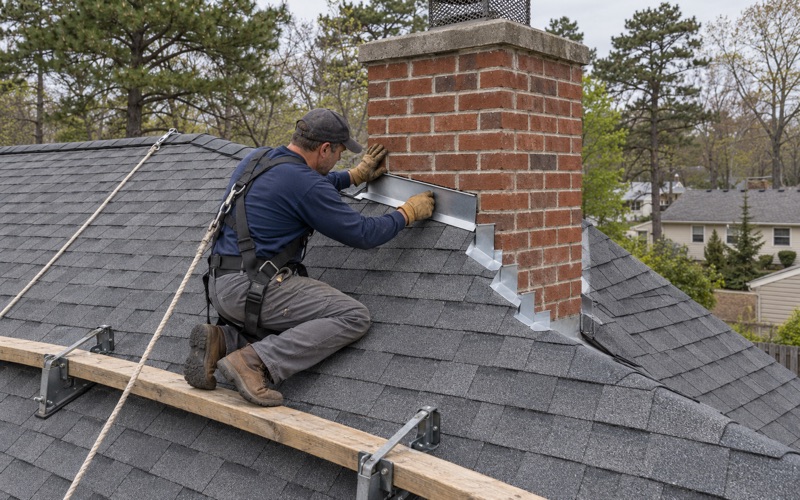
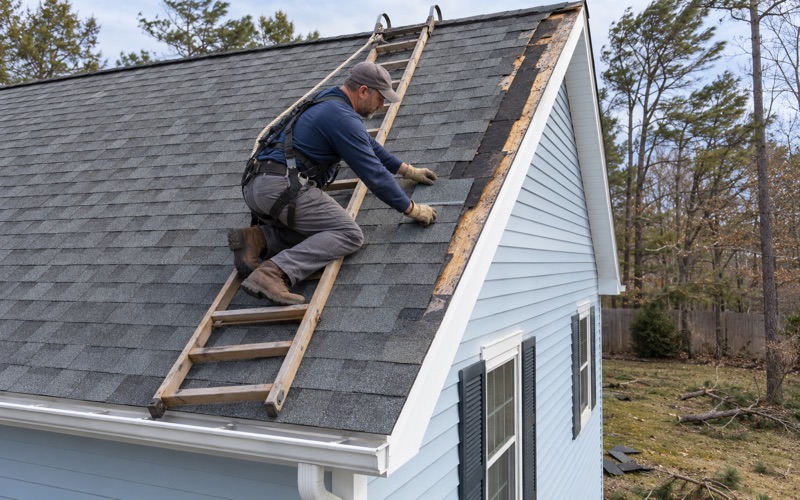
If the documents put the work on the owner, we replace step, counter and chimney flashing with the roof instead of reusing it under new material, and we check attic ventilation on every replacement, because a roof that cannot breathe ages from underneath. Each work day ends with the driveway, yard and gutters cleaned and a magnet sweep for roofing nails.
Our contracts follow New Jersey’s home improvement rules, including the three-day cancellation notice, so an owner has time to compare the scope with the board’s answers before committing. On an attached building that pause is useful: it lets an owner confirm with the association that the work fits the building’s plan before the crew ever sets up.
- 20+ Years on Shore Roofs
- Line-Item Written Scopes
- Attic and Roof Leak Tracing