Toms River Elite Roofing brings more than 20 years of experience to roofing in Manasquan, and the question we hear most from owners weighing a new roof here is whether metal makes sense this close to salt water. The honest answer starts with a tape measure, not a brochure. Metal panel warranties are written in feet, and the feet that matter are the ones between your house and the water.
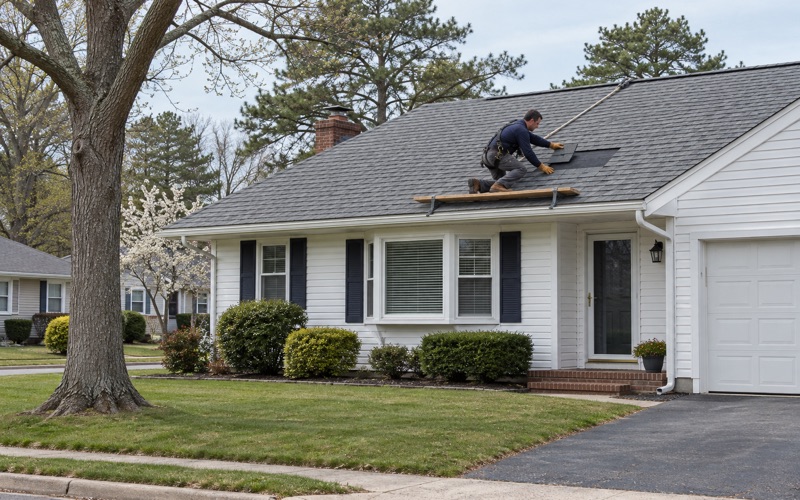
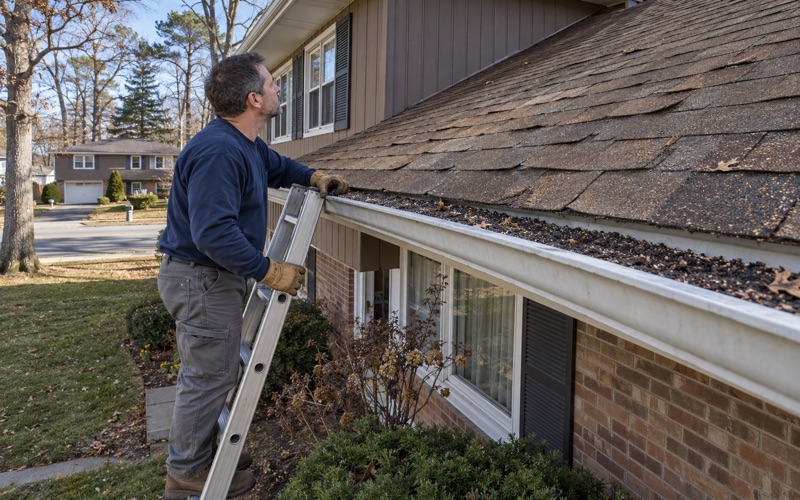
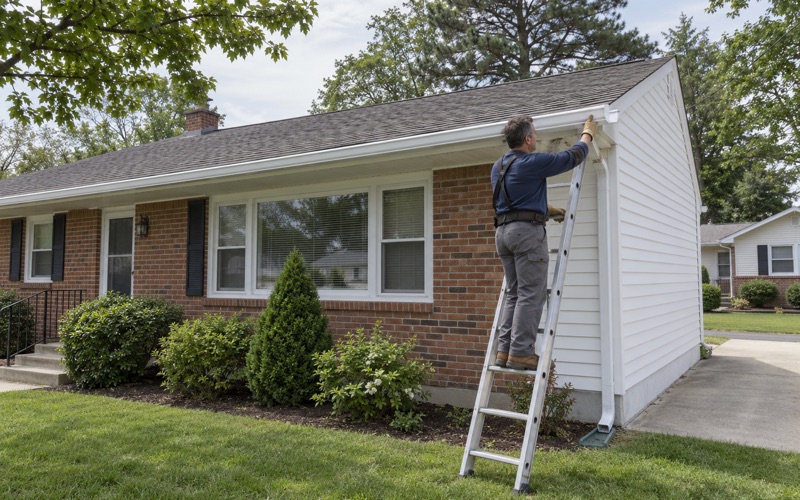
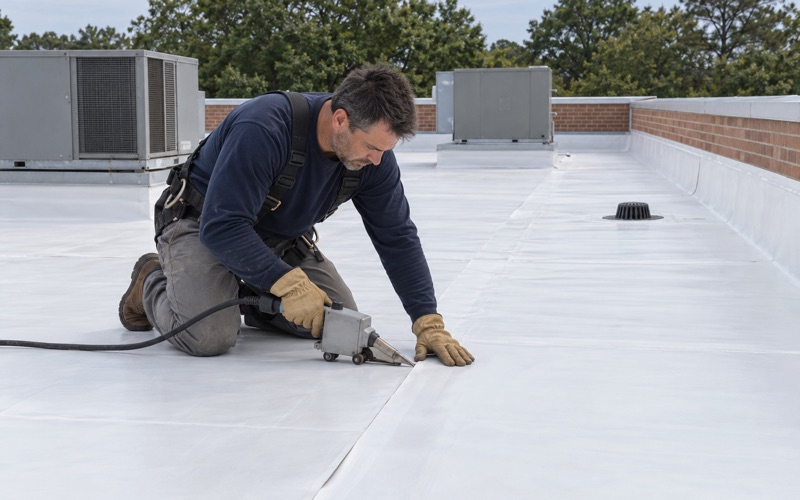
We repair and replace shingle, metal and flat roofs, and every leak call includes a look in the attic as well as on the roof, so the water is traced to where it actually gets in before anything is priced. If a roof can be repaired, we say so before anyone talks about replacing it. When replacement is the right call, the written scope breaks out tear-off, decking, underlayment, flashing, ventilation and gutters as separate lines.
This page is about one decision that is unusually sharp in this borough: choosing a roofing material whose warranty you can actually keep. Below we walk through the published distance limits in two metal roofing warranties, how to measure your own property against them, the salt-air details that matter on any material, and where asphalt shingles fit into the picture.
A Borough Wrapped in Salt Water, and Where the Warranty Lines Fall
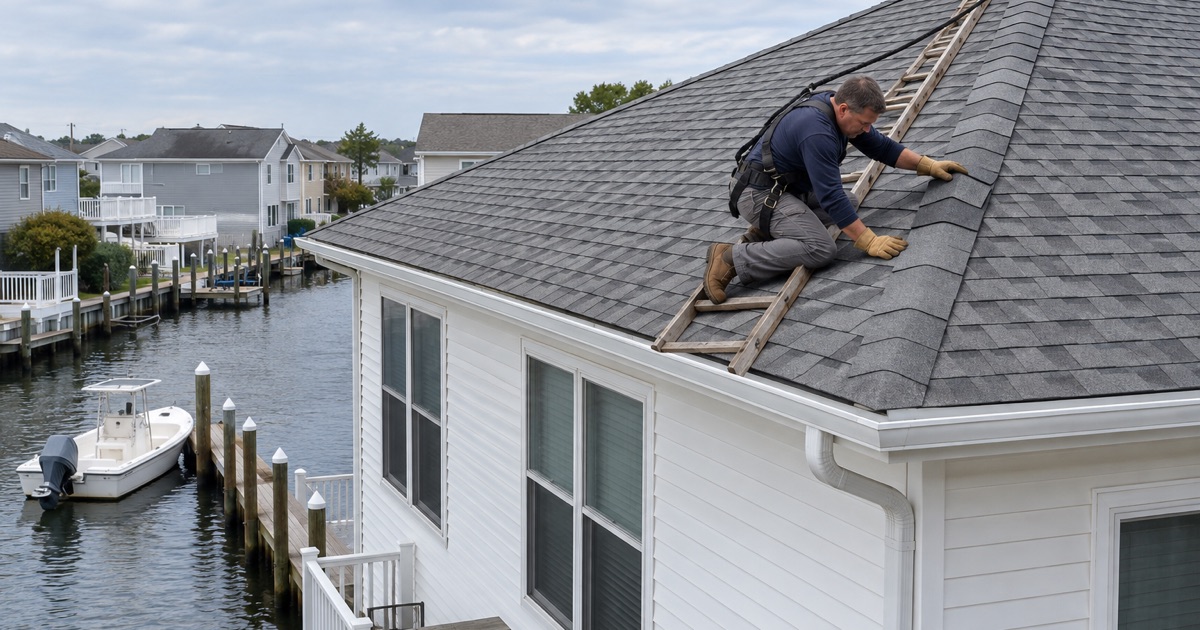
Land and water in nearly equal measure
Manasquan covers 2.53 square miles, and 1.15 of them are water, a little over 45 percent of the borough. The Atlantic forms one edge, the Manasquan Inlet another, and tidal creeks such as Watsons Creek and Glimmerglass reach in from the river side. Both creeks appear by name on 1927 New Jersey maps of pierhead and bulkhead lines, which tells you how long they have been treated as working tidal water.
The inlet matters to a roof for a specific reason. The jetty there corrals, refracts and enlarges the waves, which is part of why surfers know the spot. Breaking surf throws salt into the air, and breaking surf is exactly the condition the strictest metal warranty limits are written around.
Drexel Metals: 2,800, 1,200 and 600 feet
Drexel Metals’ 25-Year DREXLUME warranty for acrylic-coated Galvalume, revised January 2025, does not apply to areas subject to salt water marine atmospheres. Its guidelines set three minimum distances: 2,800 feet from a coastline with surf, 1,200 feet from a large bay, and 600 feet from marshes and canals. An installation inside any of those minimums is excluded and not covered.
For a borough this size, those are not small numbers. The surf figure alone is a little more than half a mile, and Manasquan has only 1.38 square miles of land. We have not measured how many houses here sit inside any of the lines, and nobody should guess; what the figures do show is that the distance question cannot be skipped.
Sheffield Metals: 1,500, 800 and 400 feet
Sheffield Metals’ 45-Year AZ55 Galvalume warranty sample draws its lines closer in. It excludes coastline with breaking surf within 1,500 feet, a large bay within 800 feet and marsh within 400 feet, along with any area subjected to constant spraying of salt or fresh water. Sheffield’s Coasteel samples use 300 feet instead.
So the same house can sit inside one manufacturer’s line and outside another’s. A property 2,000 feet from breaking surf, with no other water nearby, would fall inside the Drexel minimum but beyond the Sheffield one. That arithmetic is the reason we compare warranty documents before anyone compares panel colors.
What the documents leave out
Neither warranty says how the distance is measured: from the property line, the wall or the roof edge, or from the waterline or the dune. Neither defines what counts as a large bay. We will not classify a creek or a cove for you, because the documents do not, and only the manufacturer can answer that question in writing.
The practical step is to put the question to the manufacturer before an order is placed, naming the address and the measured distances. A written reply kept with the warranty papers is worth far more than a verbal assurance from a salesperson.
Looking for roofing closer to Robbinsville? See Robbinsville Roofing.
Measuring Your Own House Before Choosing Metal
Start with the nearest surf
Breaking surf carries the largest numbers in both documents, so it is the first distance to find. Measure from the house to the nearest beach where waves break, and check the inlet as well, since the jetty enlarges the surf there. Online map tools give a reasonable first reading, and a property survey helps fix where the house actually sits on its lot.
Write the number down in feet rather than as a few blocks. In a borough this compact, a couple of blocks can be the difference between 1,400 feet and 3,000, and that difference decides which warranties are even available on the house.
Then the bay, creek and marsh lines
Surf is not the only line. Drexel’s 600-foot minimum for marshes and canals and Sheffield’s 400-foot marsh limit both reach toward the tidal creeks that wind through the borough. A house well back from the beach can still be close to a creek behind it, and that shorter distance may be the one that decides the warranty.
Measure to every kind of water near the property and record each figure against the matching category in each warranty. Where a body of water could be read as either a bay or a marsh, treat the stricter reading as your working answer until the manufacturer says otherwise in writing.
Read the exact warranty, not a summary
Warranty terms get revised, and Drexel’s current document carries a January 2025 date. Ask for the specific warranty that would be issued for your panel, coating and substrate, and read the exclusions before you sign anything. A summary sheet or a website paragraph is not the document a claim is judged against.
When we prepare a metal roof estimate, we name the panel and the warranty it would carry on the written scope, so you know which document you are buying into. If your measured distances rule that warranty out, we tell you before the estimate goes any further.
Rinsing, Flashing and Other Salt-Air Details
The fresh-water rinse
Drexel’s warranty recommends an annual fresh-water rinse program in salt areas. A rinse washes salt deposits off the panels, which matters most on sheltered sections that rain does not wash well. Keep a simple dated record of each rinse alongside the warranty papers, so the maintenance is documented rather than remembered.
Notice the other side of that clause, though. Both documents also exclude areas subject to constant or repeated spraying of salt or fresh water, so a rinse is periodic maintenance, not a sprinkler aimed at the roof. Irrigation heads that wet the roof every day should be turned away from it.
Nails, drip edge and flashing
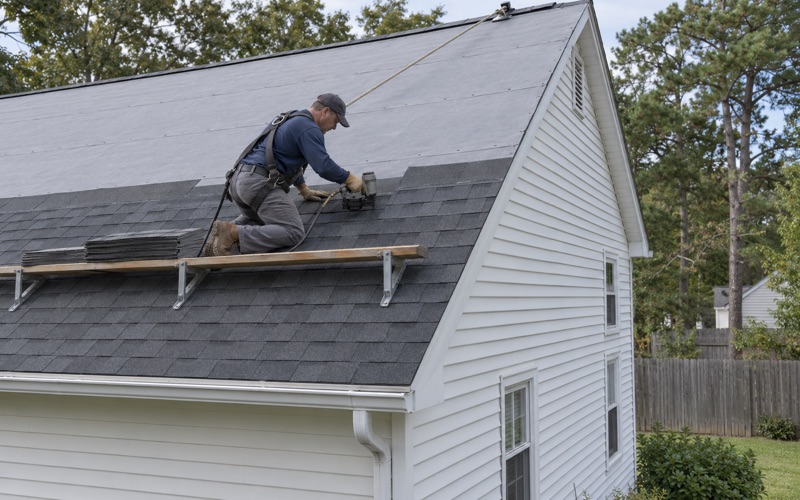
Near the bay and the ocean, we choose nails, drip edge and flashing for salt air rather than pulling them from standard truck stock, on shingle and metal roofs alike. These are our own material choices, not a code requirement, and the right metal for each part follows the roofing manufacturer’s installation instructions.
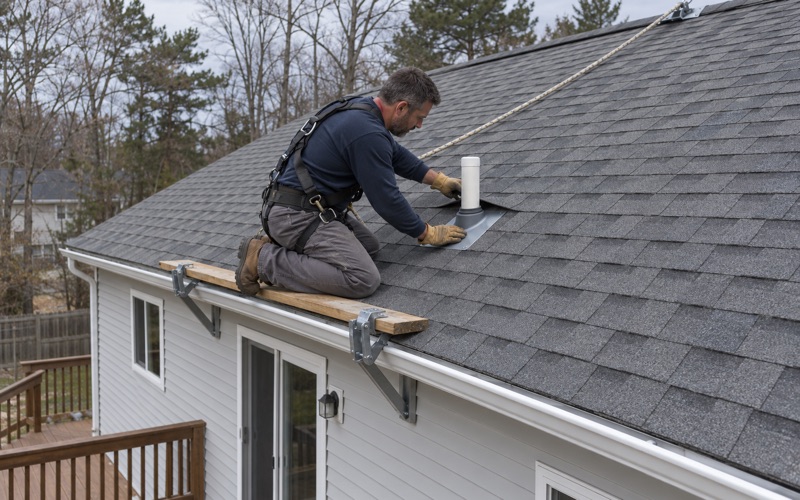
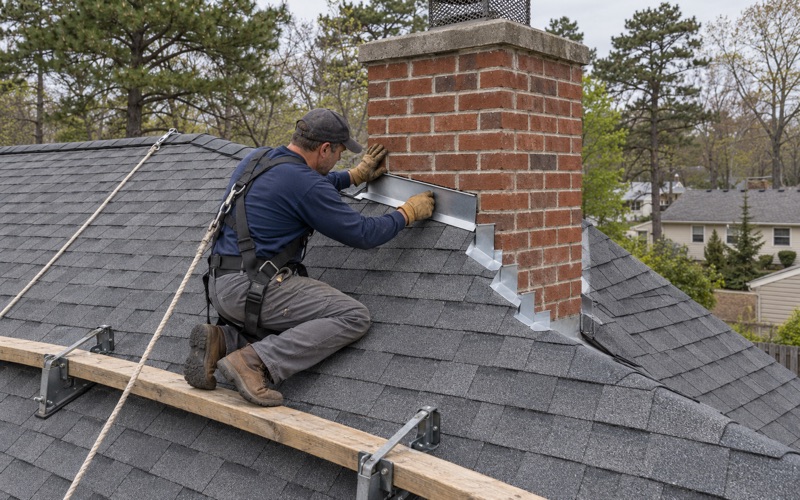
Step, counter and chimney flashing is replaced with the roof rather than reused under new material. Old flashing that has already spent years in salt air is the wrong thing to bury beneath a roof you expect to last decades, and replacing it during the tear-off costs far less than opening the roof again later.
Ventilation and the attic side
Salt is not the only thing that shortens a roof. On every replacement we check attic ventilation, because a roof that cannot breathe ages from underneath, whatever the material on top. A balanced system usually pairs soffit intake with a ridge vent sized for net free area, so warm, moist air leaves the attic instead of collecting under the deck.
If the old roof comes off and the decking underneath is damaged, we photograph it and show you before it is replaced, at the per-sheet price set in the contract. Nothing about the deck is decided out of your sight.
Shingles, Metal and the Warranty You Can Keep
Asphalt shingles near the water
Our research did not turn up a comparable coastal distance exclusion for GAF or Owens Corning asphalt shingles; the distance limits on this page are metal-panel warranty terms. That does not make shingles the automatic answer, but it does mean the measuring exercise works differently for an architectural shingle such as GAF Timberline HDZ or Owens Corning Duration.
Shingle choice then turns on the familiar questions: wind rating, underlayment and ventilation. Products tested to ASTM D3161 Class F or ASTM D7158 Class H carry published wind ratings, and a self-adhering ASTM D1970 ice and water barrier at the eaves adds protection where water tends to back up.
When metal still makes sense
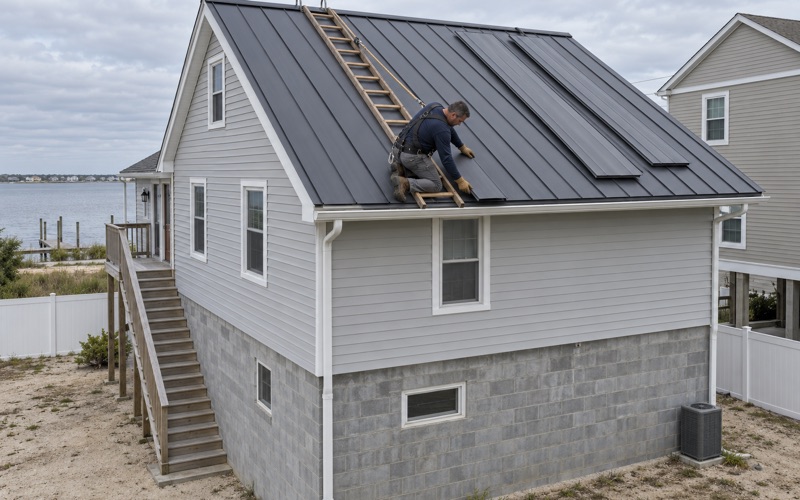
Standing seam metal roofing remains a strong option where the measured distances clear the warranty you want. Because Drexel and Sheffield draw different lines, a house that falls inside one may still qualify under another, and that is worth checking before giving up on metal altogether.
Where no metal warranty fits, some owners still choose metal knowing the coating coverage is excluded. That is a legitimate decision as long as it is made with the exclusion in writing, rather than discovered after a problem appears.
Seasonal houses and longer gaps between visits
Census estimates count 628 housing units in Manasquan held for seasonal, recreational or occasional use. A house that sits empty for months can go a long time between rinses and inspections, so a written maintenance routine matters more there than on a house someone walks past every day.
If you are selling, we can prepare a written roof condition report you can hand to the buyer’s inspector, covering the roofing material, its condition and what we saw in the attic.
Storm damage and the paperwork
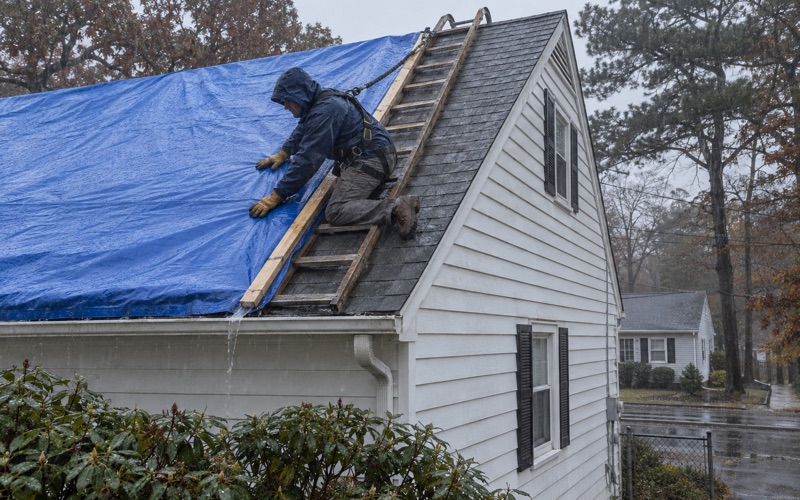
After a storm, we photograph the damage and write it up for your own claim, and the crew will meet the insurance adjuster on site when you ask. The claim itself stays yours. Our contracts are written to New Jersey’s home improvement rules, including the three-day cancellation notice.
- 20+ Years on Shore Roofs
- Line-Item Written Scopes
- Attic and Roof Leak Tracing