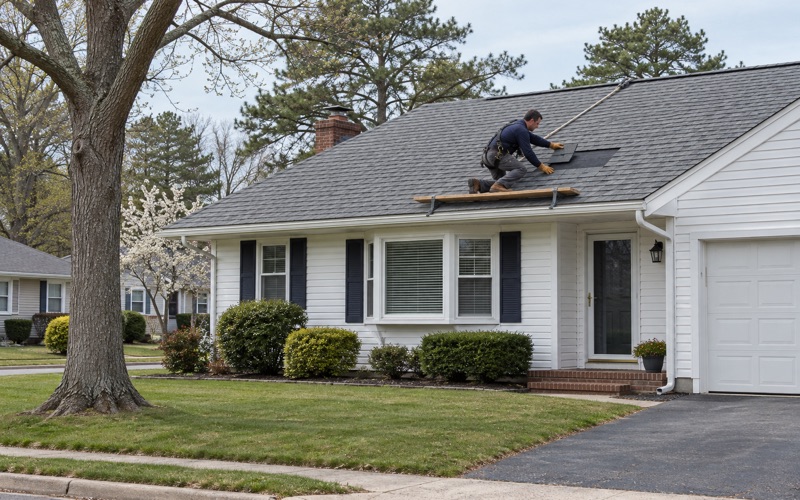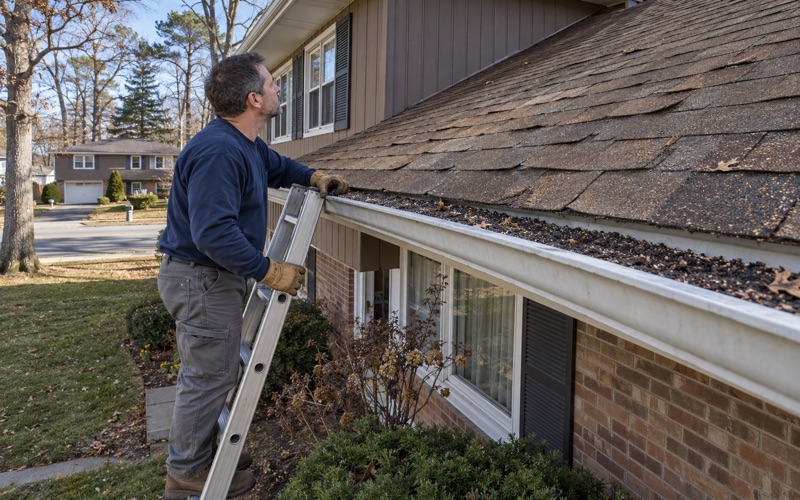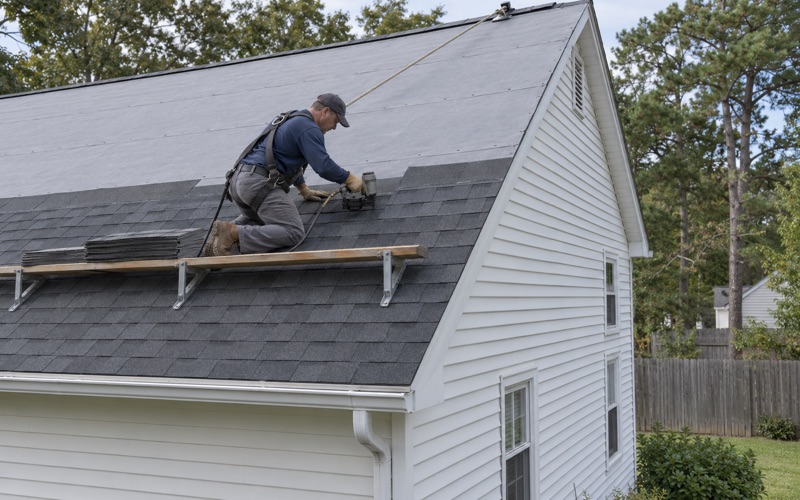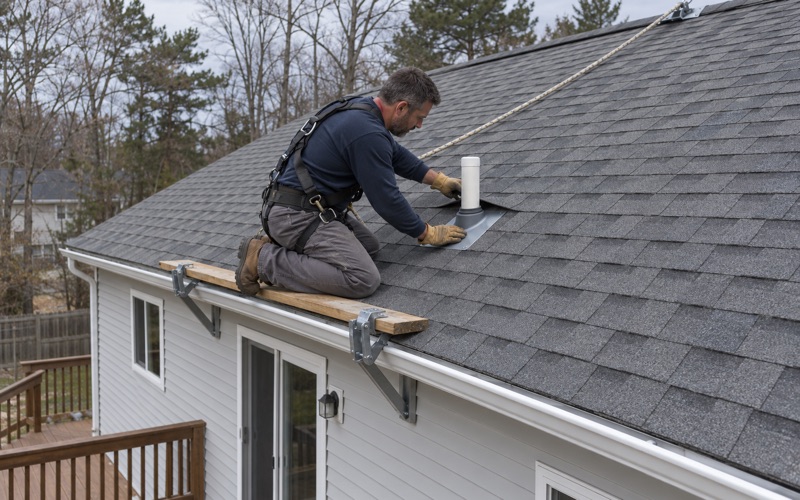
Toms River Elite Roofing has spent more than 20 years on roofing in Millstone Township and across this part of New Jersey, and on wooded properties the first question is often about a tree rather than the shingles. A limb resting on the eaves, a trunk leaning toward the garage or a dead oak shading the back slope all shape how a roof ages and how a crew can reach it.
Our work starts the same way on every call. We look at the roof and inside the attic, trace any water to the point where it actually enters, and tell you plainly whether a repair will hold before a replacement is ever mentioned. When the cause is a branch that keeps scraping or a canopy that never lets the shingles dry, we say so and explain who has to deal with it.
This page covers what a homeowner here should know about trees and roofs together: the township’s own tree rules, how dead and storm-hit trees fit in, and how we schedule roofing around them.
Trees, Limbs and Roofs on a Millstone Lot
Why the Tree Question Comes First
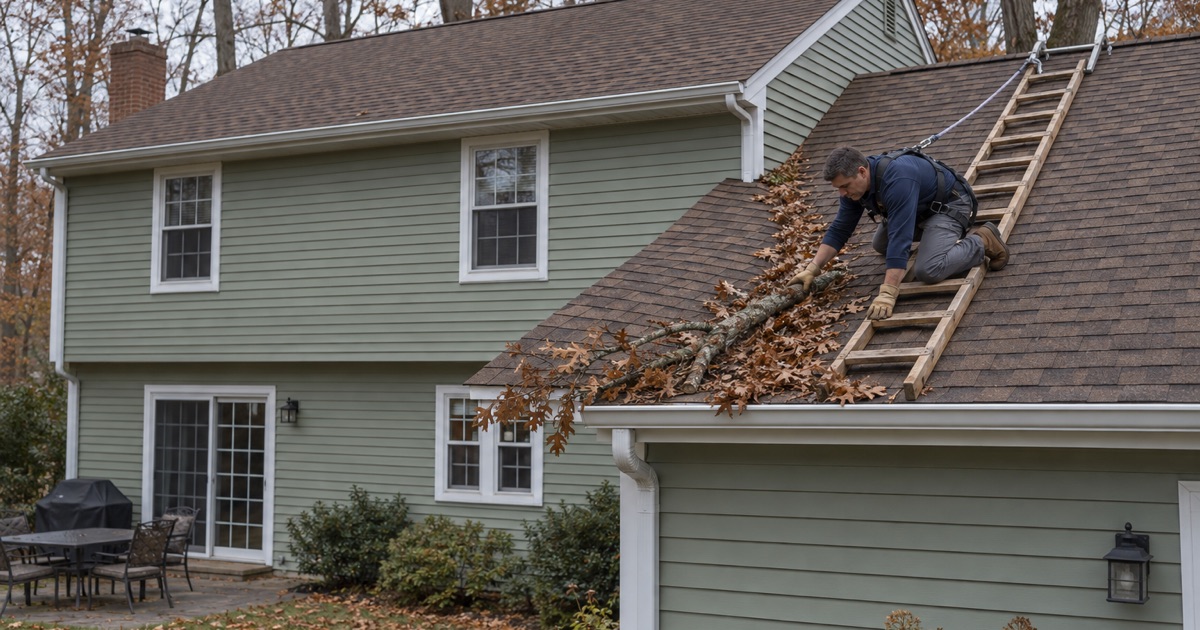
On a multi-acre wooded lot, the tree beside the house is part of the roof’s story. Shade keeps moss and lichen alive on the north slopes, needles and leaves pack the valleys and gutters, and a heavy limb hanging over the ridge is a repair waiting to happen. Fixing the shingles without settling the tree only resets the clock.
That is why, in Millstone, a tree over the roof is a township permit decision before it is a roofing one. The order matters: the tree work has its own approval and its own registered professionals, and the roof is scheduled once that path is clear.
Overhanging Limbs and What They Do
Overhanging limbs damage a roof slowly and then all at once. A branch that sways in the wind scuffs the granules off architectural shingles, wears at the ridge cap and lifts tab edges until water finds a way under. Debris dams the valleys, and water backs up behind it along the drip edge and into the decking.
When we inspect under a canopy, we photograph abraded areas, clogged valleys and any soft decking we can see from the attic. You get a written note of which damage traces back to the tree, so the tree decision and the roofing decision rest on the same evidence.
Fallen Branches Are the Owner’s
The township’s Shade Tree Commission is direct on this point: the property owner is responsible for branches or debris that fall from the owner’s own trees. The Commission also notes the township has no legal authority over private tree disputes, and that branches in power lines are a matter for JCP&L.
For a house with mature trees on several sides, that responsibility is a practical reason to plan ahead. A limb that comes through the roof in a storm is a far larger job than one addressed on a calm day with the right approval in hand.
Looking for roofing closer to Eatontown? See Eatontown Roofing.
What Millstone’s Tree Removal Permit Asks For
Ordinance 23-16 and Section 35-11-25
Ordinance 23-16, adopted December 6, 2023, rewrote the Tree Removal section of the township land use code, Section 35-11-25. The township zoning page puts it simply: any person proposing to remove a tree shall make application to the township. Its stated intent is a significant population of healthy trees, and the ordinance defines heritage trees and sets penalties for violations.
We have not read the ordinance text itself, so we will not tell you whether cutting a particular limb back from the roof needs approval. That is a question for the township before any saw comes out, and we would rather you ask than guess.
The Application and the Plan
The Tree Removal Permit Application goes to the Land Use Department and carries a $50 fee for a home, or $150 for a commercial or other non-residential property. Two copies of a Tree Preservation and Removal Plan must come with it, or the application is returned unprocessed.
The form sorts the trees counted for replacement into trunk-diameter classes measured at breast height, the smallest running from 6 to 10 inches. It asks for a Tree Replacement Plan and authorizes the Zoning Officer or a designee to enter the property for inspection. The office also checks steep slopes, wetlands and threatened or endangered species.
Heritage Trees and the Licensed Tree Expert
A heritage or historic tree needs a written report from a New Jersey Licensed Tree Expert or Professional Forester. The application also asks for the remover’s NJDEP LTE or LTCO number, and every business pruning, removing or repairing trees in the township must be registered with the New Jersey State Board of Tree Experts.
That means the tree work belongs to a registered tree care company, not to a roofing crew. Our part is to coordinate timing with whoever you hire, so the roof is ready to go once the tree work is done and the permit is moving.
Replacement Trees and Closing the Permit
The permit does not close when the tree comes down. Replacement trees go in, either 2 to 4 inch caliper deciduous stock or 5 to 10 foot evergreens, and a final inspection of the installed replacements is what marks the permit as successfully closed. Millstone has been a Tree City USA since 2005, and the process reflects that.
Dead, Leaning and Storm-Damaged Trees Near the House
A Dead or Dying Tree Still Needs a Permit
Many owners assume a dead tree is exempt. The Shade Tree Commission says otherwise: a Tree Removal Permit Application is required even for a dead or dying tree, including one in the township right of way. Call Code Enforcement at (732) 917-2955 before removal, because an inspection comes first.
The township may also ask for verification by a certified tree expert or professional forester, at the owner’s expense. If we spot a dead trunk or a hollow limb over the house during a roof inspection, we photograph it and point it out so you can start that process early.
When a Threat Is Immediate
The Commission describes one narrow exception. In conservation easements, wetlands and steep slopes of 15 percent or greater, a tree posing an imminent threat to person or property may come down first, as long as the owner photographs it and contacts Code Enforcement within one week. Outside those areas, the normal application and inspection apply.
Storms Along Route 33
Wind here can turn sudden. On a Tuesday afternoon in August 2011, a small tornado touched down along Route 33 in the township, stayed on the ground for about half a mile on a path roughly 50 yards wide, and brought down trees and numerous branches. Nobody was hurt and no houses were damaged.
It is a reminder of how quickly a healthy-looking canopy can drop wood. After any storm, we photograph and write up roof damage for the owner’s own claim, and we will meet the insurance adjuster on site when asked.
Clearing the Roof Before Repair or Replacement
Sequencing the Tree Work and the Roof
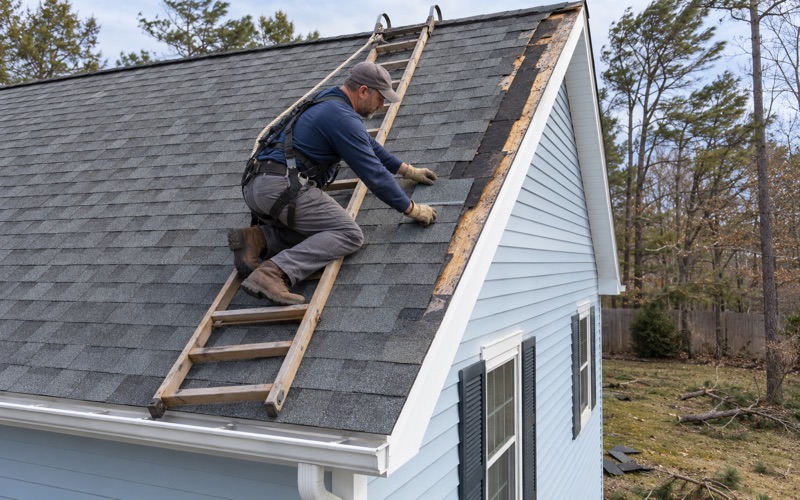
The cleanest jobs follow a simple order. The tree question is settled with the township, the tree company does its work, and then we tear off, inspect the decking and install the new roof. Doing it the other way risks a falling limb or dragged equipment marring a roof that is only days old.
While a tree permit is pending, we can still inspect, measure and write the scope, then hold a start date until the tree work is finished. Roof covering replacement on a detached one- or two-family house is ordinary maintenance under N.J.A.C. 5:23-2.7, so the tree is usually the step that sets the calendar.
Leaks Under a Canopy
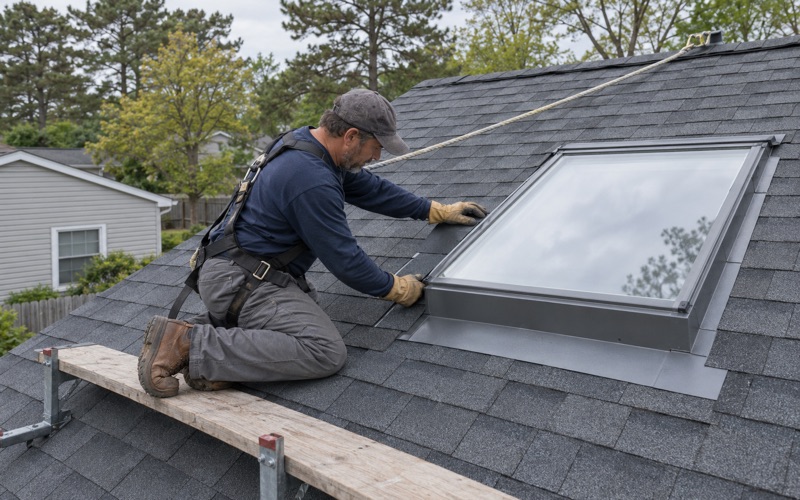
A leak beneath heavy shade often starts somewhere other than where the stain appears. Packed debris behind a chimney, a pipe boot split by a falling branch, or water backing up in a clogged valley can all travel along rafters before showing on a ceiling.
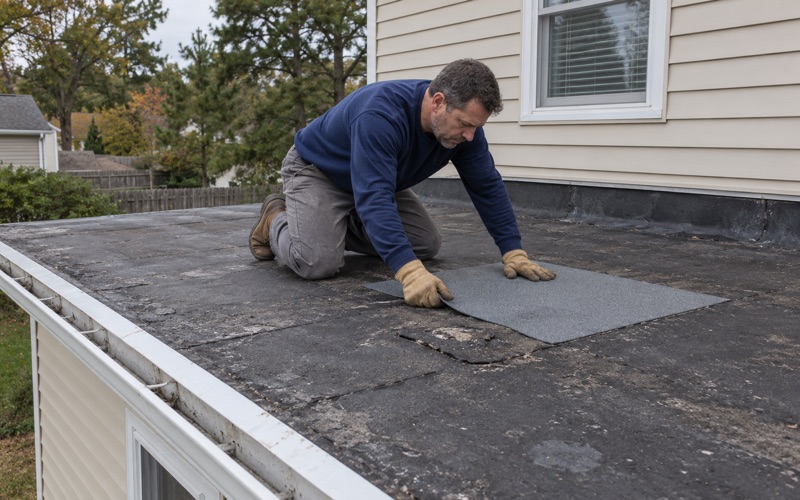
We check the attic as well as the roof surface on every leak call, so the price you see is for fixing the actual entry point. If a targeted repair will hold, that is what we recommend.
What a Written Scope Shows
When replacement is the right call, the scope lists tear-off, decking, underlayment, flashing, ventilation and gutters as separate lines, so you can compare our estimate with another one item by item. Damaged decking found under the old roof is photographed and shown to you before it is replaced, at a per-sheet price set in the contract.
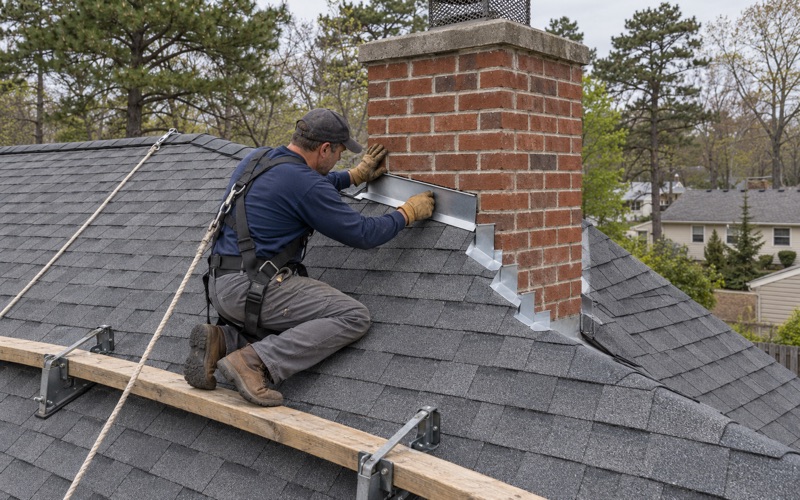
Step, counter and chimney flashing are replaced with the roof rather than reused, and we check attic ventilation on every replacement, because a shaded roof that cannot breathe ages from underneath. Every contract follows New Jersey home improvement rules, including the three-day cancellation notice.
Cleanup on a Wooded Property
Long driveways and lawns under trees hide a lot of debris. At the end of each work day we clean the driveway, yard and gutters and run a magnet sweep for roofing nails, so the property is safe to walk and drive before the crew leaves.
- 20+ Years on Shore Roofs
- Line-Item Written Scopes
- Attic and Roof Leak Tracing