Toms River Elite Roofing has spent more than 20 years on roofing in Pine Lake Park and the rest of the Toms River area, and the calls that come in after a hard storm are the ones we take most seriously. A wet ceiling raises two questions at once: where the water got in, and which part of a homeowner’s insurance it belongs to.
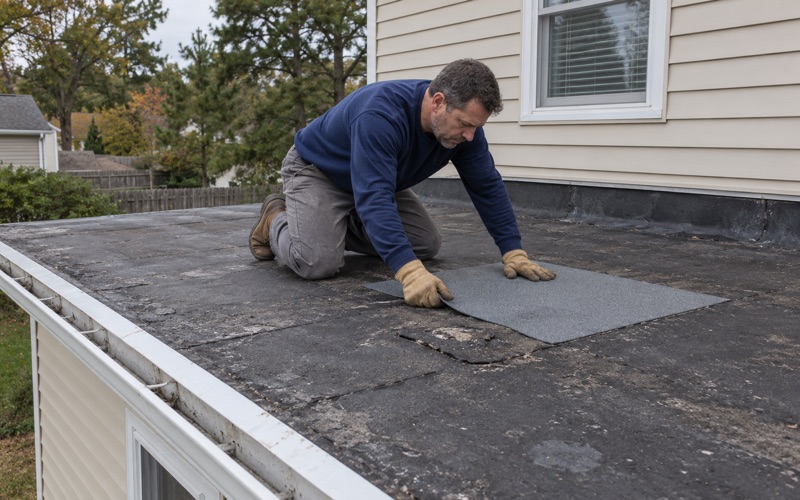
We answer the first question the slow way. Every leak call includes a trip into the attic as well as onto the roof, so we can follow the stain back to the spot where water actually enters before anyone prices a repair. That trace matters later, because it is the evidence that separates a roof failure from water that came from somewhere else.
We also tell you plainly whether the roof can be repaired before replacement comes up at all. When it cannot, our written scope breaks tear-off, decking, underlayment, flashing, ventilation and gutters into separate lines, so you can hold our estimate next to anyone else’s and compare them item by item.
Pine Lake Park’s Houses and Manchester’s Flood Map
Detached homes around a man-made lake
Pine Lake Park is Manchester Township’s largest development, a census-designated place in Ocean County built around Pine Lake, a man-made lake dug in the 1970s. The 2020 census counted 8,913 residents. Until the 2000 census it was counted together with Leisure Village West, and the two were split into separate places for 2010.
The housing is overwhelmingly single-family. The 2024 American Community Survey counts 2,908 detached houses out of 3,210 units, and 2,626 of those detached houses are owner-occupied. That means most roof decisions here are made by one household with one homeowners policy, not by an association or a landlord, and the insurance questions land on the owner directly.
Manchester’s place in the National Flood Insurance Program
Because Pine Lake Park is unincorporated, its flood-insurance terms are set at the township level. FEMA’s Community Status Book, in a report dated October 14, 2026, lists Manchester Township under community number 340382. Its first flood hazard boundary map is dated October 18, 1974, and its first full flood insurance rate map, or FIRM, is dated May 2, 1983.
Manchester entered the regular National Flood Insurance Program on that same day in 1983, so flood coverage here has been written under the regular program for more than four decades. Being a participating community is what makes federally backed flood policies available to Pine Lake Park owners in the first place. It says nothing on its own about whether a particular lot carries any flood risk.
What the September 29, 2006 date means
The same FEMA report gives Manchester’s current effective flood map date as September 29, 2006. That is the map lenders and insurers rely on today. FEMA did release preliminary maps for Ocean County, with an index dated March 27, 2014, but the effective Manchester map in the report is still the 2006 one.
We have not looked up any individual Pine Lake Park property on that map, and we will not guess at one. If you want to know how your own lot is mapped, the effective FIRM and your insurance agent are the sources to ask. Our part is the roof, and keeping roof evidence clean so it never gets tangled up with a mapping question.
Looking for roofing closer to Dover Beaches North? See Roofing in Dover Beaches North.
No Community Rating System Discount in Manchester
What the Community Rating System does
The Community Rating System is a voluntary FEMA program that rewards towns for floodplain management work beyond the minimum. A town earns a class from 10 down to 1, and each step lowers the premium on flood policies written inside it. The discount is set for the whole community, so an individual homeowner cannot apply for it.
In the October 2026 report, Manchester’s Community Rating System columns are blank. There is no entry date, no current class and no listed discount. For a Pine Lake Park owner, that means a flood policy here is priced without any community discount, whatever the house, roof or lot looks like.
How Manchester compares in the same report
The contrast sits on the same page. Ocean Township in Ocean County carries Class 6, worth a 20% discount, and Mantoloking carries Class 5, worth 25%. Those shore towns did the paperwork and the mitigation work that the program asks for, and their residents see it on every flood bill.
None of that changes how we build a roof, but it does change the stakes of a mixed-up claim. When flood coverage costs more and carries no community discount, owners are more likely to carry only a homeowners policy. That makes it more important that roof damage is documented as roof damage, clearly and early.
Why a roofer brings this up at all
We raise flood insurance because the first person on a roof after a storm often sees the evidence before the adjuster does. Shingles torn loose, a lifted drip edge or a cracked pipe boot point one way. A tide line on drywall near the floor points another. Mixing those two in one set of photos helps nobody.
Our job is to document what happened above the ceiling line. Storm damage is photographed and written up for the owner’s own claim, and when asked, our crew will meet the insurance adjuster on site to walk the roof and show what we found. The claim itself, and every coverage decision, stays between you and your insurer.
Roof Leak or Rising Water: Two Policies After a Storm
Water that comes through the roof
As a general rule of how insurance is structured, water that enters through a roof opened up by wind, a falling limb or hail is a question for a homeowners policy. Policy terms vary widely, so the words in your own policy and your insurer decide what applies. What the insurer will want first is a clear cause: what opened the roof, and when.
That is why our attic inspection matters. Wet sheathing directly below a missing shingle, a soaked insulation batt beside a failed step flashing or daylight around a chimney tells a straightforward story. We photograph the attic side and the roof side of the same spot so the path of the water reads from start to finish.
Water that rises from the ground
Rising water is a different event in insurance terms. Water that comes up from the ground, the street or an overflowing body of water is generally the subject of a separate flood policy, written through the National Flood Insurance Program or a private carrier. A homeowners policy and a flood policy are two documents with two sets of rules.
We stay out of the flood half of that line. We do not inspect foundations, crawl spaces or basements for flood damage, and we will not describe ground-level water as a roof leak. If a storm brought both, our report covers what came through the roof and leaves the rest to the people who handle flood losses.
Storms Manchester has already seen
Manchester has had wind events that tested roofs. On August 12, 2020, a thunderstorm with gusts of 60 mph recorded by the National Weather Service left more than 5,800 homes in the township without power, with trees and wires down across the area. An earlier storm on June 22, 2011 damaged between 40 and 60 homes in the township.
Neither report named Pine Lake Park, and we do not claim either storm hit it. They show the kind of event that produces both kinds of water at once: wind that lifts shingles and drops limbs on a roof, and heavy rain that pools at grade. Sorting the two apart is easier when the roof is documented right away.
What to Photograph Before Anyone Files
Outside, from the ground first
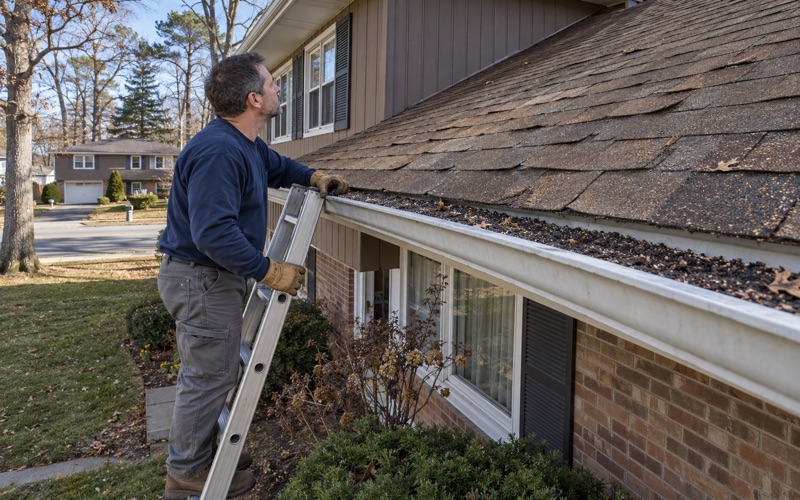
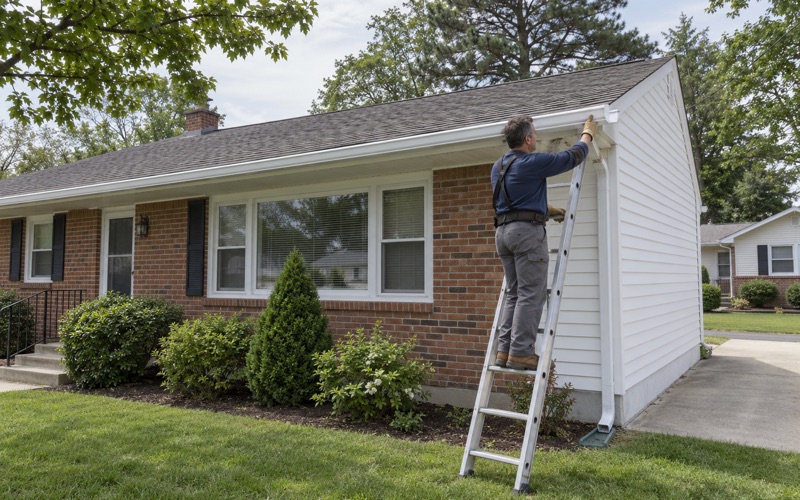
Start from the yard, not a ladder. Photograph every slope you can see, any shingles or ridge caps lying on the lawn, gutters pulled away from the fascia and limbs resting on the roof. Take wide shots that show the whole house, then closer ones of each damaged spot, with the date recorded on the files.
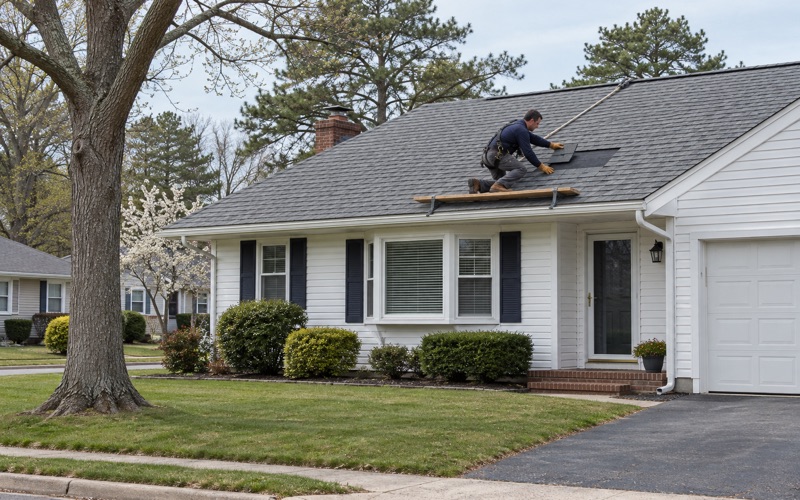
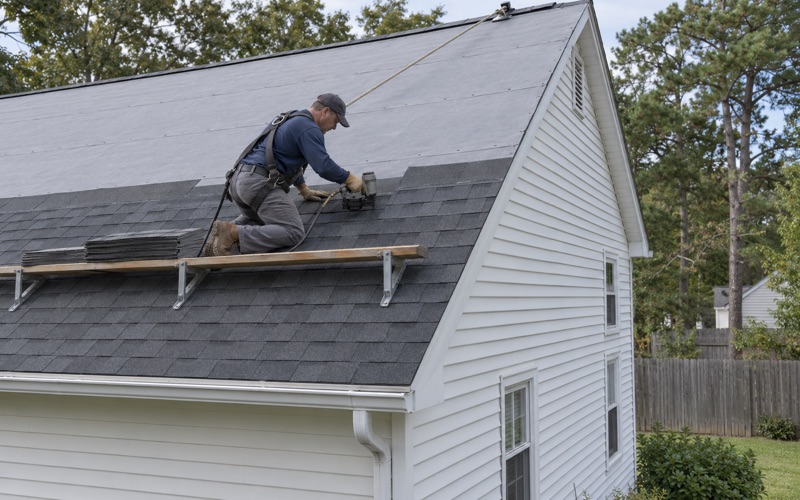
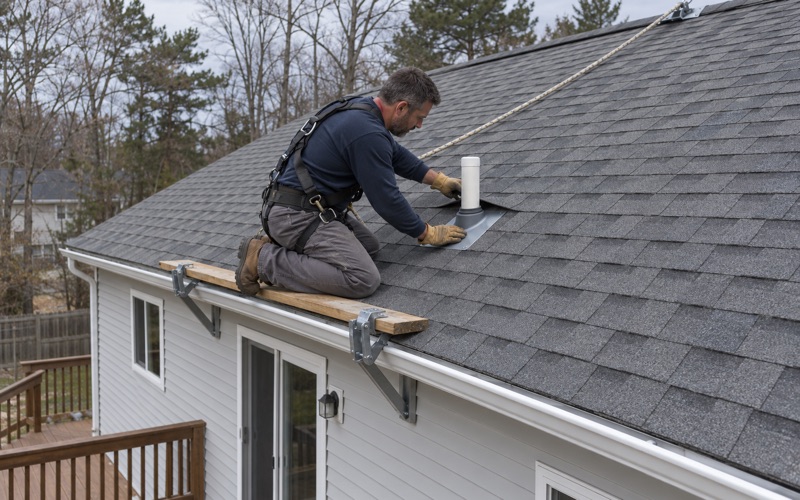
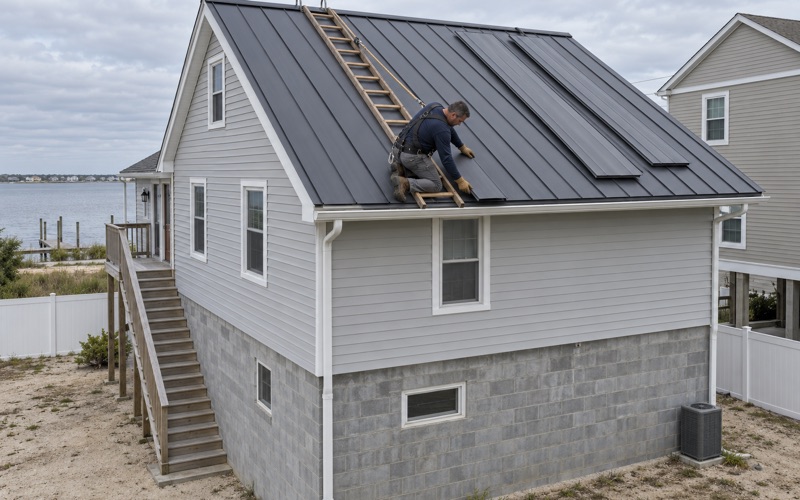
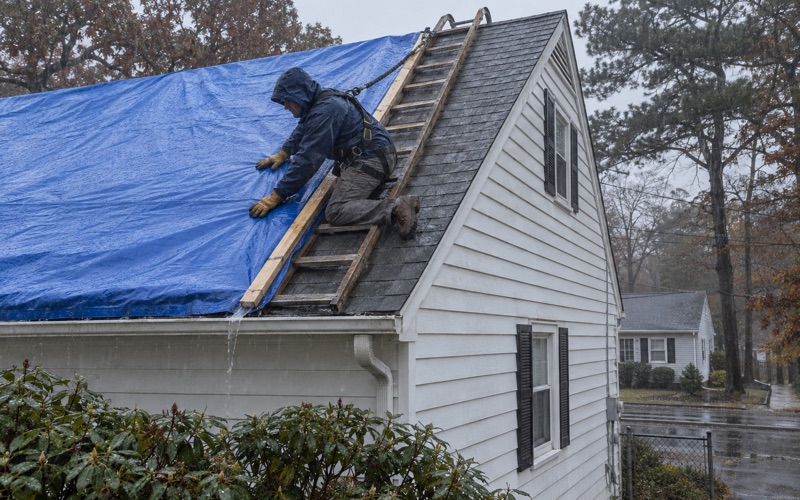
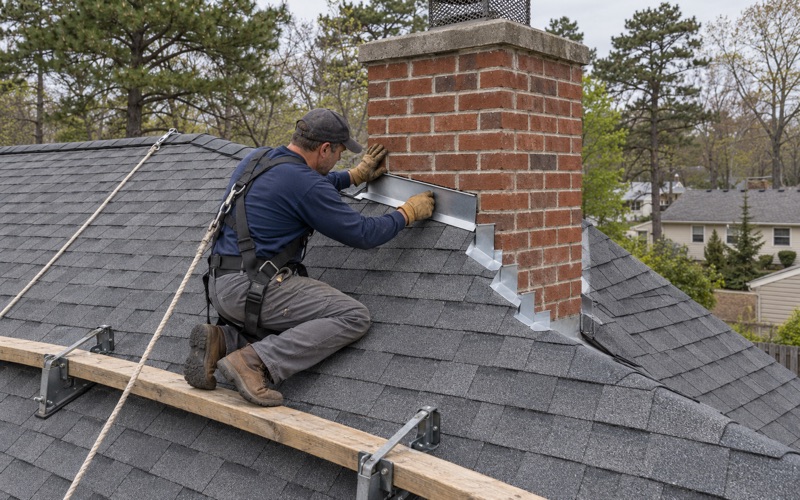
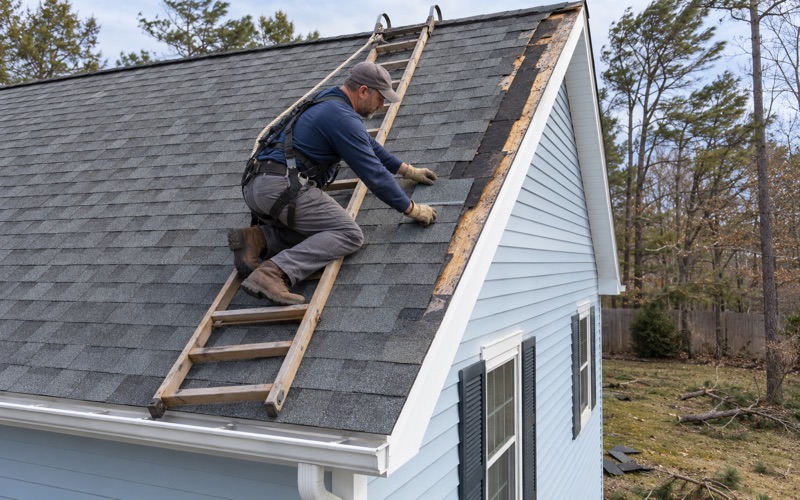
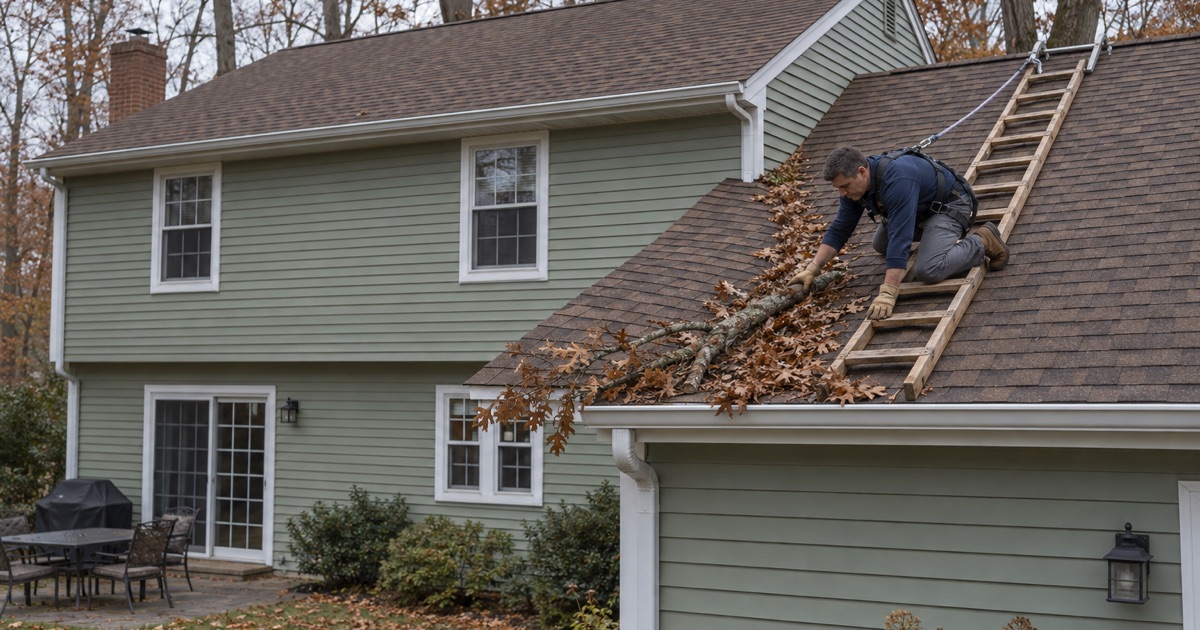
Leave the climbing to us. Wet shingles after a storm are slick, and fall protection on a residential roof is something our crew plans before anyone goes up. Once we are on the roof, we photograph lifted tabs, creased shingles, exposed nail heads, damaged flashing at walls and chimneys, and any decking we can see through an opening.
Inside, in the attic and on the ceilings
Inside, photograph every ceiling stain, drip point and wet wall before towels and buckets change the scene. Note which room sits under which part of the roof. If water reached the floor from above, a photo of the ceiling directly over the puddle helps show which way it traveled.
In the attic, we look for wet sheathing, stained rafters, damp insulation and light showing through. Ventilation gets checked on the same visit, because condensation from a poorly vented attic can look like a leak and point a claim in the wrong direction. Separating storm entry from moisture that built up from underneath keeps the record honest.
The written scope that goes with the photos
Photos carry more weight with a written scope beside them. Ours lists each component on its own line, so the repair or replacement that follows lines up with what the pictures show. If the old roof comes off and the decking under it is damaged, we photograph it and show you before replacing it, at the per-sheet price written into the contract.
On a replacement, step, counter and chimney flashing is replaced along with the roof rather than reused under new material. Our contracts follow New Jersey’s home improvement rules, including the three-day cancellation notice. At the end of each work day we clean the driveway, yard and gutters and run a magnet sweep for loose roofing nails.
- 20+ Years on Shore Roofs
- Line-Item Written Scopes
- Attic and Roof Leak Tracing