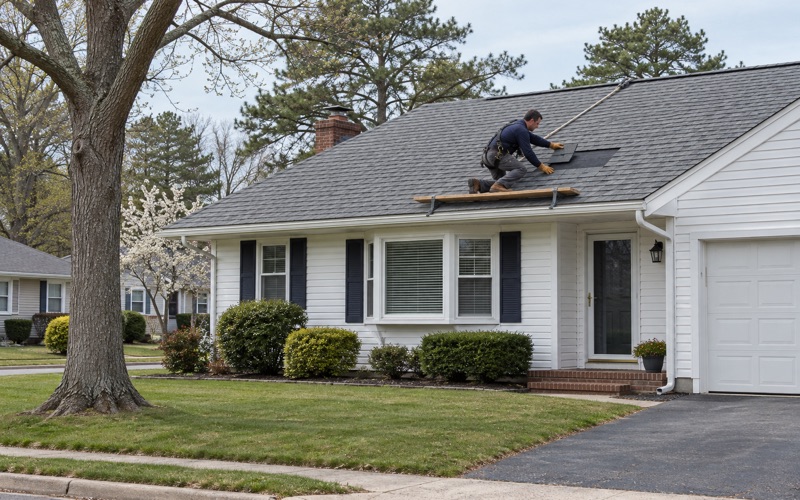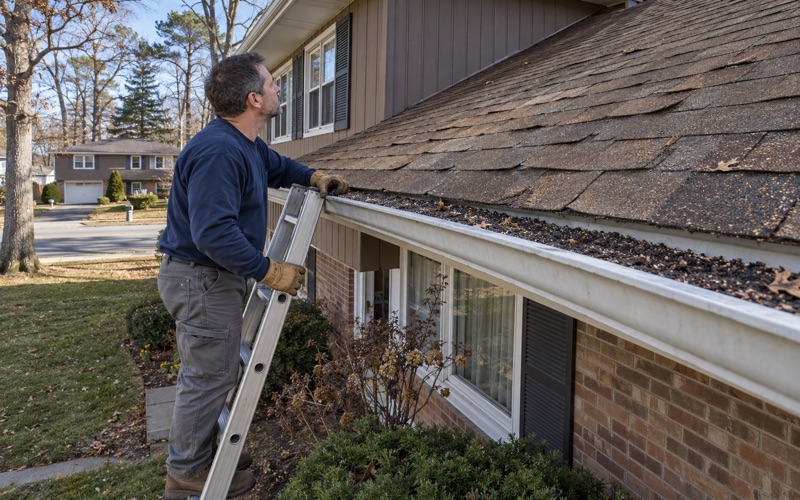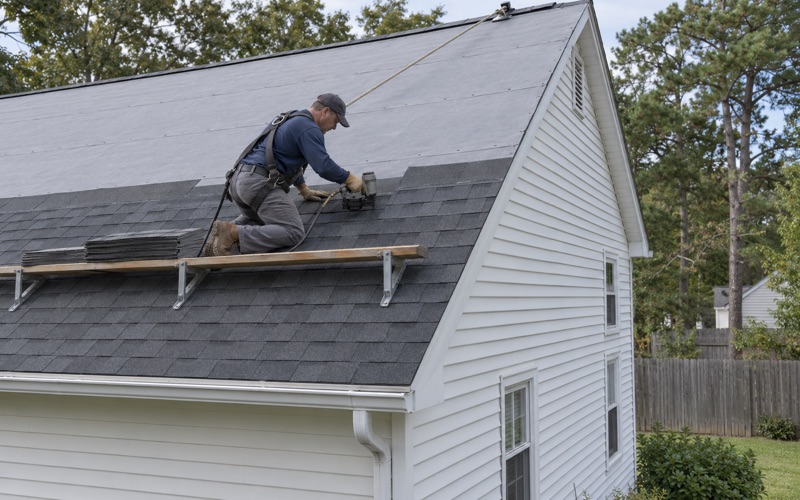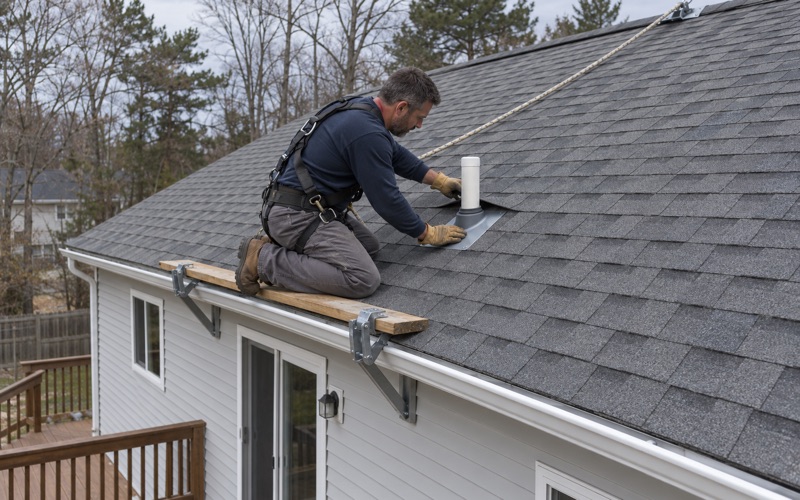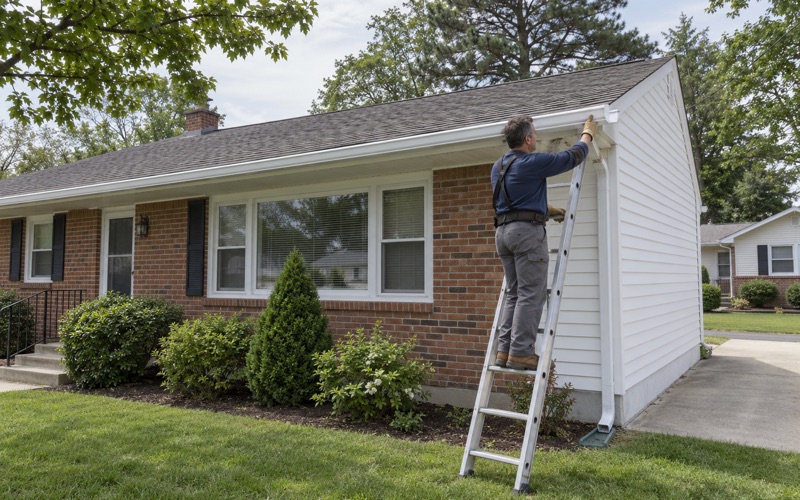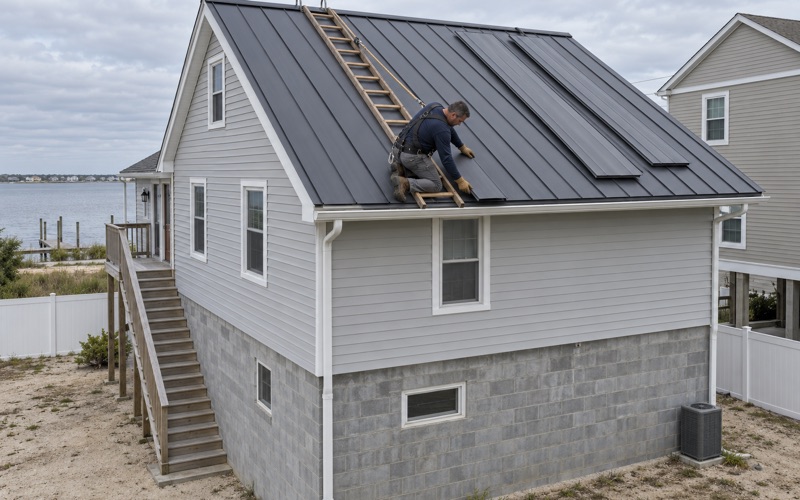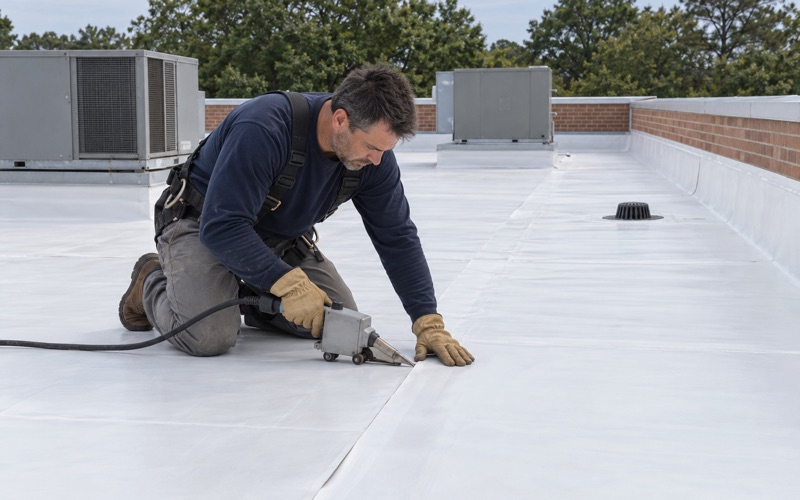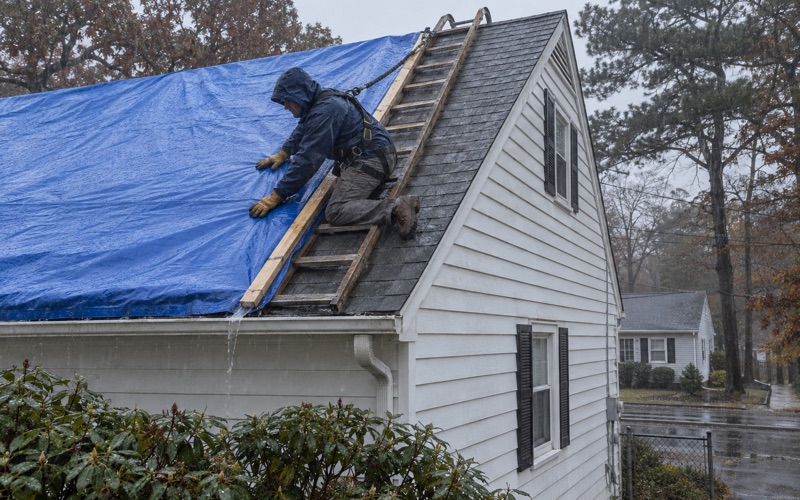
Toms River Elite Roofing brings more than 20 years of roofing in Point Pleasant to every job we take, from a single lifted shingle to a full tear-off down to the decking. Most of that work happens on houses, and most of it starts with a leak call. We check the attic as well as the roof surface, so we know where water actually gets in before we put a price on anything.
This page is about how a roof job gets planned, and it uses an unusual example: the time local voters decided to pay for new roofs on their own schools. A public building runs on bids, bonds and a school calendar. A house runs on the owner’s calendar. Comparing the two makes it easier to see which rules apply to your roof and which do not.
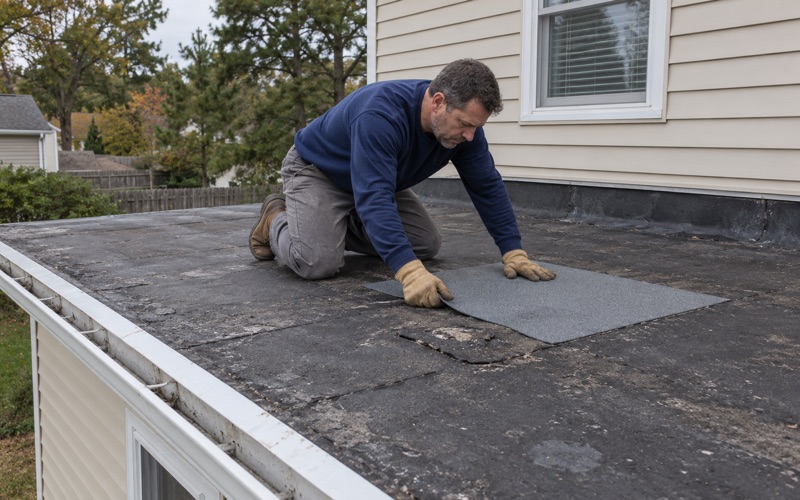
We also say plainly whether a roof can be repaired before replacement comes up at all. When it cannot, our written scope breaks tear-off, decking, underlayment, flashing, ventilation and gutters into separate lines. That way an owner can set our number beside anyone else’s and compare the work item by item, rather than weighing two totals that may describe very different jobs.
What Point Pleasant Voters Decided About Their School Roofs
The December 2013 Referendum
In December 2013, Point Pleasant Borough voters passed a school referendum that paid for new roofs, along with heating and ventilation units and masonry repairs. It is one of the clearer public records of roofing in town, because the decision, the financing and the schedule were each reported as they happened in Patch rather than pieced together afterward.
The record has limits worth stating. We have not read the ballot language or the vote count, and the reports do not name the roof systems, the warranties or the construction contractor. What they do show is how a community treated roofs it could not afford to let fail: as a planned capital project with its own funding vote, not an emergency.
Nellie F. Bennett, Memorial Middle and the High School
The reports name three buildings for roof replacement: Nellie F. Bennett Elementary School, Memorial Middle School and Point Pleasant Boro High School. These are institutional roofs over classrooms, gyms and corridors, built and maintained under commercial rules that have little in common with a gable roof over a two-story house on a residential street.
A school roof also carries a different kind of risk. Water through a classroom ceiling disrupts a whole building of students at once, so a district has every reason to replace roofs on a plan instead of waiting for a failure. Homeowners can borrow that habit. A roof that is inspected and budgeted for ahead of time is rarely the one that forces a rushed decision in January.
One $15.9 Million Contract
The contract for the $15.9 million project was awarded in May 2014. That single figure covered the roof replacements together with the mechanical and masonry work in the same package, so it is not a price for the roofs alone. We would not use it to estimate anything about a residential roof, and nobody should read it as a roof cost per school.
What it does show is scale. A borough of 18,941 people at the 2020 census chose to borrow for this work rather than patch it year after year. When we look at a house roof in Point Pleasant, we make the same kind of call on a smaller budget: whether repairs still make sense or whether the money is better spent once, on a full replacement.
Looking for roofing closer to Pine Ridge at Crestwood? See Pine Ridge at Crestwood Roofing.
Bonds, a 20-Year Term and a Summer Work Window
How the District Paid for It
In January 2014, the district sold $15,948,000 in bonds in a competitive sale. The winning bond purchaser, Roosevelt & Cross, financed the work at 3.55 percent over a 20-year term, for what the district called critical repairs to the roofs and to the heating and ventilation units at the borough’s four schools. Roosevelt & Cross bought the bonds; it was not a construction firm.
The reported savings came to $864,000 over the 20-year bond term. The wording matters, too. The bond line covered roofs and mechanical work across four schools, while the August 2014 report names three schools for roof replacement. Public records like these are useful precisely because they are specific, and we try to read them the same careful way we read a roof.
Why the Work Ran Through the Summer
Once school let out in 2014, work on the buildings did not stop, and in August it was reported on schedule. That is the logic of a school roof: the building is emptiest in July and August, so the tear-off, the noise and the open sections of roof all happen while classes are out and nobody is sitting underneath.
A district cannot simply pick a convenient week. Publicly funded work is bid, awarded and then fitted into a fixed calendar, which is why a contract awarded in May lined up with work that began when school ended. Miss that window and the job waits a year or runs into the school term, so the schedule is set months before any old roofing comes off.
What Summer Means for a House
Houses do not have a school calendar, but they do have one of their own. Many Point Pleasant families plan around summer guests, a graduation party or a closing date. We schedule a replacement around those dates and say in advance how many days the crew expects to be on site, so a roof is not half open on the weekend you most need the house.
Weather matters too. The borough sits in the National Weather Service forecast zone named Coastal Ocean, served by the Mount Holly office, and we watch those forecasts before we strip any section of roof. We open only what we can dry in the same day. At the end of each day the crew cleans the driveway, yard and gutters and runs a magnet across the ground for loose nails.
Why a School Roof Needs a Permit and a House Roof Usually Does Not
Commercial Work on a Public Building
A school roof is commercial construction on a public building. It is designed, publicly bid, permitted and inspected, and it is scheduled around the school year rather than the owner’s convenience. Every one of those steps adds time, which is part of why a referendum in December led to a contract in May and to work in the summer that followed.
None of that makes a school roof better built than a house roof. It reflects who owns the building and who pays. A public district spends taxpayer money and answers to voters, so the process is written down at every step. A homeowner spends their own money, and the rules that govern a typical re-roof are correspondingly lighter.
Ordinary Maintenance on Detached Houses
In New Jersey, repairing or replacing the existing roof covering on a detached one- or two-family dwelling counts as ordinary maintenance under N.J.A.C. 5:23-2.7, and ordinary maintenance needs no construction permit. That describes most of the borough. The Census counts 6,933 detached houses among 8,742 housing units in Point Pleasant, and 3,454 of those units date from 1950 through 1969.
So for a like-for-like re-roof on a typical detached house here, the paperwork that matters is the contract. We write ours to New Jersey’s home improvement rules, including notice of the owner’s three-day right to cancel, and we list every line of the scope so there is nothing to argue about later over what the price included.
Where a House Job Leaves That Exemption
The exemption has edges. Work that affects the structure or fire safety of the house falls outside it, and so do buildings that are not detached one- or two-family dwellings. If we open a roof and find framing that needs more than routine decking, we stop and talk it through with the owner before any of that work goes ahead, rather than folding it quietly into the job.
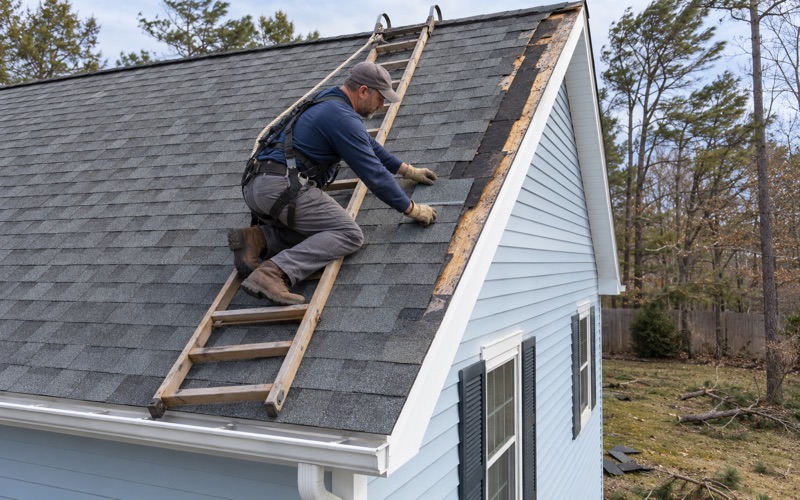
Decking itself is the most common surprise. When rotted sheets turn up after tear-off, we photograph them and show the owner before replacing anything, at a per-sheet price already set in the contract. The owner sees the damage, knows the cost in advance and decides with the facts in front of them, which is how a school board works too, just on a smaller scale.
Planning a Point Pleasant Re-Roof Like a Capital Project
Budget Before the Roof Fails
The district did not wait for a classroom ceiling to come down before asking voters for money. A house owner can follow the same order. We inspect, tell you honestly whether repair will buy several more good years, and if replacement is the right call, give a written scope you can budget for over a season rather than one forced on you by the next storm.
If you are selling, the same planning helps. We can write a roof condition report the seller hands to the buyer’s inspector, describing what is on the roof, its condition and what we found in the attic. A buyer gets a clear picture, and a seller avoids learning about the roof for the first time halfway through a negotiation.
Flashing and Ventilation Done Once
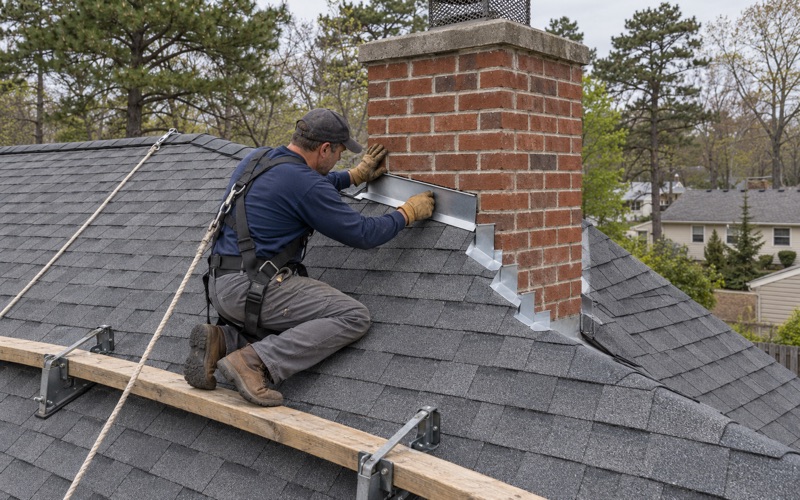
A capital project is meant to be done once and left alone for decades. That is why we replace step, counter and chimney flashing with the roof instead of reusing old metal under new material. Old flashing tends to fail before the shingles around it do, and reusing it puts the most leak-prone details on the roof on a shorter clock than the rest.
We also check attic ventilation on every replacement. A roof that cannot breathe holds heat and moisture under the decking and ages from the inside, whatever shingle sits on top. Balanced intake at the soffits and exhaust at the ridge is the usual answer, and we size it to the attic rather than guessing, so the new roof gets its full working life.
Built for the Salt Air
Point Pleasant sits between the Manasquan River on the north and Beaver Dam Creek on the south, with the Point Pleasant Canal dividing it in half. Salt air reaches a lot of roofs here, and it works on ordinary fasteners and metal edges. We choose nails, drip edge and flashing for that exposure rather than taking whatever is on the standard truck.
Those choices cost little at installation and a great deal to correct later, which is the whole argument for planning ahead. A homeowner who treats the roof as a long-term investment, the way the borough treated its schools, ends up paying for the right materials once instead of paying for repairs to cheap ones every few years.
- 20+ Years on Shore Roofs
- Line-Item Written Scopes
- Attic and Roof Leak Tracing