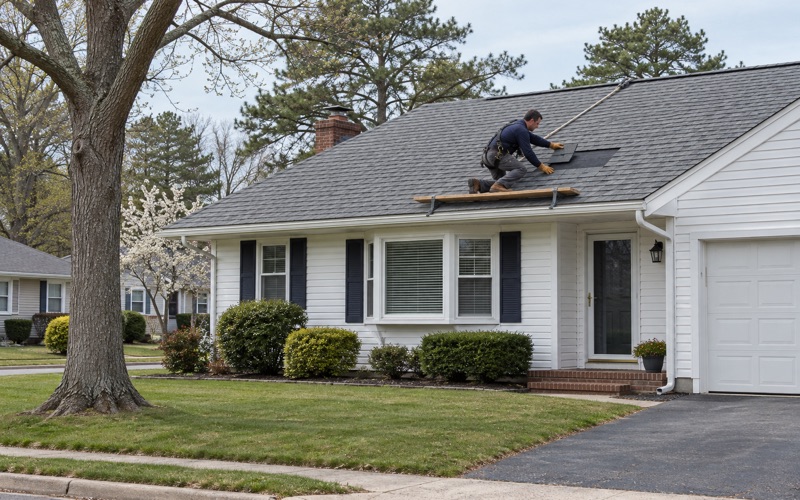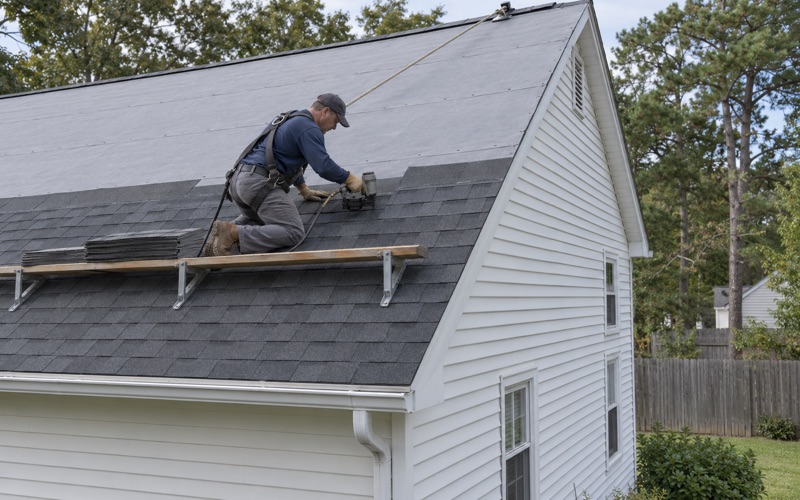
Toms River Elite Roofing has spent more than 20 years on roofing in Ramtown and the towns around it, and the jobs we see most here are not dramatic. They are slow leaks at a wall line, a gutter pulling off its fascia, a downspout that empties beside the foundation, and a roof that is simply reaching the end of its first or second covering.
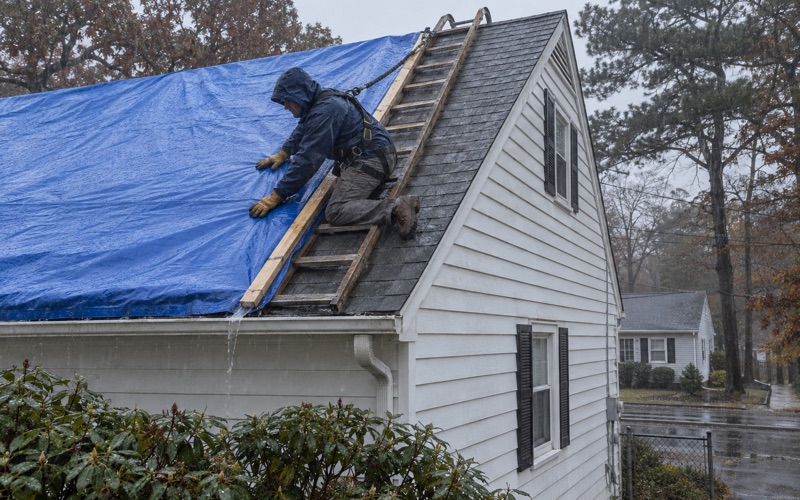
We treat those as one problem rather than four. Water lands on the shingles, runs across the flashing, drops into the gutter and leaves through the downspout, and a weak point anywhere in that path shows up as damage somewhere else. So every leak call starts with a look in the attic as well as on the roof, and we find where the water actually enters before we price anything.
That way of looking at a roof also happens to line up with the property maintenance code your township uses. Below we explain what that code covers, how it is enforced, and what keeping a roof system in repair means on the houses built across this neighborhood.
Ramtown Roofs Under Howell’s Maintenance Code
Adopted in 2012
Ramtown is a census-designated place in Monmouth County with no government of its own, so the rules for its houses come from Howell Township. On March 6, 2012 the Howell council adopted Chapter 232, a property maintenance code built on the 2012 International Property Maintenance Code, taken in part and as amended by local ordinance.
That qualifier matters, and we want to be plain about it. We have read the model code and published descriptions of it, but not Howell’s own amendments to the roof section, and not the changes made by the township’s 2026 ordinances. When we talk about the code on this page, we mean the model text unless we say otherwise.
Complaints, Not Sweeps
The Patch report on the March 2012 vote described a complaint-driven tool. The township’s code enforcement officer would respond when, in the mayor’s words, a neighbor complains, somebody complains. The debate that night centered on campers, boats and trucks parked on lots, and roofs and gutters were not mentioned at all.
So the code is not a schedule of inspections that walks every street. It sits in the background until someone raises a concern about a property. For most owners that means the practical question is not whether an officer will notice a sagging gutter, but whether the house itself is being protected from the water that gutter is supposed to carry away.
Why a Roofer Reads It
We read a maintenance code for the same reason we read a shingle manufacturer’s installation instructions. It is a short statement of what a working roof is expected to do, written by people who have seen a lot of houses fail. The model code says that in plain language, and it is a useful checklist for an owner.
It also explains why we write estimates the way we do. If the standard groups the covering, the flashing and the drainage together, then a quote that prices only shingles leaves part of the system unexamined. Our written scopes list tear-off, decking, underlayment, flashing, ventilation and gutters as separate lines.
Looking for roofing closer to Point Pleasant Beach? See Roofing Services in Point Pleasant Beach.
Roofs, Flashing, Gutters and Downspouts in One Rule
Sound, Tight and Free of Defects
Section 304.7 of the model property maintenance code covers roofs and drainage in a single rule. As NRCA described it in Professional Roofing in February 2024, roofs and flashings must be sound, tight and free of defects that admit rain. That is a performance standard, not a list of approved materials or colors.
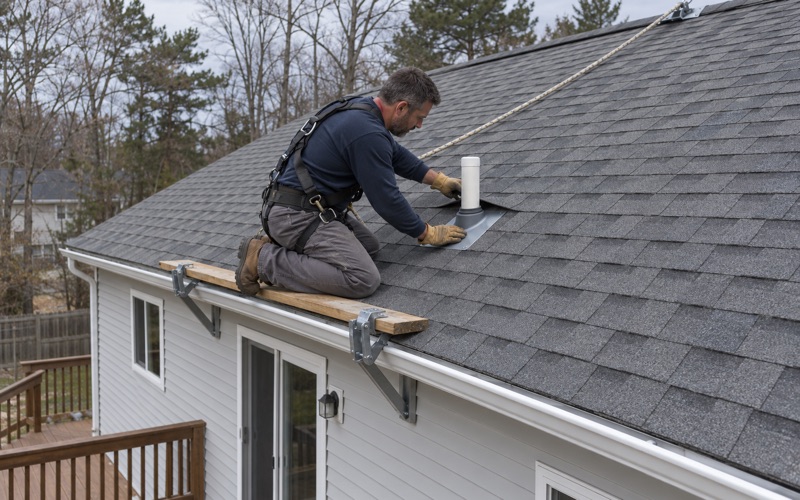
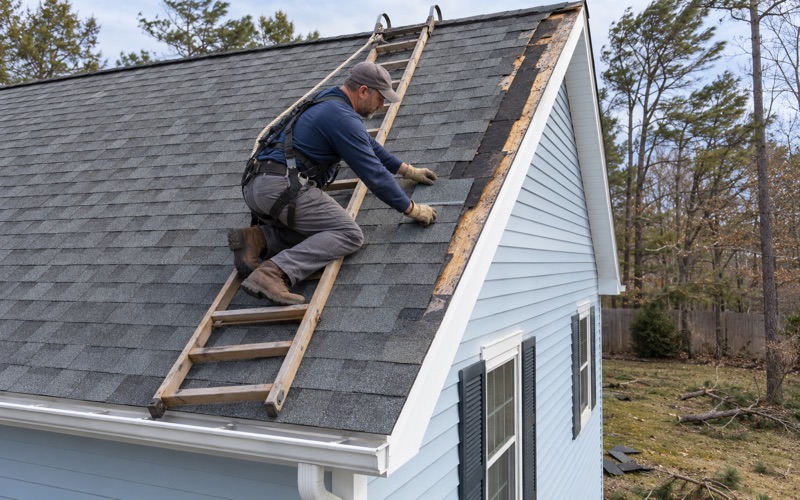
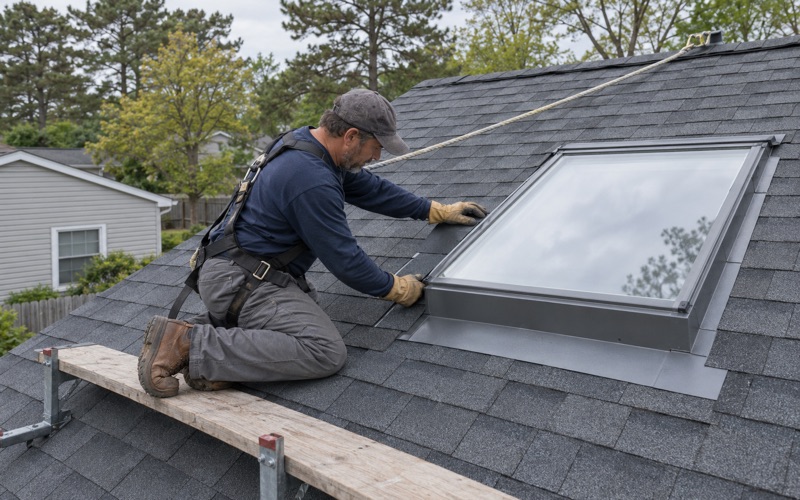
In practice it describes what we check on every visit: lifted or missing shingles, cracked pipe boots, nail heads backing out, and gaps where the covering meets a wall or chimney. Each of those is a place where rain can get past the roof, and the attic usually shows the evidence before the ceiling does.
Gutters and Downspouts Count Too
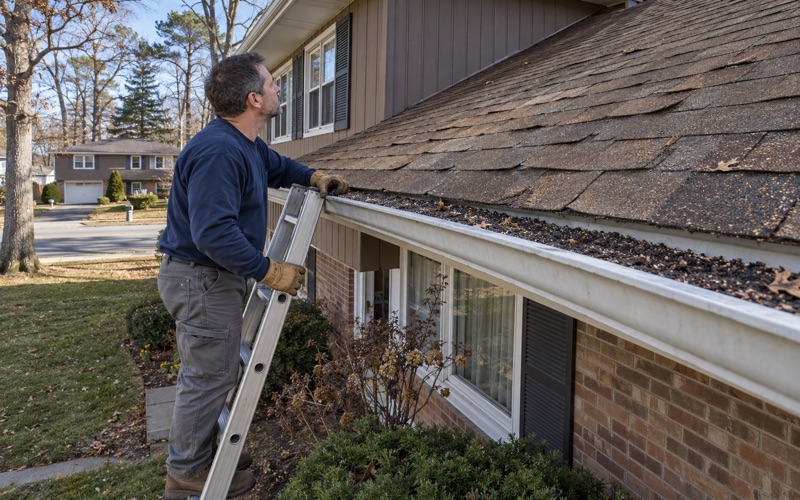
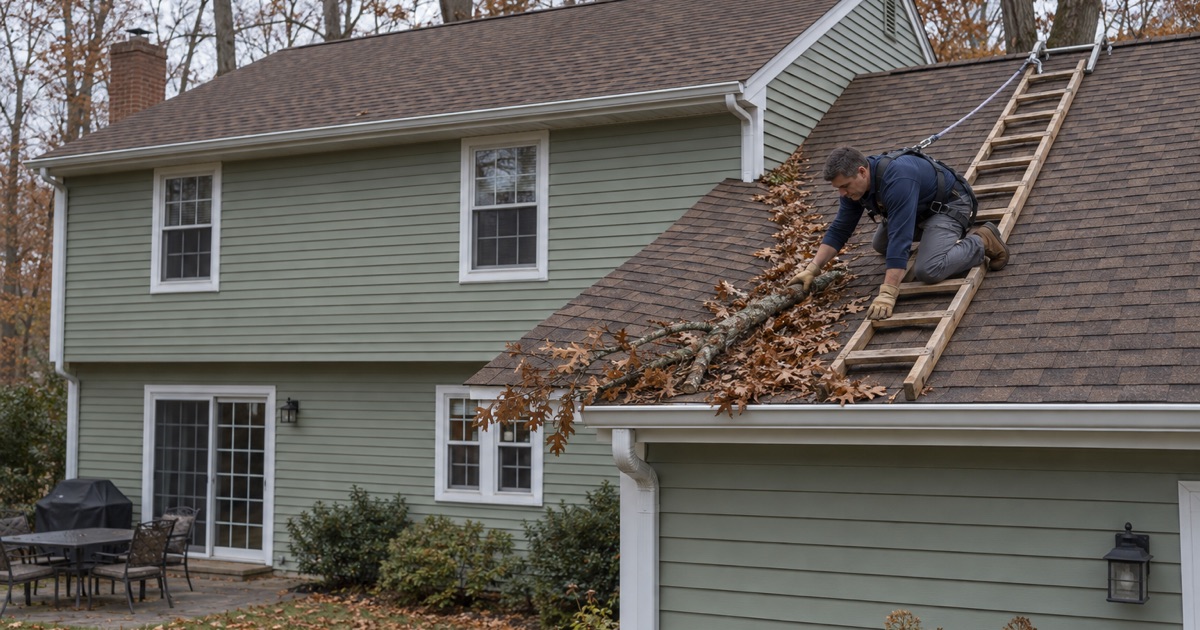
The same model section says roof drains, gutters and downspouts must be free of obstructions and in good repair. That is the part owners tend to overlook. A gutter full of leaves or a downspout knocked loose by a mower sits in the same rule as the shingles above it, because it does the same job.
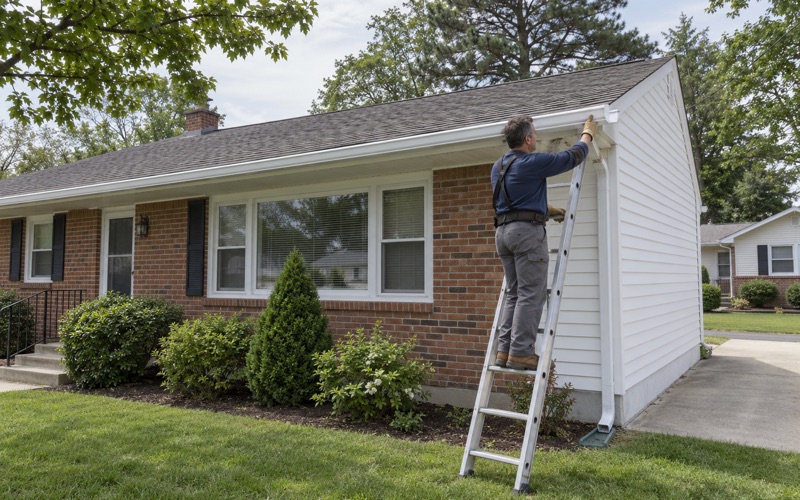
We look at the whole run when we are on a roof. Gutters that have pulled away from the fascia, joints that drip, outlets packed with debris and downspouts that stop short of where they should discharge all go into the written report. Where the gutters are failing, seamless aluminum gutters and leaders are a line item of their own.
Flashing on 1980s and 1990s Houses
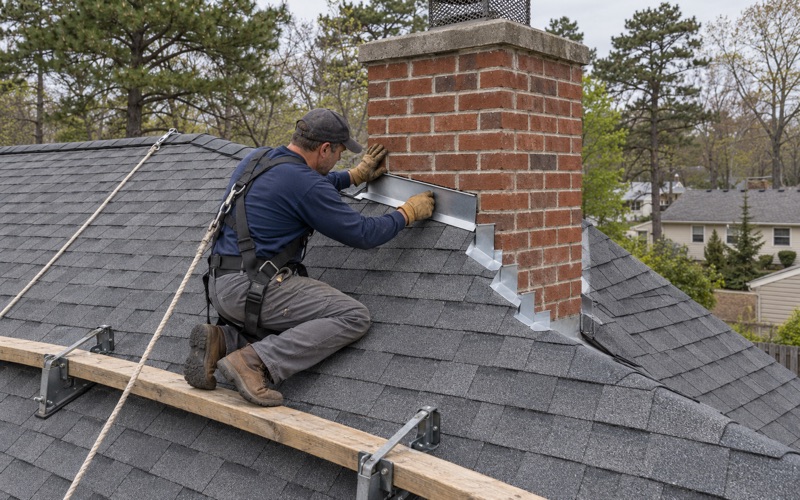
Flashing is where houses of this age usually leak first. Step flashing along sidewalls, counter flashing at chimneys and the boots around plumbing vents were often installed with the original roof and then reused when it was replaced. By the second roof, that metal and rubber can be decades older than the shingles around it.
We do not reuse it. Step, counter and chimney flashing is replaced along with the roof, and we add kick-out flashing where a roof edge dies into a sidewall so water is turned into the gutter instead of down the siding. Chimneys wider than 30 inches get a cricket behind them, as IRC R1003.20 calls for.
Where Roof Water Goes on a Ramtown Lot
Dampness in Walls and Interiors
Municipal copies of the model code add a line that explains why drainage matters. Roof drainage must be adequate to prevent dampness or deterioration in the walls or interior portion of the structure. That is the failure we see when a gutter overflows at an inside corner for several seasons and nobody sees it from the ground.
The damage rarely starts at the roof. It shows up as soft fascia, peeling paint on trim, a stained basement wall under a downspout, or rot at the bottom of a sheathing panel behind the siding. When we trace a leak, we follow the water from the attic down to wherever it finally leaves the house.
Discharge and the Neighbors
The same municipal copies of the model text say roof water shall not be discharged in a manner that creates a public nuisance. We have not read how Howell’s version treats that line, and we have not read any enforcement case from this neighborhood, so we do not tell owners their downspout breaks a rule.
What we do tell them is practical. A downspout that dumps onto a driveway, a walk or a shared property line puts roof water where people notice it, and that is the kind of thing that turns into a complaint. Extending the leader, turning it, or adding a splash block usually settles it without touching the roof at all.
Sizing the System to the Roof
A gutter system only works if it can carry what the roof sends it. Long eaves on a two-story colonial or a roof with a valley feeding one corner can overwhelm a single downspout in a heavy rain, and the overflow lands right where the model code does not want it.
So when we replace gutters we look at where the water collects, not just at the old layout. That can mean adding a downspout, moving an outlet away from a valley, or setting drip edge at the eaves so water clears the fascia and lands in the trough. The goal is a roof that sheds water and a system that takes it away.
Keeping a 1980s Ramtown Roof System in Repair
The Houses We Work On
The Census numbers explain the work here. The 2024 American Community Survey counts 2,034 owner-occupied detached houses in Ramtown, out of 2,211 occupied homes. Of all housing units, 1,006 were built in the 1980s and 468 in the 1990s, so most of the neighborhood was framed within the same two decades.
Houses that age are often on their first or second replacement roof, though no record tracks that house by house. What it means for us is a lot of similar framing, similar attic layouts and similar original flashing details, which makes the common failure points easy to recognize and quick to check.
Repair First, Then Replacement
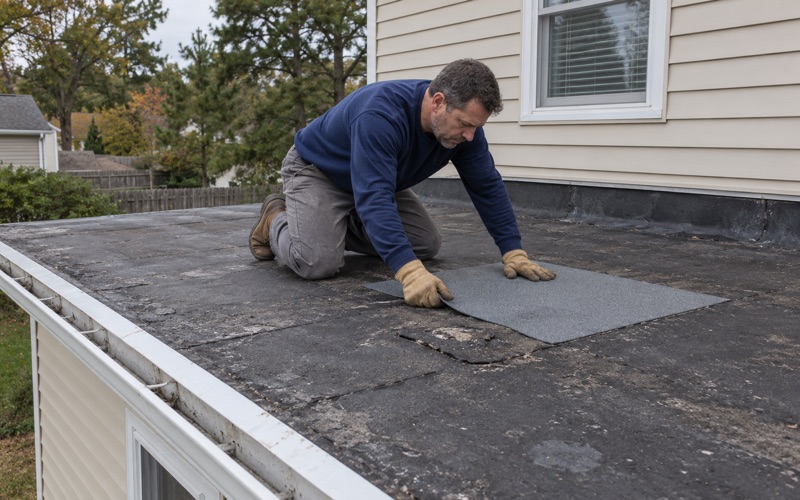
Not every leak calls for a new roof. Before we discuss replacement, we give a straight answer on whether the existing roof can be repaired, and why. A lifted flashing piece, a failed boot or a clogged gutter is a repair, and we price it as one.
When replacement is the honest answer, re-roofing a detached one- or two-family house is ordinary maintenance under N.J.A.C. 5:23-2.7 in New Jersey. Attic ventilation is checked on every replacement, with ridge vent and soffit intake balanced, because a roof that cannot breathe ages from underneath no matter how well the shingles are laid.
What the Contract and the Cleanup Look Like
Damaged decking only shows once the old roof is off. When we find it, we photograph it and show the owner before any sheet is replaced, at the per-sheet price already written into the contract. Contracts follow New Jersey’s home improvement rules, including the three-day cancellation notice.
At the end of each work day we clean the driveway, the yard and the gutters, and we run a magnet sweep for roofing nails. Owners getting ready to sell can ask for a written roof condition report to hand to the buyer’s inspector, which answers the roof and drainage questions before they come up.
- 20+ Years on Shore Roofs
- Line-Item Written Scopes
- Attic and Roof Leak Tracing