
Toms River Elite Roofing handles roof repair in Toms River, NJ, serving surrounding cities including Leisure Village East, Leisure Village, Silver Ridge, Holiday City South and Beachwood. After more than 20 years fixing roofs across Ocean County, we know that most leaks start at a small detail, and that the right repair can add years to a roof that still has life in it.
Every repair visit starts in two places, on the roof and in the attic. Water rarely drips straight down from the hole that admits it, so we follow the stain, the wet insulation and the darkened sheathing back to the true entry point. That is how the first repair becomes the last one for that leak.
We also give you a straight answer on whether a repair makes sense. If the roof is sound apart from one failure, we fix that failure. If it is near the end of its life, we tell you so plainly, show you the evidence and let you decide.
Residential Roof Repair for Shingle Roofs
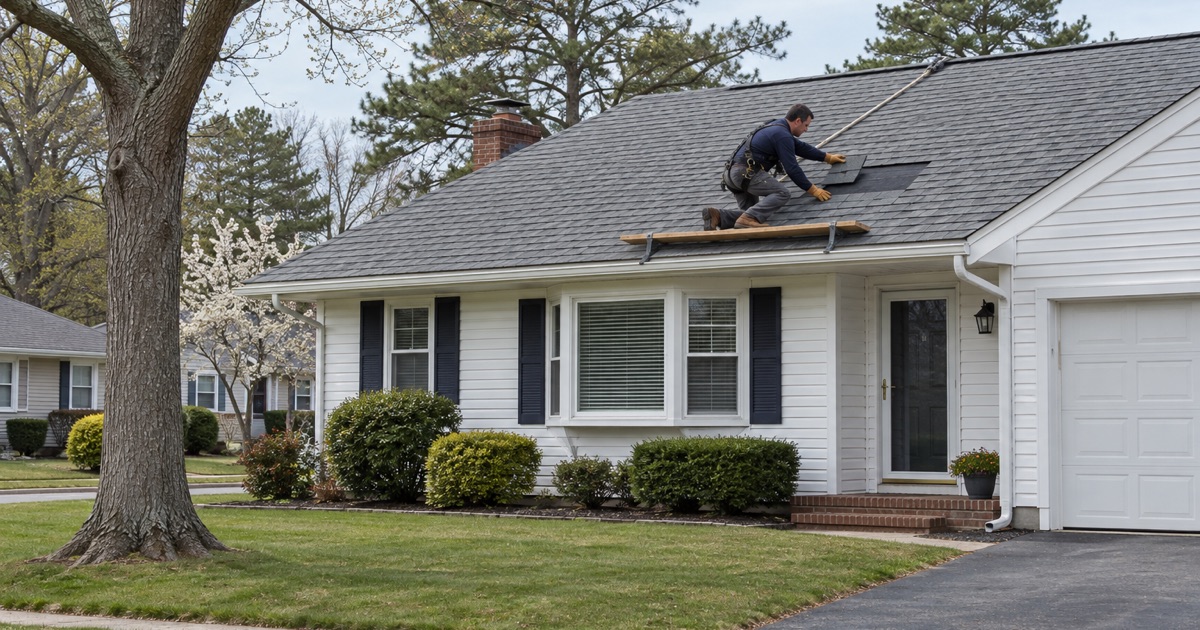
Torn, Lifted and Missing Shingles
Wind catches shingles that were nailed above the manufacturer’s nailing zone or never sealed down, and once one tab lifts, the next storm usually takes its neighbors. We remove the damaged pieces without tearing the surrounding courses, install matching shingles with the correct fastener pattern and hand-seal each tab so it bonds before the next gust.
We also check nearby shingles for creases. A tab that has folded back and dropped into place looks fine from the yard but has a broken mat, and it will be the next one to go. Replacing those during the same visit costs far less than another service call.
Flashing Around Chimneys, Walls and Dormers
Step flashing along sidewalls and counter flashing at chimneys keep water out at the joints where the roof meets a vertical surface. Over time, sealant dries, mortar joints open and the metal corrodes. Caulking over a failed joint might buy a season, so we remove the old metal and install new step flashing and counter flashing set into a reglet or mortar joint.
Wider chimneys add another issue. The International Residential Code, at R1003.20, calls for a cricket behind chimneys wider than 30 inches, so water is diverted around the chimney instead of pooling behind it. Where one is missing and the leak points there, we build one.
Pipe Boots, Vents and Valleys
Rubber pipe boots crack in the sun and are among the most common leak sources on houses built in the 1960s and 1970s. We replace them with new rubber or lead flashing boots sized to the pipe. Roof vents get the same scrutiny, since a cracked plastic housing or loose fasteners can let wind-driven rain inside.
Valleys collect the most water on any roof, and a worn or poorly lined valley leaks during heavy rain. We rebuild valleys with an ice and water barrier underneath and shingles or metal on top, cut and sealed so water flows down the channel instead of under it.
Commercial and Low-Slope Roof Repair
Membrane Seams, Blisters and Splits
Flat roofs on stores, offices, porches and additions rely on continuous membranes. Torch-down modified bitumen, EPDM rubber and TPO single-ply roofs each fail differently, from lifted laps and open seams to blisters that crack underfoot. We identify the membrane, clean and prepare the area, and patch with a compatible material so the repair bonds rather than peeling away.
Where a membrane has been patched many times, we look at whether the surrounding sheet still has life. A roof that is mostly patches will keep leaking between them, and we tell owners when a section replacement is the more economical step.
Ponding Water and Drains
Water that stands on a low-slope roof for days speeds up aging and finds every weak seam. Clogged drains, sagging decks and gutters set too high are the usual causes. We clear drains and scuppers, check that water reaches them and recommend tapered insulation or drainage changes when ponding keeps coming back.
After a heavy rain, a quick look at where water still sits two days later tells us more than any drawing. We mark those areas, check the deck beneath for deflection and price the drainage fix separately from the leak repair, so an owner can decide whether to address the cause now or schedule it with the next budget.
Rooftop Equipment and Curbs
HVAC units, exhaust fans and skylights all sit on curbs that interrupt the membrane, and those flashings fail as the equipment vibrates and the building moves. We reflash curbs, reseal pitch pockets and replace worn counterflashing, then check the area for foot-traffic damage left by service technicians.
For property managers, we photograph each repair location and list it on the invoice by unit or roof section. That record makes it easier to track which curbs keep failing, hold a mechanical contractor accountable for damage, and plan a roof replacement when the time comes instead of reacting leak by leak.
What We Check Before Quoting a Repair
Tracing the Leak From the Attic
On a sloped roof, water can run along a rafter or the underside of the deck for several feet before it drips. We go into the attic with a light and moisture readings to follow that path back. On a hard-to-find leak, we may water-test sections of the roof in sequence, starting low and working up.
That patience matters most on leaks that only appear during wind-driven rain from one direction. A garden hose cannot always reproduce a nor’easter, so we combine the water test with what the stains, nail tips and sheathing show, and we tell you honestly how confident we are in the diagnosis before you pay for the fix.
Decking and Ventilation
A spongy spot underfoot often means rotted decking under the shingles, and a repair laid over rot will not last. We check deck stiffness around the leak and look at attic ventilation while we are inside, because poor airflow causes frost, condensation and drips that are easily mistaken for roof leaks.
If we find a bathroom fan venting into the attic or blocked soffit vents, we point it out alongside the roof repair. Fixing the roof while a moisture source keeps soaking the deck from below only moves the problem, so the estimate names both and lets you decide how to handle each one.
The Repair-or-Replace Answer
After the inspection, we explain what failed, why and what it will take to fix. If the roof has many years left, you get a repair quote. If the problems are widespread, we explain why a repair would not be good value and give you the option to price a replacement, with no pressure to choose it.
Repairs on Shore Homes and Older Houses
Salt Air and Corroded Metal
Near Barnegat Bay and the ocean, salt air corrodes standard nails, drip edge and flashing well before the shingles wear out. When we repair a roof close to the water, we choose corrosion-resistant fasteners and flashing metals rather than matching whatever rusted out, so the repair does not fail early for the same reason.
We also look at the rest of the metal on the roof while we are up there. Rust streaks below a vent, pitted drip edge and loose gutter spikes are early warnings that other parts will follow, and catching them during a repair visit is far cheaper than waiting for the next leak.
Raised and Rebuilt Homes
Many houses near the bay were lifted after Sandy, which puts their roofs a full story higher than before. A small repair on a raised house still needs safe ladders, staging and fall protection. We plan the access before the visit, so the crew can work safely and finish the repair the same day.
Height also changes how wind reaches the roof. A raised house stands above the neighbors’ rooflines and fences that once sheltered it, so its edges and ridge take more of each storm. On these homes we pay particular attention to the eave and rake shingles, where uplift starts.
Ranches and Capes on Older Roofs
Toms River’s housing stock peaked in the 1960s and 1970s, and many of those ranches, Capes and split-levels have tight attics and vents that were never sized for today’s shingles. Repairs on these roofs go better when the crew knows what to expect from original plank decking and earlier layers underneath.
- 20+ Years on Shore Roofs
- Line-Item Written Scopes
- Attic and Roof Leak Tracing