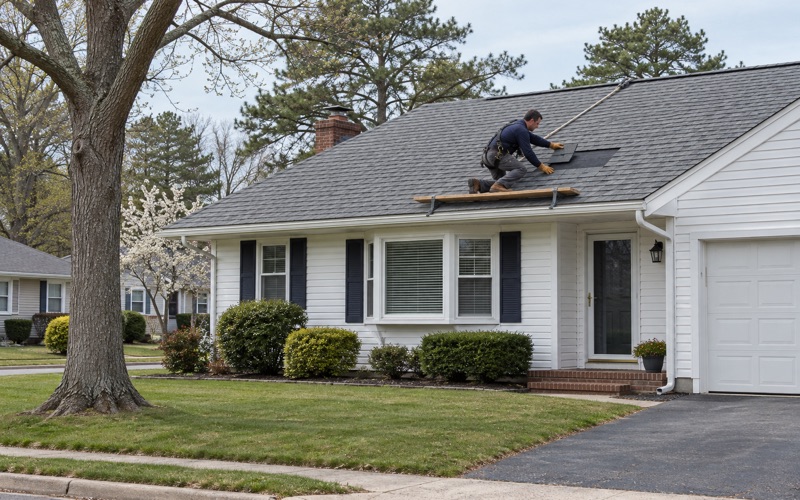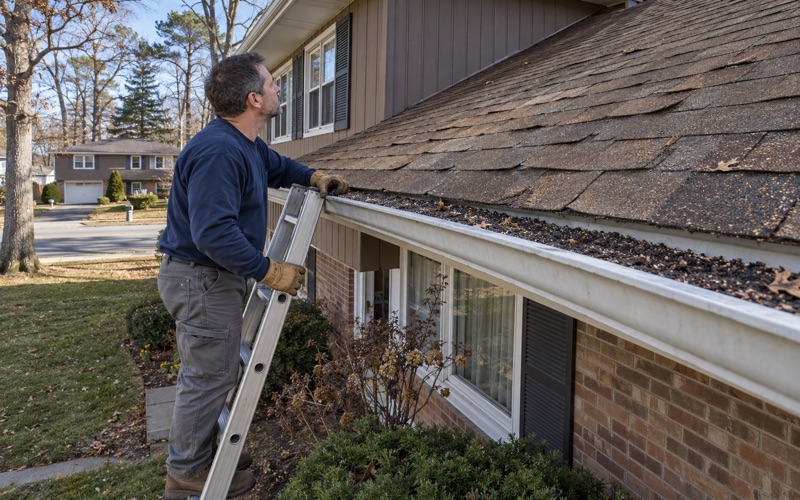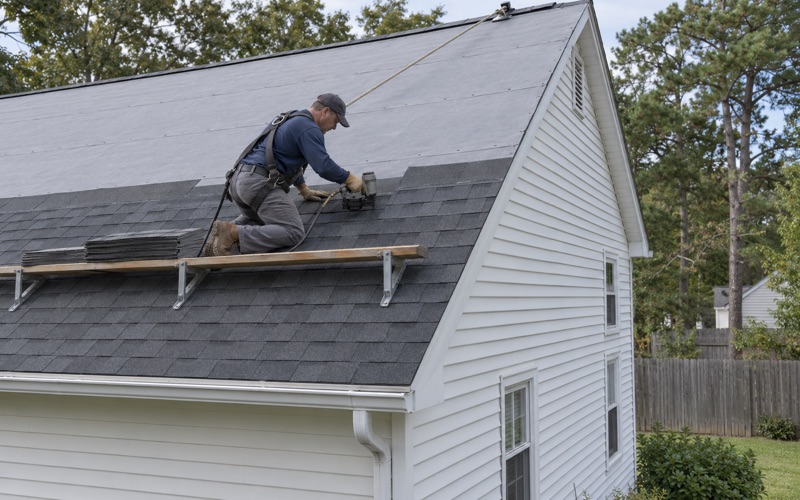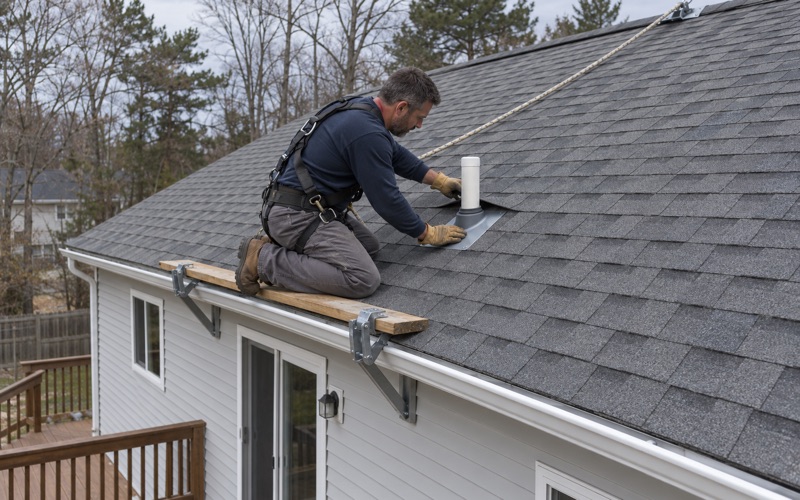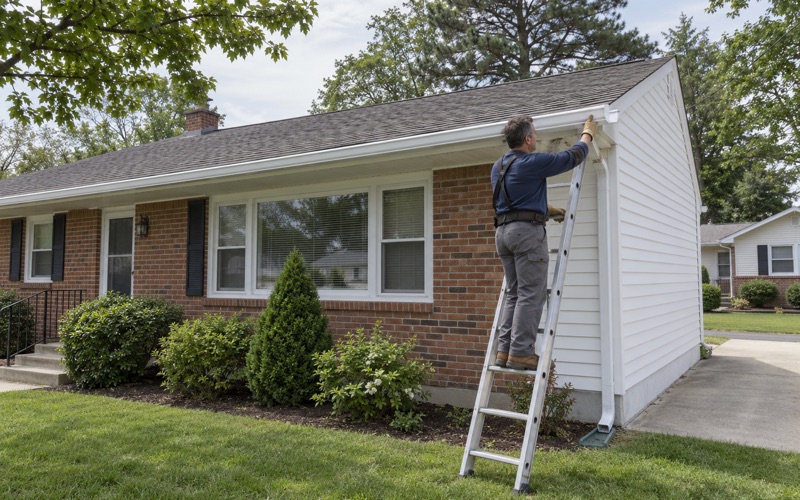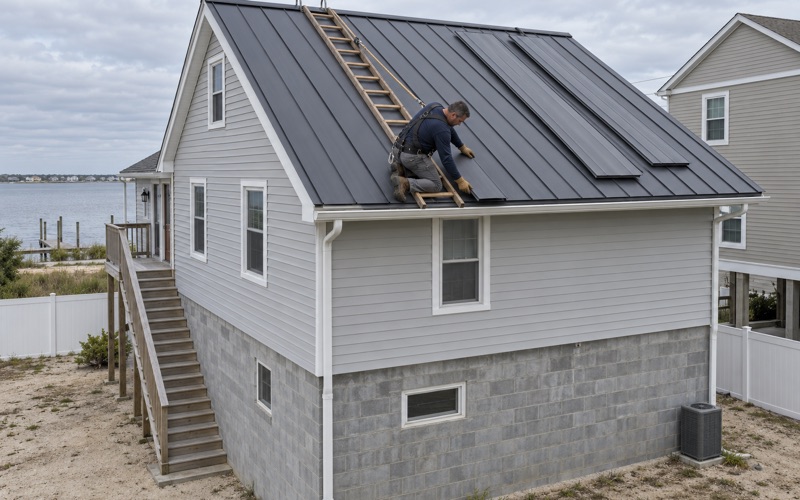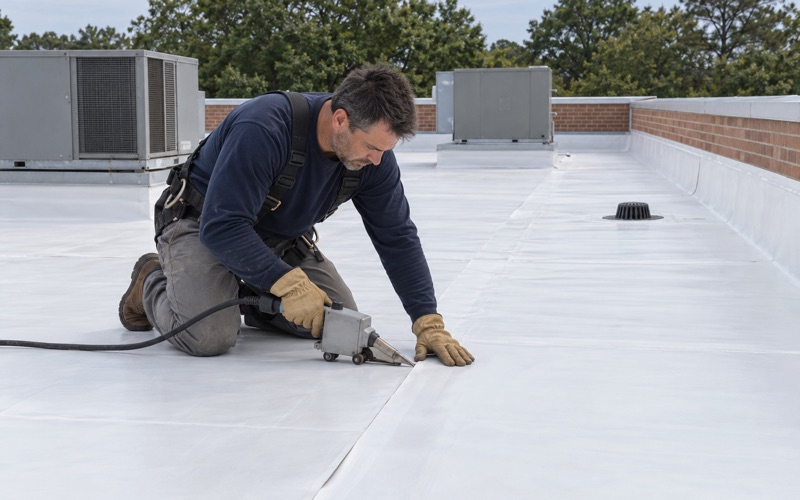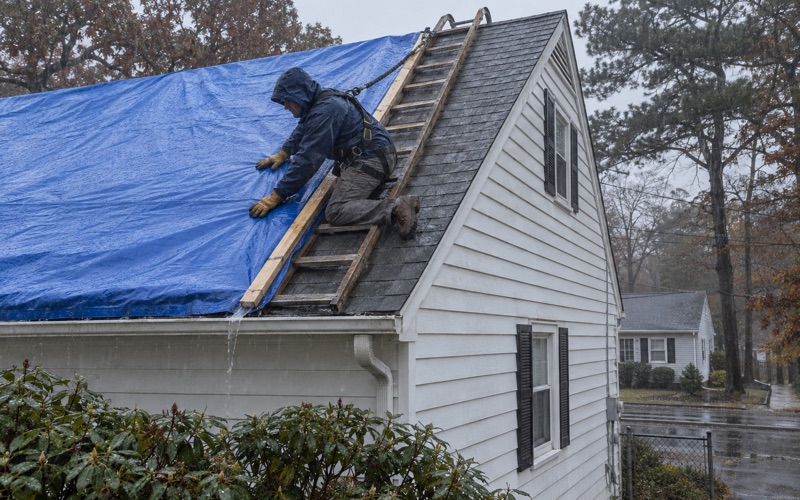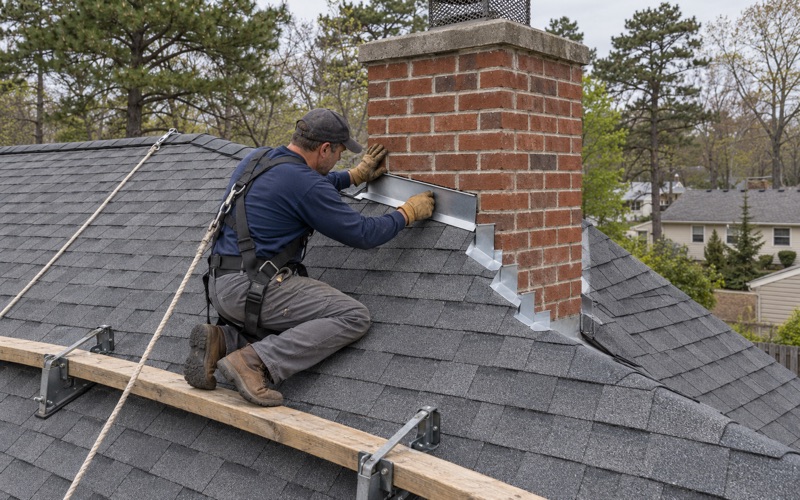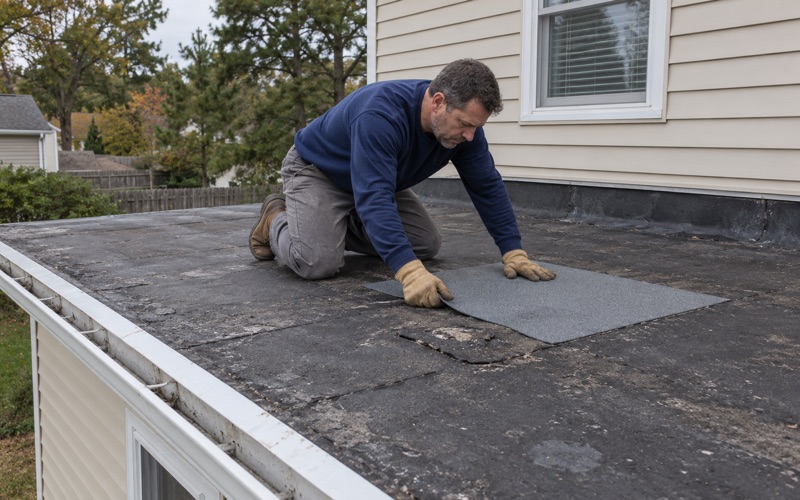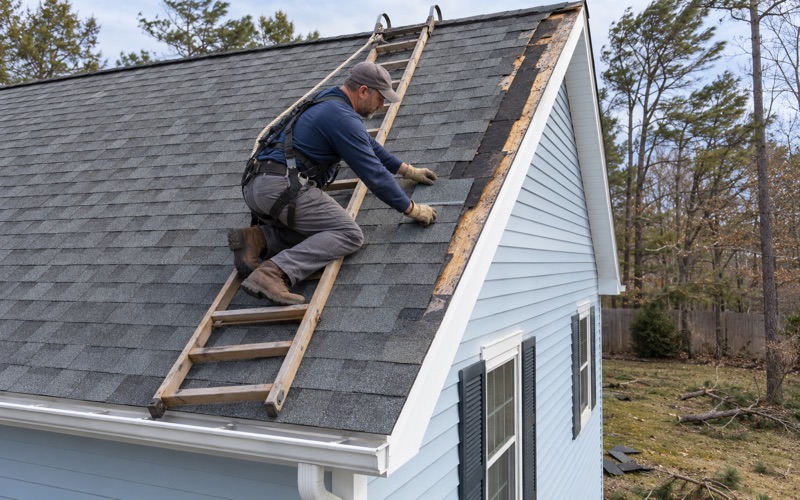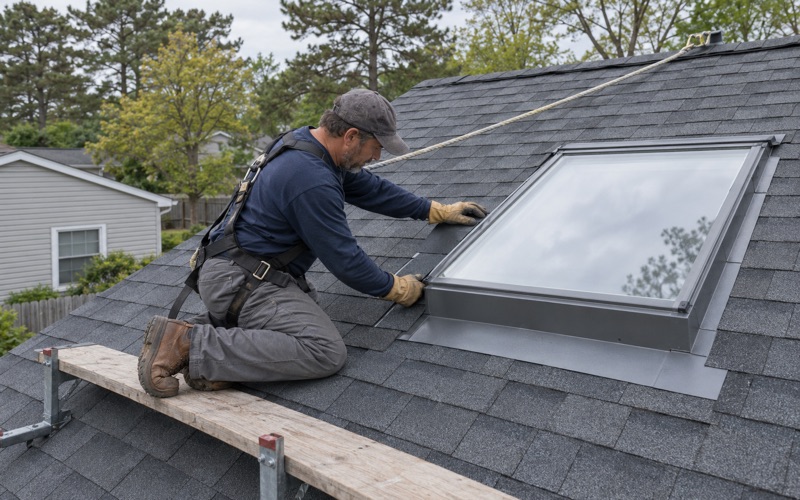
Toms River Elite Roofing brings more than 20 years of roofing in Tinton Falls and along the shore to repairs, re-roofs and leak calls on every kind of house the borough holds. We start each job by working out what the roof actually needs, and we give a straight answer on whether a repair will do before replacement ever comes up.
A leak visit with us means two inspections, not one. We go up on the roof and into the attic, follow the water to the point where it really enters, and only then put a price on the fix. That habit keeps owners from paying for new shingles over a problem that started at a flashing joint or a tired pipe boot.
Our written scopes break the job into separate lines for tear-off, decking, underlayment, flashing, ventilation and gutters, so you can set our number beside anyone else’s and compare it item by item. Where a house sits in the borough’s older village, we also check what the local preservation rules say about the work before any material is chosen.
The Tinton Falls Historic District and Its Old Mill Village
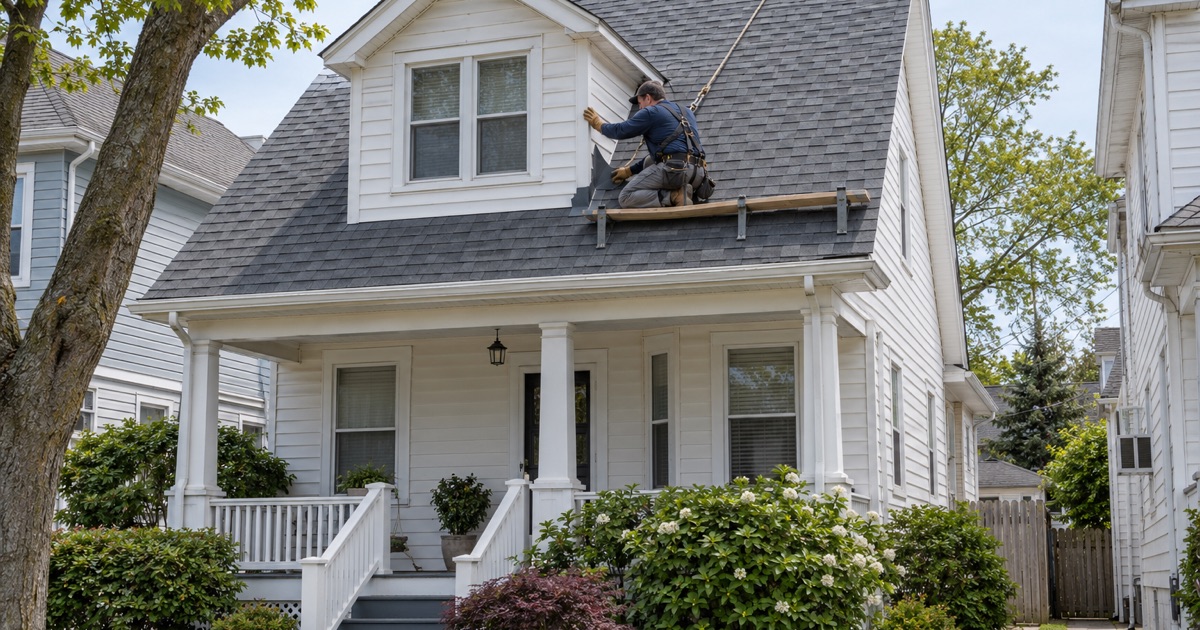
A National Register Listing From 1977
The Tinton Falls Historic District was listed on the National Register of Historic Places on November 10, 1977. It covers about 40 acres laid out in an irregular pattern along Tinton and Sycamore Avenues, built up around the Old Mill and the falls that gave the borough its present name.
That listing is older than the name itself. Tinton Falls was formed as the Borough of New Shrewsbury in 1950 and renamed in 1975 to avoid postal errors, and the name reaches back to Lewis Morris’s Tinton Manor and its gristmill. The borough has grown from 3,783 residents in 1950 to 19,181 in 2020, yet the village core around the mill still reads as the oldest part of town.
The Old Mill at the Center
The Old Mill was constructed in 1676 and was listed on the National Register on its own in 1973. The falls beside it are described as the highest waterfall on New Jersey’s coastal plain, and settlement in this corner of Monmouth County began in the late 1600s around James Grover’s ironworks.
For a roofer, that history matters because the way the village looks from the street is the reason a district exists at all. Rooflines, materials and proportions are part of that picture, which is why a visible change to a roof here is handled differently from routine work elsewhere in the borough.
Boundaries and Contributing Buildings
The 1977 National Register boundary and the local district the borough regulates are not necessarily the same line, and we do not assume one from the other. Before we price work on an older house near Tinton or Sycamore Avenue, we ask the borough whether the property falls inside the local district.
Within a district, buildings are classified as contributing or non-contributing. The borough’s ordinance is reported to exempt a non-contributing building from the review requirements, so the classification of a particular house shapes what happens next. We confirm it with the borough rather than guessing from a house’s age or address. An old-looking house is not automatically contributing, and a modest one may be, so the answer comes from the record and not from the curb.
Looking for roofing closer to Allenwood? See Roofing in Allenwood.
What the Historic Preservation Commission Reviews
Five Members and Two Alternates
The borough’s Land Use Ordinance, Article VIII, sets up a Historic Preservation Commission of five regular members and two alternates, all appointed by the Mayor. Its design guidelines rest on the Secretary of the Interior’s Standards, the federal framework many local commissions use to weigh changes to older buildings.
The commission says it reviews applications for certain exterior changes to buildings in the historic district, along with any proposed construction there. It is advisory to the Planning and Zoning Boards, which means it reports and recommends rather than issuing the final land use decision on its own. Its page does not mention roofs by name, so we read the ordinance wording alongside it rather than treating every roof job the same way.
How the Zoning Officer Refers an Application
Under Article VIII, the Zoning Officer refers applications for permits involving regulated activities in a historic district to the commission for a written report. That referral is how a roofing project on a historic building reaches the commission, so the process starts with the borough’s paperwork rather than a phone call to the commission. The borough’s construction page also says a building permit will not be issued until zoning or other prior approvals are in hand, which puts that referral ahead of everything else.
The ordinance also says that if the commission fails to report on a development application, the silence counts as a report in favor. We still plan a job as though the report will arrive, because a schedule built around a meeting date beats a crew sitting idle while an answer is pending.
Meetings at the Crawford House
The commission meets on the second Monday of each month at 7:30 p.m. at the Crawford House, 750 Tinton Avenue. A monthly calendar has a real effect on a roofing timeline, since missing one meeting can push a change of material back by weeks. An owner weighing a new material is better off knowing that calendar before ordering anything than after.
When a project looks like it will go before the commission, we build that meeting into the start date we quote. We would rather tell an owner up front that a new roof is a longer plan than promise a start date the borough’s process cannot support.
Like-for-Like Work Versus a Visible Change
The Permitted-Repair Rule
The ordinance lists maintenance and repair of existing roofing materials involving no change in the design, scale or appearance of the structure as a permitted repair. Repair or exact replacement of an existing improvement that does not alter the exterior appearance is treated the same way. The key words are design, scale and appearance, and each one is something a neighbor standing on the sidewalk could notice.
Read as written, that makes a like-for-like re-roof in the village routine work. Same material, same color, same profile at the eaves and rakes: the house looks the way it did before the crew arrived, and the job sits within the repair language rather than the review path. Details like drip edge color, ridge profile and the reveal of each course are where a like-for-like job quietly drifts, so we write them into the scope.
A New Material or Color
A change of material or color on a historic building is a different matter. Swapping slate or cedar for asphalt, or a dark shingle for a light one, alters the appearance the repair rule protects, and that is the kind of change that goes to the commission first. Standing seam metal on a house that never had it is another example, however well it would perform.
We match the existing material wherever an owner wants to stay on the repair side of that line, and we say plainly when a true match is not available. If a change is the better choice for the house, we write the scope so the commission and the borough can see exactly what is proposed.
Changing the Roof Form
Raising a pitch, adding a dormer or reshaping a porch roof changes the design and scale of a structure, not just its surface. Those projects sit well outside like-for-like work and belong in front of the commission through the Zoning Officer’s referral before any framing is touched. We would sketch the proposed roofline and list the materials so the written report has something concrete to respond to.
The ordinance also limits how an earlier mismatched repair can be redone. Replacing a previous non-contributing or disharmonious repair is permitted only when it returns the structure to its original condition, so undoing an old patch is not a free hand to try something new. If a past owner put asphalt over part of an older roof, the ordinance points the next repair back toward the original.
Roofing an Older House Near Tinton and Sycamore Avenues
Tracing Leaks Before Pricing
Older houses often carry decades of patches, and a stain on a ceiling rarely sits right under the spot where water gets in. We check the attic on every leak call, follow the path along rafters and sheathing, then match it to what we find outside before writing a number. Valleys, chimney joints and the seam where an addition meets the original roof are the usual suspects on houses of this age.
In a historic house that care pays off twice. A targeted repair at the actual entry point keeps the original roof in service longer and stays inside the maintenance language, while a misread leak can push an owner toward a replacement the house never needed. Original material that is still sound is worth keeping, and we say so when it is.
Decking, Flashing and Ventilation
Once an old roof comes off, damaged decking is photographed and shown to the owner before we replace it, at a per-sheet price fixed in the contract. Step, counter and chimney flashing are replaced along with the roof rather than reused under new material. On an older chimney we look at the crown and mortar joints too, since new flashing set against failing masonry will not hold for long.
We also check attic ventilation on every replacement, since a roof that cannot breathe ages from underneath. On an older house, new intake or exhaust vents can show from the street, so we plan ventilation with the appearance question in mind and raise it before the scope is signed.
Contracts, Cleanup and Storm Damage
Our contracts are written to New Jersey’s home improvement rules, including the three-day cancellation notice. At the end of every work day the crew cleans the driveway, yard and gutters and runs a magnet sweep for roofing nails, so nothing is left behind overnight. On older houses with painted trim and fascia, we also treat any disturbed paint with lead-safe practices under the EPA RRP rule for homes built before 1978.
If a storm damages a roof in the village, we photograph it and write it up for the owner’s own claim, and we will meet the insurance adjuster on site when asked. Any permanent repair that follows still faces the same like-for-like question as planned work. A storm is no reason to change a historic roof’s look in a hurry, and we keep the owner’s options open until the commission question is settled.
- 20+ Years on Shore Roofs
- Line-Item Written Scopes
- Attic and Roof Leak Tracing